
Best Universal Travel Adapter: Top 9 Picks Under $30

TravelGearZone is supported by our readers. Buying through our links helps us earn an affiliate commission. Learn more
There’s a specific kind of panic that hits around 11pm in a foreign hotel room: phone at 8%, charger in hand, and a wall socket that looks nothing like the one at home. A universal travel adapter solves that problem before it happens, and you don’t need to spend $100 on one to get it right.
The best universal travel adapter covers the plug types you’ll actually run into, charges more than one device at a time, and doesn’t fall apart after a few trips. You don’t need laptop-grade GaN charging or a six-port monster to get all of that — plenty of solid options sit comfortably under $30.
We evaluated nine universal travel adapters, all priced under $30, across plug coverage, charging speed, safety features, and price-to-value. The lineup runs from an $13 basic pick to GaN-charging options that would normally cost twice as much from bigger names.
For most travelers, the Anker Nano Travel Adapter is the strongest overall pick under $30 — it’s compact, backed by a brand with a real reputation for reliability, and covers over 200 countries.
Quick Comparison: Best Universal Travel Adapters Under $30
| Product | Best For | Ports/Power | Price | Our Rating |
|---|---|---|---|---|
| Anker Nano Travel Adapter | Best overall, most trusted brand | 1 AC, 2 USB-A, 2 USB-C, 20W | $25.99 | 4+/5 (check current listing) |
| EPICKA TA-105 | Best ultra-budget basic | 4 USB-A, 1 USB-C, 28W | $20 | Strong review base (1M+ units sold per brand) |
| EPICKA TA-105S | Best GaN fast charging under $30 | GaN, 6 ports, 45W | $20-$25 | Check current listing |
| Ceptics UP-11KU | Best value / fastest USB-C | 3 USB-A, 2 USB-C (PD/QC), 4-plug slide | $22.99 (MSRP $34.99) | 4.9/5 (56 reviews, brand site) |
| Ceptics UP-10KU | Best compact USB-C | 1 USB-C (PD/QC), 2 USB-A | $17.99 | Check current listing |
| LENCENT Universal Adapter | Best rock-bottom budget | 4 USB ports | From $12.59 | Check current listing |
| SAUNORCH Universal Adapter | Best all-around budget | 4 USB ports, AC outlet | ~$22 | Check current listing |
| TESSAN Universal Adapter | Best for Europe trips | USB-C PD, AC outlet | ~$20-$25 | Check current listing |
| NEWVANGA Universal Adapter | Best budget GaN USB-C | GaN, USB-C PD3.0, USB-A | ~$14 | Check current listing |
Prices and availability shift often on Amazon and Walmart, especially for sale-priced items like the Ceptics UP-11KU — confirm the current price before buying, since some of these dip in and out of promotional pricing.
How We Selected These Adapters
We evaluated these adapters on plug coverage first — a “universal” adapter is only useful if it actually includes the plug types you’ll encounter, typically Type A, C, G, and I, which together cover most of North America, Europe, the UK, and Australia. We also weighed charging speed, since a slow adapter charging multiple devices overnight is a real inconvenience, and safety features like fuses and surge protection, since a $15 adapter frying your phone charger isn’t actually a bargain.
Price-to-value mattered throughout, but we did not treat the cheapest option as automatically the best. A $13 adapter is the right call for occasional travelers who just need something that works, while paying a few dollars more for GaN charging or a sturdier build makes sense for people who travel often.
1. Anker Nano Travel Adapter: Best Overall, Most Trusted Brand
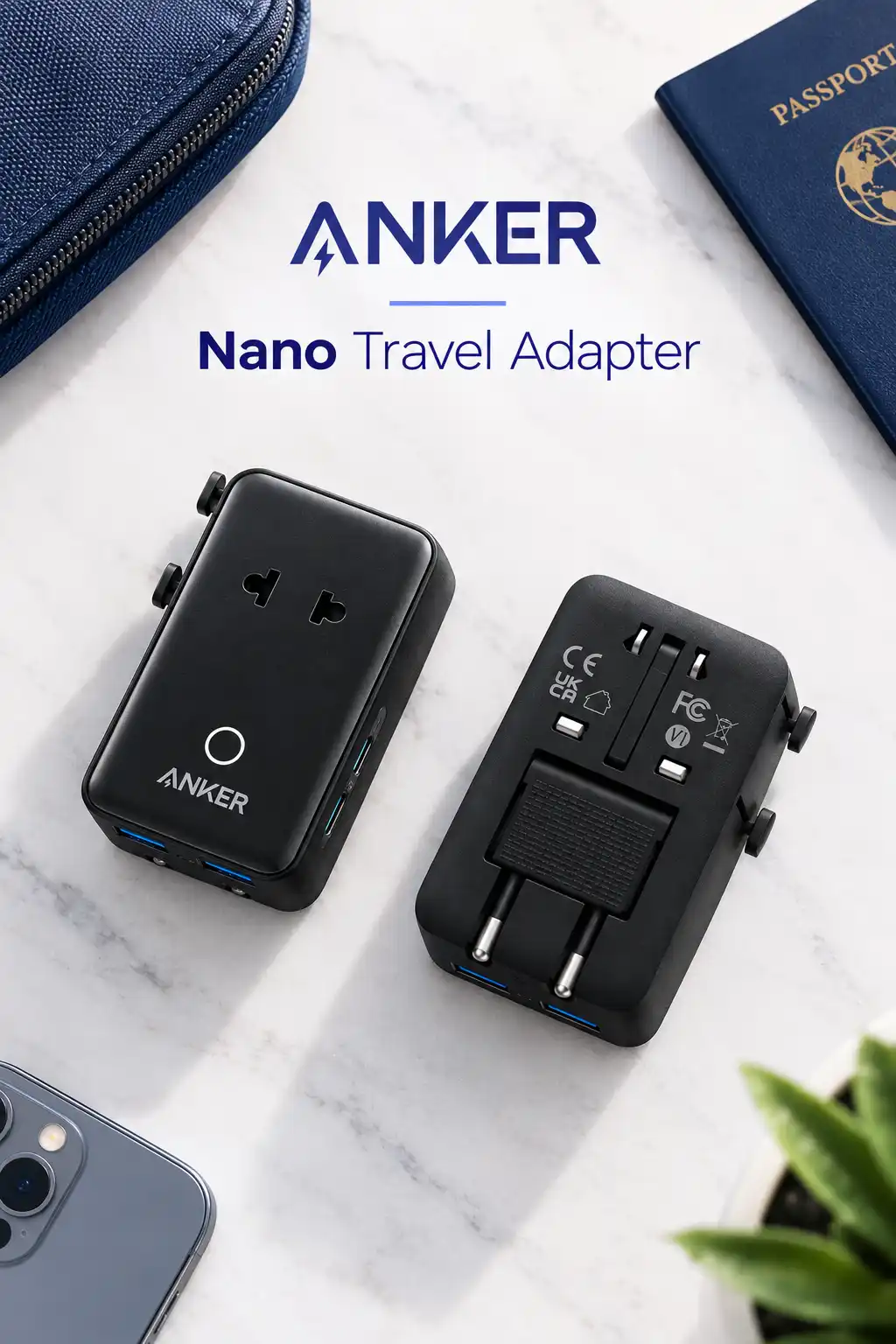
Verdict: The safest default pick if you only want to buy a travel adapter once.
The Anker Nano Travel Adapter packs five charging points — one AC outlet, two USB-A ports, and two USB-C ports — into a compact body that Anker says is roughly 43% smaller than comparable adapters. It covers 200+ countries with retractable pins for US, UK, Europe, and Australia-style outlets, and includes smart temperature control to prevent overheating during extended charging sessions.
At $25.99 direct from Anker (and frequently on sale closer to $20), it sits at the upper end of this list’s budget, but you’re paying for a brand with a much longer safety and reliability track record than most of the smaller adapter brands on this list.
The tradeoff is charging speed — at 20W total output, it’s not going to fast-charge a laptop, and it’s not the cheapest option here. But for phones, tablets, power banks, and everyday travel electronics, it’s plenty.
Pros:
Cons:
Best for: Travelers who want one reliable adapter and don’t want to research brand reputation themselves.
2. EPICKA TA-105: Best Ultra-Budget Basic
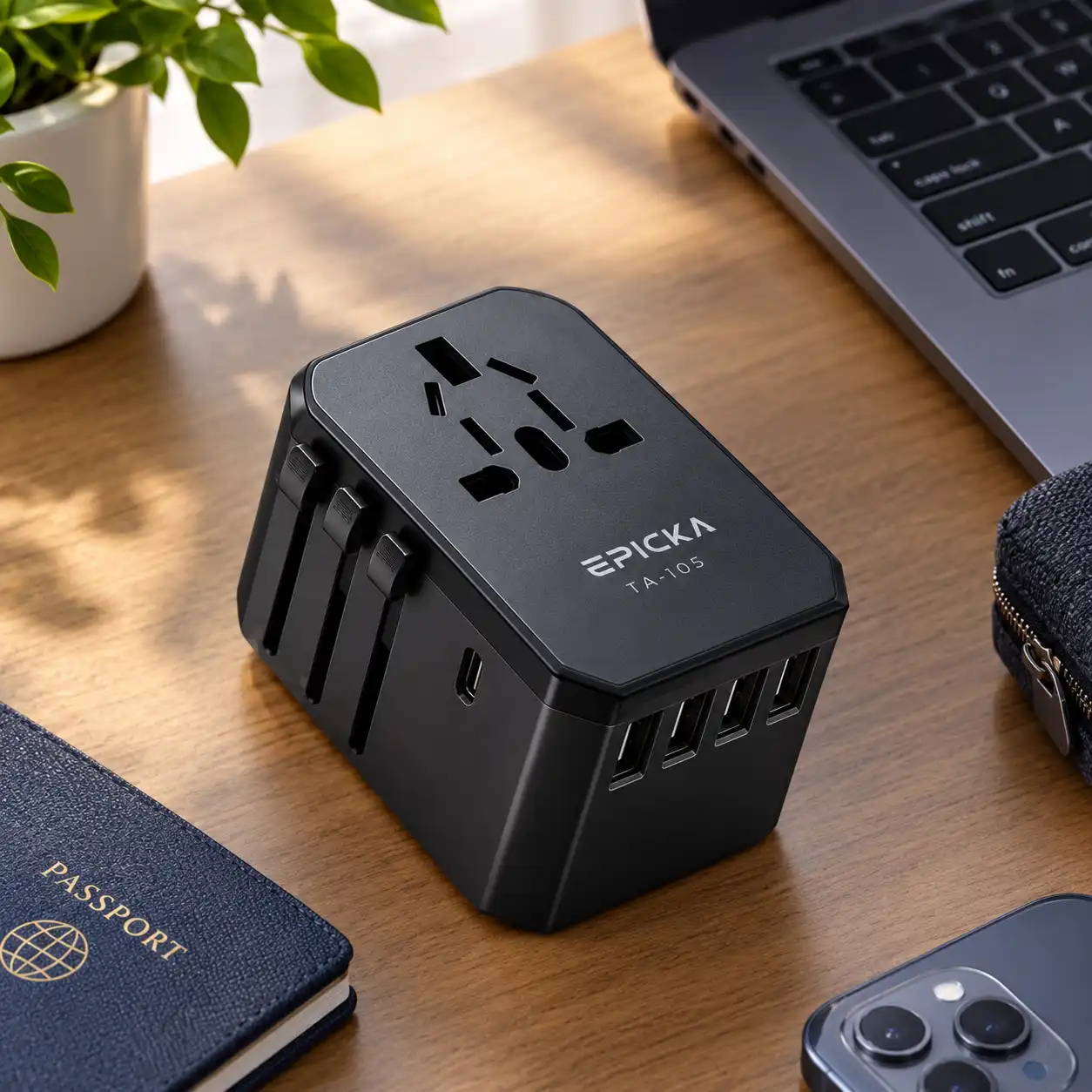
Verdict: The no-frills workhorse — four USB-A ports for the price of a nice dinner out.
The EPICKA TA-105 is a straightforward, non-GaN adapter with four USB-A ports and one USB-C port, delivering 28W combined. It comes with a carry bag, two spare fuses, and a manual, and covers 200+ countries with slide-out plugs for the major plug types.
At $20 direct from EPICKA, it’s one of the cheapest genuinely capable options on this list, and the brand says it has sold over a million units with a large base of 5-star reviews — a track record that matters for a category where cheap, unbranded options can be a gamble.
The tradeoff is charging speed and port mix — no GaN technology means it runs warmer and charges somewhat slower than the GaN-based picks on this list, and USB-A-heavy device lineups (most modern phones ship with USB-C cables) may find the single USB-C port limiting if multiple people are charging USB-C devices at once.
Pros:
Cons:
Best for: Occasional travelers who mostly charge phones and don’t need laptop-speed charging.
3. EPICKA TA-105S: Best GaN Fast Charging Under $30
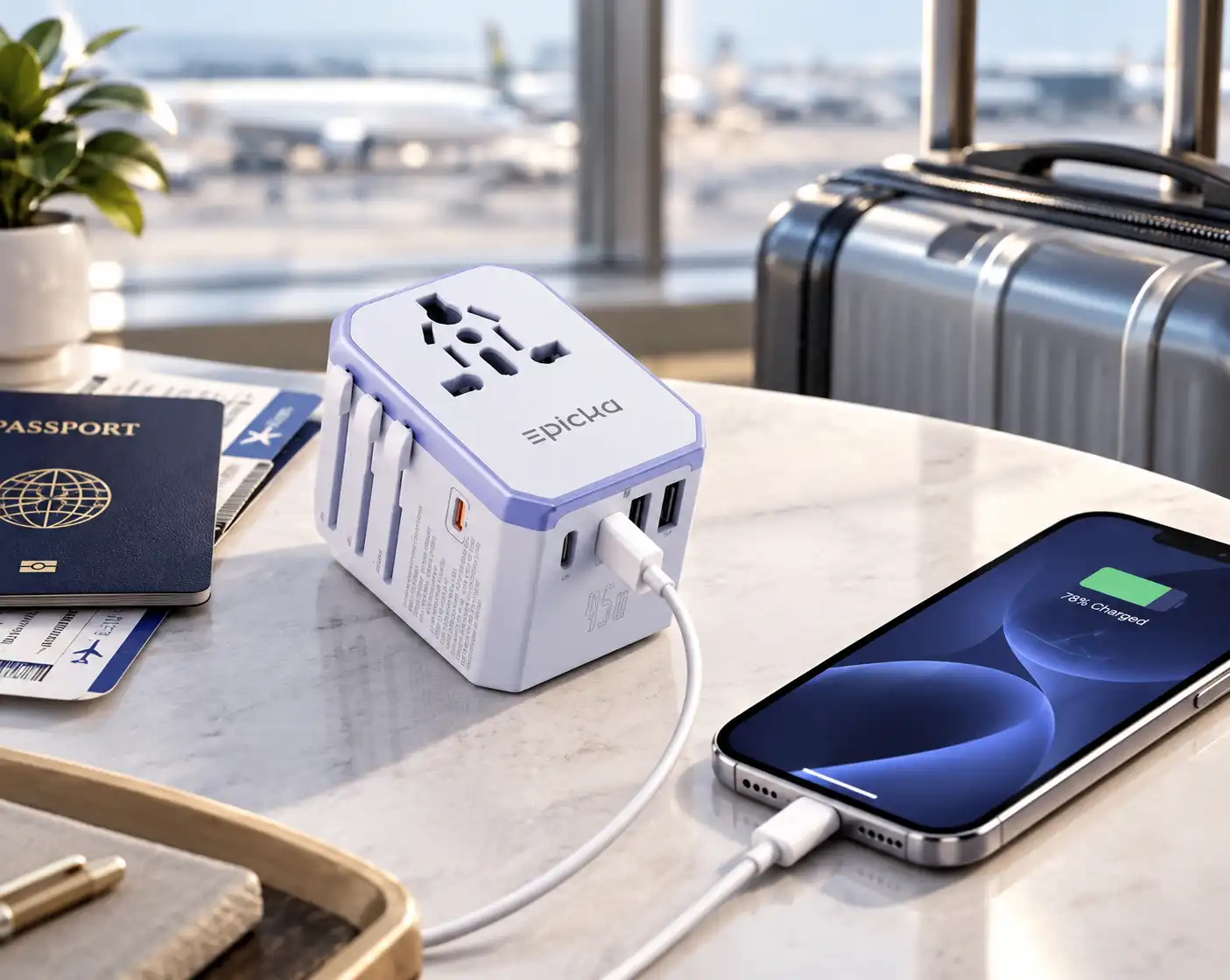
Verdict: The best charging speed-to-price ratio on this list.
The EPICKA TA-105S steps up to GaN (gallium nitride) technology, which runs cooler and more efficiently than standard chargers. It offers six total ports and 45W of combined output — genuinely fast for a sub-$25 adapter — and covers the same 200+ country range as its sibling, the TA-105.
At $20-$25 direct from EPICKA, it undercuts most GaN-equipped competitors by a wide margin; GaN adapters from bigger names often start well above $30.
The tradeoff, as with most multi-port adapters, is that the full 45W is shared across all active ports rather than delivered to each one independently — plugging in several devices at once will charge each one more slowly than if it were the only thing connected.
Pros:
Cons:
Best for: Travelers who want faster charging without paying GaN-premium prices.
4. Ceptics UP-11KU: Best Value, Fastest USB-C Charging
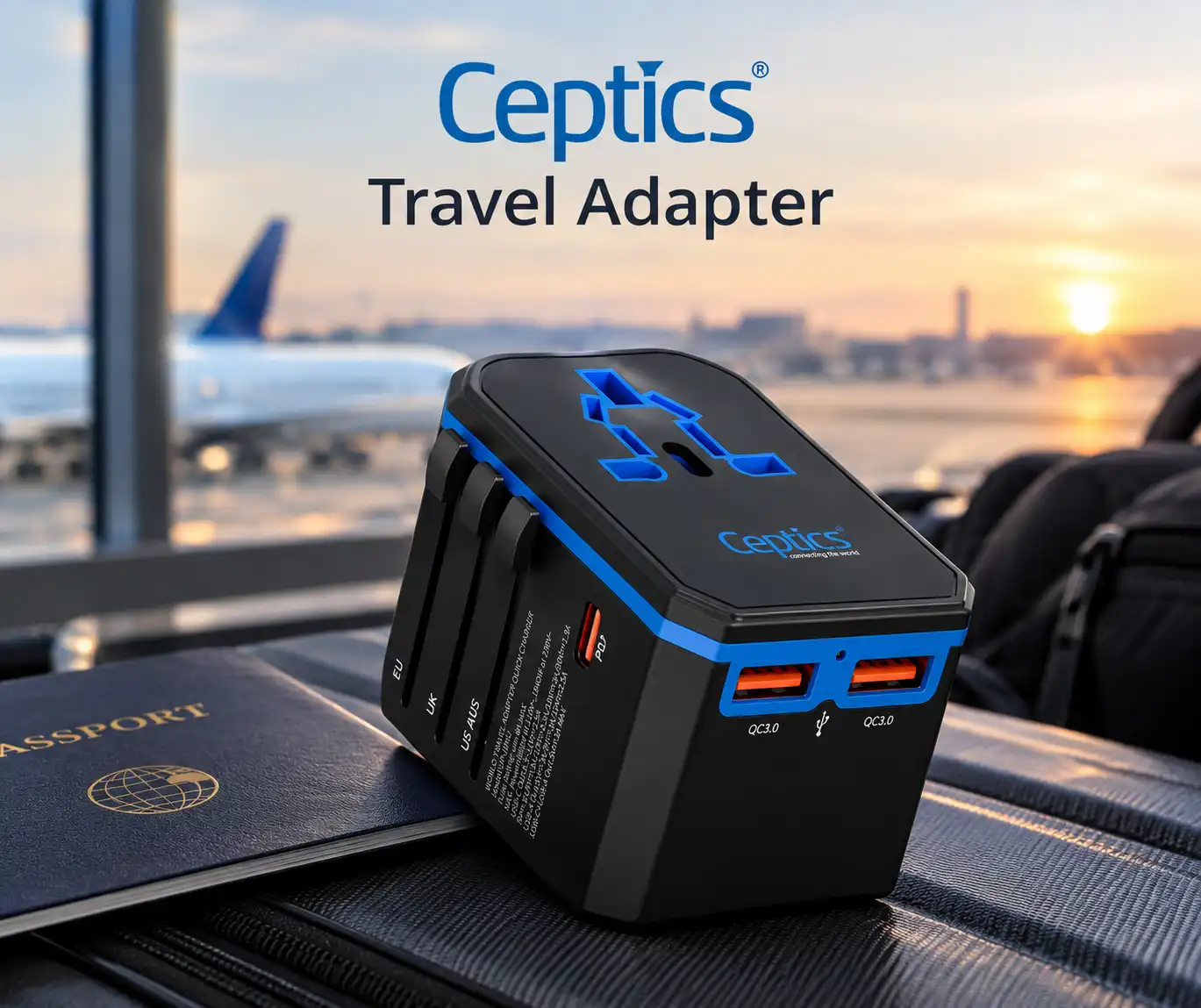
Verdict: The most capable charging setup on this list, when it’s at its current sale price.
The Ceptics UP-11KU pairs a sliding four-plug mechanism (covering Type A, C, G, and I) with three USB-A ports and two USB-C ports supporting Power Delivery and Quick Charge 3.0. It carries a strong 4.9-star rating on Ceptics’ own site across 56 reviews and covers 200+ countries.
Here’s the important caveat: the current price is $22.99, but the listed regular price is $34.99. That’s a meaningful gap — if you’re reading this after a sale has ended, this pick could price out of the “under $30” range entirely. Check the current price before buying, and consider the Ceptics UP-10KU below as a backup if the price has climbed.
The tradeoff otherwise is fairly minor — each USB port maxes out at 2.4A individually, so it won’t out-charge a dedicated laptop charger, but for phones, tablets, and cameras it’s plenty capable.
Pros:
Cons:
Best for: Travelers who want the fastest USB-C charging on this list and are comfortable checking the current price before buying.
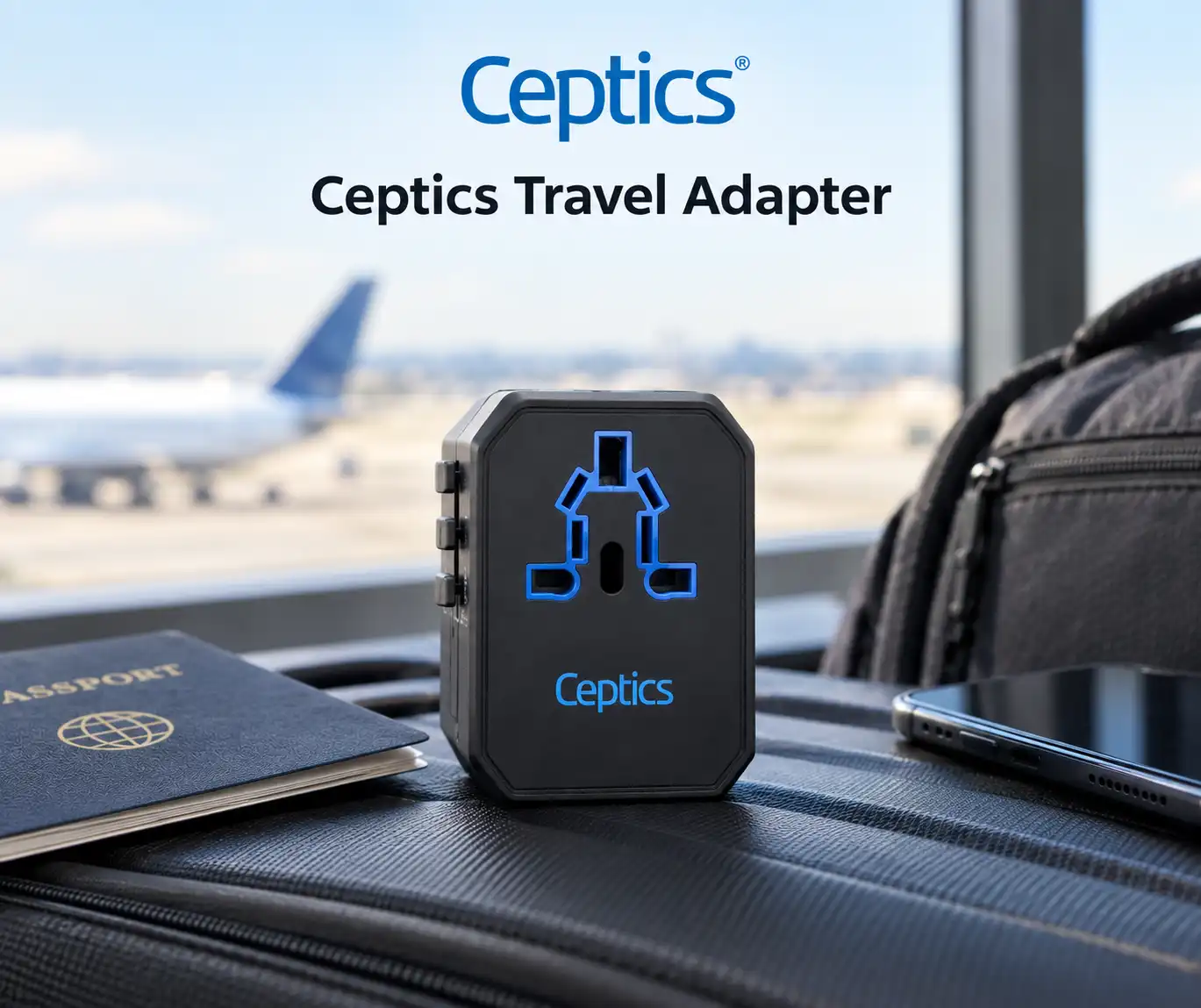
5. Ceptics UP-10KU: Best Compact USB-C
Verdict: A smaller, simpler alternative to the UP-11KU with a reliably low price.
The Ceptics UP-10KU trims down to one USB-C port (with PD and QC support) plus two USB-A ports, in a smaller and lighter body than its sibling. It’s a good fit for travelers who don’t need five simultaneous charging points and would rather have something compact.
At $20 direct from Ceptics, it’s reliably priced well under the $30 ceiling without depending on a limited-time sale, which makes it a safer bet than the UP-11KU if you’re buying close to your travel date and don’t want to gamble on pricing.
The tradeoff is capacity — with only three total ports, it’s not the pick for a family or group traveling together and sharing one adapter.
Pros:
Cons:
Best for: Solo travelers who want fast USB-C charging without paying for ports they won’t use.
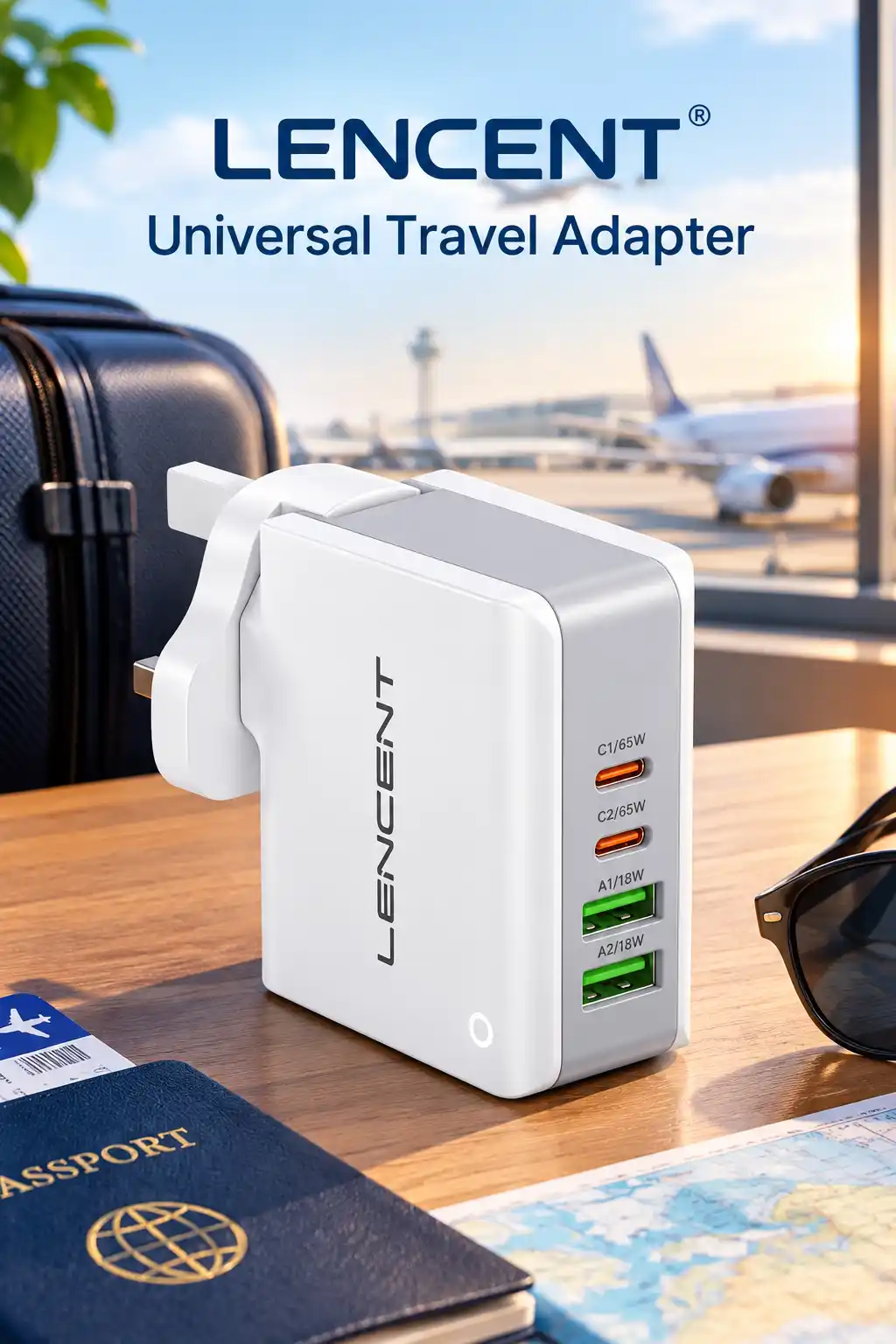
6. LENCENT Universal Travel Adapter: Best Rock-Bottom Budget
Verdict: The cheapest genuinely functional option on this list.
The LENCENT Universal Travel Adapter offers four USB charging ports in an all-in-one body designed for US, UK, EU, and Australian outlets. It’s positioned squarely as a budget pick, with listed prices starting from $22.
For the price, it covers the basics that most travelers actually need — enough ports to charge a couple of devices overnight, broad plug coverage, and a simple, no-frills design. If you’re preparing for a longer journey, our guide to travel accessories for long-haul flights covers more gear that can make hours in transit easier.
The tradeoff is charging speed and long-term durability data. Budget adapters at this price point generally don’t include GaN technology, and with a smaller brand than Anker or Ceptics, there’s less of an established track record to lean on.
Pros:
Cons:
Best for: Budget travelers who want the cheapest option that still covers the basics.
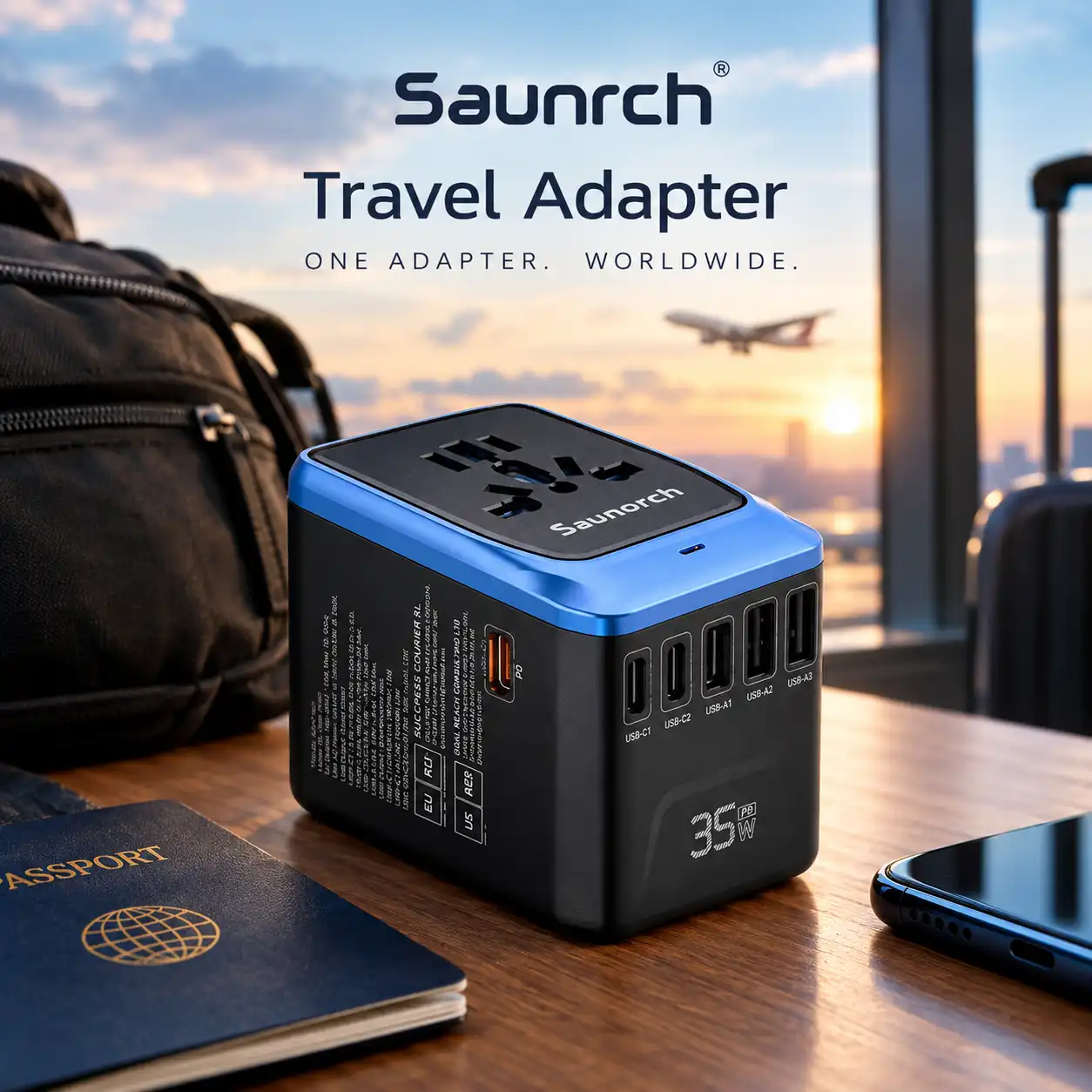
7. SAUNORCH Universal Travel Adapter: Best All-Around Budget
Verdict: A solid middle-ground budget pick between the ultra-cheap and brand-name options.
The SAUNORCH Universal Travel Adapter combines four USB ports with an AC outlet, covering 150+ countries in one compact unit. It sits in the same general price range as the EPICKA TA-105, positioning it as a genuine alternative rather than a downgrade.
At around $22, it’s a reasonable middle ground — not the cheapest option on this list, but not stretching toward the Anker/Ceptics price ceiling either.
The tradeoff is the same one facing most budget adapters here: it’s a less established brand than Anker or Ceptics, so there’s less independent, long-term reliability data to point to.
Pros:
Cons:
Best for: Travelers who want an AC outlet included alongside USB charging, without paying premium prices.
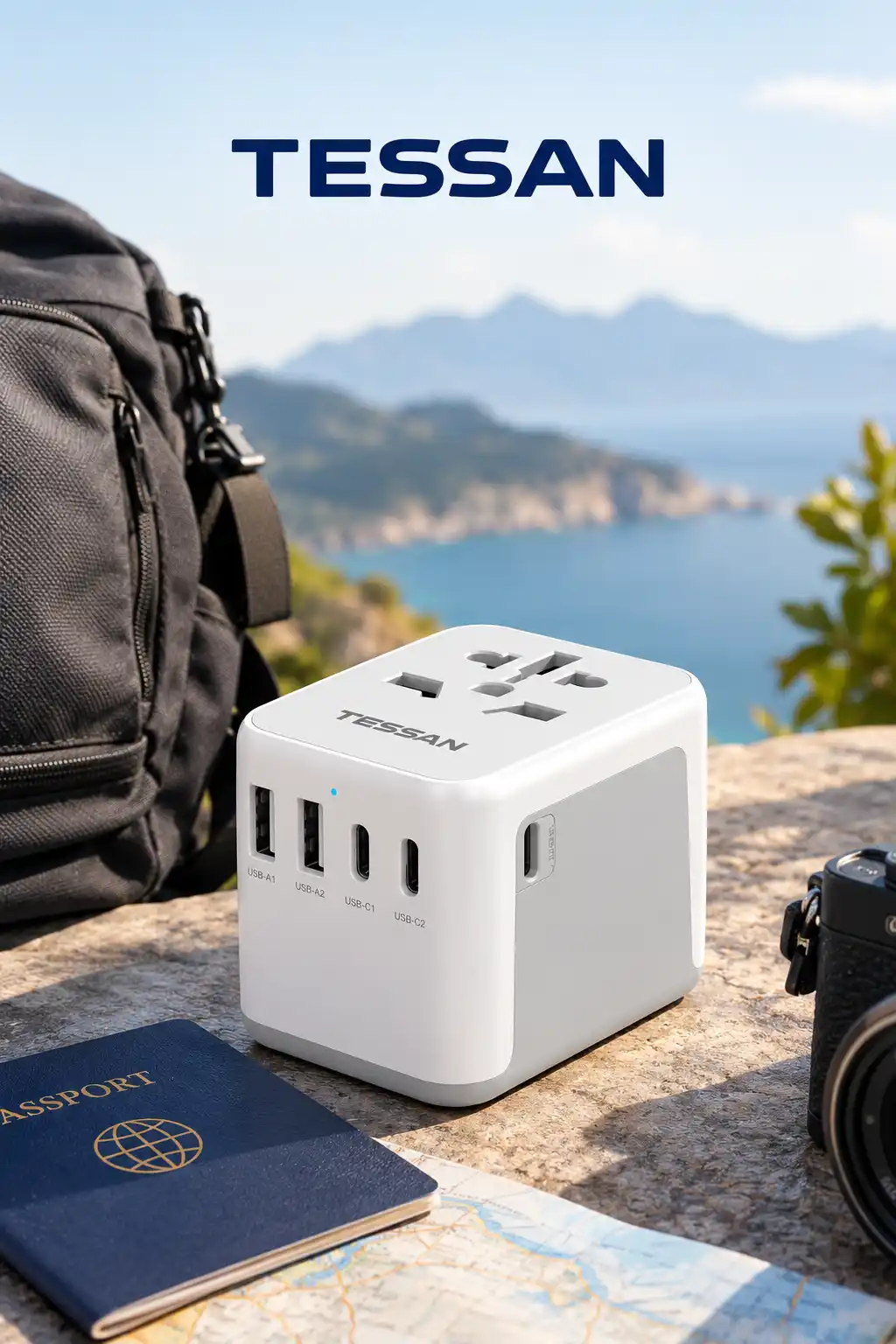
8. TESSAN Universal Travel Adapter: Best for Europe Trips
Verdict: A straightforward pick if your travel is Europe-focused.
This is TESSAN’s standard (non-GaN) universal adapter, combining USB-C PD charging with an AC pass-through outlet, and covering 150+ countries including the full range of European plug types. Note: this is a different, cheaper model than TESSAN’s GaN 65W WTA07, which runs closer to $43 — if you see that model at a higher price, that’s a different product with laptop-charging ambitions this pick doesn’t have.
At around $20-$25, it lands near the top of this list’s budget range but still comfortably under $30, with a straightforward feature set aimed at the most common travel need: charging phones and small electronics across Europe’s outlet types.
The tradeoff is the same GaN-versus-standard tradeoff seen elsewhere on this list — it charges reliably but won’t match the speed of the GaN-equipped picks.
Pros:
Cons:
Best for: Travelers whose trips are primarily Europe-focused and want a straightforward, reliable adapter.
9. NEWVANGA Universal Travel Adapter: Best Budget GaN USB-C
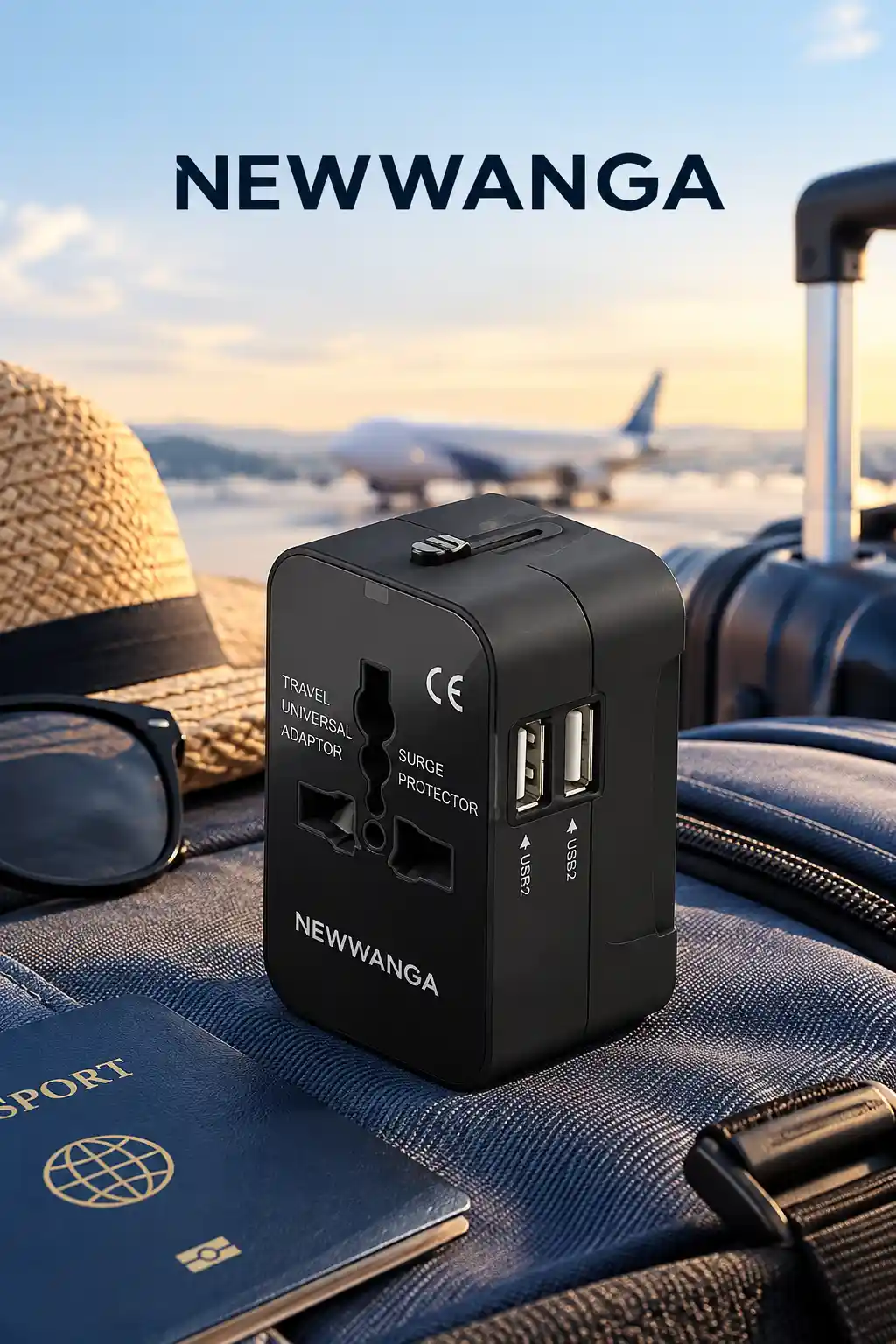
Verdict: The cheapest GaN-equipped adapter on this list.
The NEWVANGA Universal Travel Adapter pairs GaN PD 3.0 charging with a USB-C and USB-A port combination, covering US, EU, UK, and Australian outlets. At around $14, it undercuts every other GaN option here by a wide margin.
That combination — GaN technology at a rock-bottom price — is the clear selling point. For travelers who want faster, cooler charging without paying the EPICKA TA-105S’s already-low $24.99, this is the cheapest way to get there.
The tradeoff is port count — with fewer total ports than the multi-device options on this list, it’s better suited to solo travelers than groups.
Pros:
Cons:
Best for: Solo travelers who want GaN charging speed at the lowest possible price.
What to Look for in a Universal Travel Adapter
Plug Type Coverage
Most “universal” adapters cover four core plug types — Type A (North America, Japan), Type C (most of Europe), Type G (UK, Ireland, Hong Kong), and Type I (Australia, New Zealand, China, Argentina) — which together handle the vast majority of popular travel destinations. If your trip includes South Africa, Israel, or a handful of other outlier countries, double-check the specific plug types included, since not every “universal” adapter covers every regional variant.
Adapter vs. Voltage Converter — Read This Before You Buy
This is the most important thing to understand before buying anything on this list, and it’s also the most commonly confused. A travel adapter changes plug shape only — it does not change voltage. A voltage converter is a separate device that actually steps electricity up or down between, say, 120V (North America) and 230V (most of Europe and Asia).
Here’s why this matters: most modern electronics — phone chargers, laptop chargers, camera chargers — are dual voltage, meaning they accept 100–240V automatically. Check the fine print on your charger’s label; if it says something like “INPUT: 100-240V,” a plug adapter alone is all you need. If a device is single-voltage only (most commonly older hair dryers, curling irons, or other high-wattage appliances), plugging it into a different voltage region with just an adapter — no converter — can damage the device or create a safety hazard. Every adapter on this list is a plug adapter, not a voltage converter, which is the right tool for the vast majority of modern travel electronics, but not for single-voltage appliances.
USB-C Power Delivery and Charging Speed
If you’re charging a phone, tablet, or noise-cancelling headphones for flights, look for USB-C with Power Delivery (PD) support, which charges significantly faster than standard USB-A. GaN (gallium nitride) technology, found on the EPICKA TA-105S and NEWVANGA picks here, runs cooler and more efficiently than older charging tech, which matters if you’re charging multiple devices overnight in a small hotel room.
Number of Ports
Think about how many devices you’re actually charging at once. A solo traveler with just a phone doesn’t need a six-port adapter — a compact two- or three-port option like the Ceptics UP-10KU is lighter and simpler. If you’re trying to keep your entire setup compact, our guide on how to pack a backpack for travel can help you organize chargers, electronics, clothing, and other essentials efficiently.
A family or group sharing one adapter benefits more from a higher port count like the Ceptics UP-11KU or EPICKA TA-105S.
Safety Certifications and Fuses
Look for a built-in fuse and, ideally, surge protection — these protect your devices if there’s a power spike, which is more common in some countries’ electrical grids than others. Spare fuses, like the ones included with the EPICKA TA-105, are a small but genuinely useful inclusion if the original ever blows.
Conclusion
For most travelers, the Anker Nano Travel Adapter is the safest place to start under $30 — it’s compact, backed by a brand with real staying power, and covers enough countries and devices for the vast majority of trips. If you prefer keeping your travel gear together in one bag, we’ve also reviewed the best carry-on backpacks for international flights
If charging speed matters more than brand recognition, the EPICKA TA-105S offers genuine GaN fast-charging at nearly $10 less than the Anker pick. And if budget is the only concern, the LENCENT and NEWVANGA options prove you don’t need to spend much to get a functional universal adapter.
Whichever you choose, remember the most important distinction on this whole list: none of these convert voltage, only plug shape — check our buying guide above before assuming any adapter will work with every device you pack.
Before your next trip, check out our [minimalist packing list] to make sure the rest of your travel tech setup is dialed in too.
Frequently Asked Questions
Does a universal travel adapter convert voltage?
No. A universal travel adapter changes the shape of your plug so it physically fits a foreign outlet — it does not change the voltage of the electricity coming out of that outlet. If your device isn’t dual voltage (check the label for “INPUT: 100-240V”), you need a separate voltage converter, not just an adapter.
Do I need a voltage converter for Europe?
Usually not, if you’re only traveling with modern electronics. Most phone, laptop, tablet, and camera chargers are already dual voltage and will work fine in Europe’s 230V outlets with just a plug adapter. You’d only need a voltage converter for single-voltage appliances, most commonly older hair styling tools that aren’t rated for 220–240V.
What is the difference between a travel adapter and a converter?
A travel adapter changes plug shape only. A voltage converter changes the actual electrical voltage. They solve two completely different problems, and despite how they’re sometimes marketed together, there’s no single device that’s both a compact travel adapter and a genuine voltage converter for high-wattage appliances.
Can I use a universal travel adapter for a laptop?
Yes, as long as your laptop charger is dual voltage — which the vast majority are (check the “INPUT” label to confirm). The adapter just needs to physically fit your laptop charger’s plug; it doesn’t need to handle laptop-specific wattage, since the voltage conversion happens inside your laptop’s own charging brick, not the adapter.
What plug type do I need for Europe?
Most of continental Europe uses Type C or Type E/F outlets (two round pins), while the UK and Ireland use Type G (three rectangular pins) instead. All nine adapters on this list include coverage for the major European plug types, but if your trip is Europe-specific, the TESSAN pick above is built with that use case in mind.
Are cheap travel adapters safe?
Generally yes, as long as the adapter includes basic safety features like an internal fuse — all nine picks on this list do. The bigger safety risk isn’t the adapter’s price, it’s using a plug adapter alone (with no voltage converter) on a single-voltage appliance that needs one. Price matters more for charging speed and durability than for basic electrical safety, as long as you’re buying from a real brand rather than an unbranded, unreviewed listing.