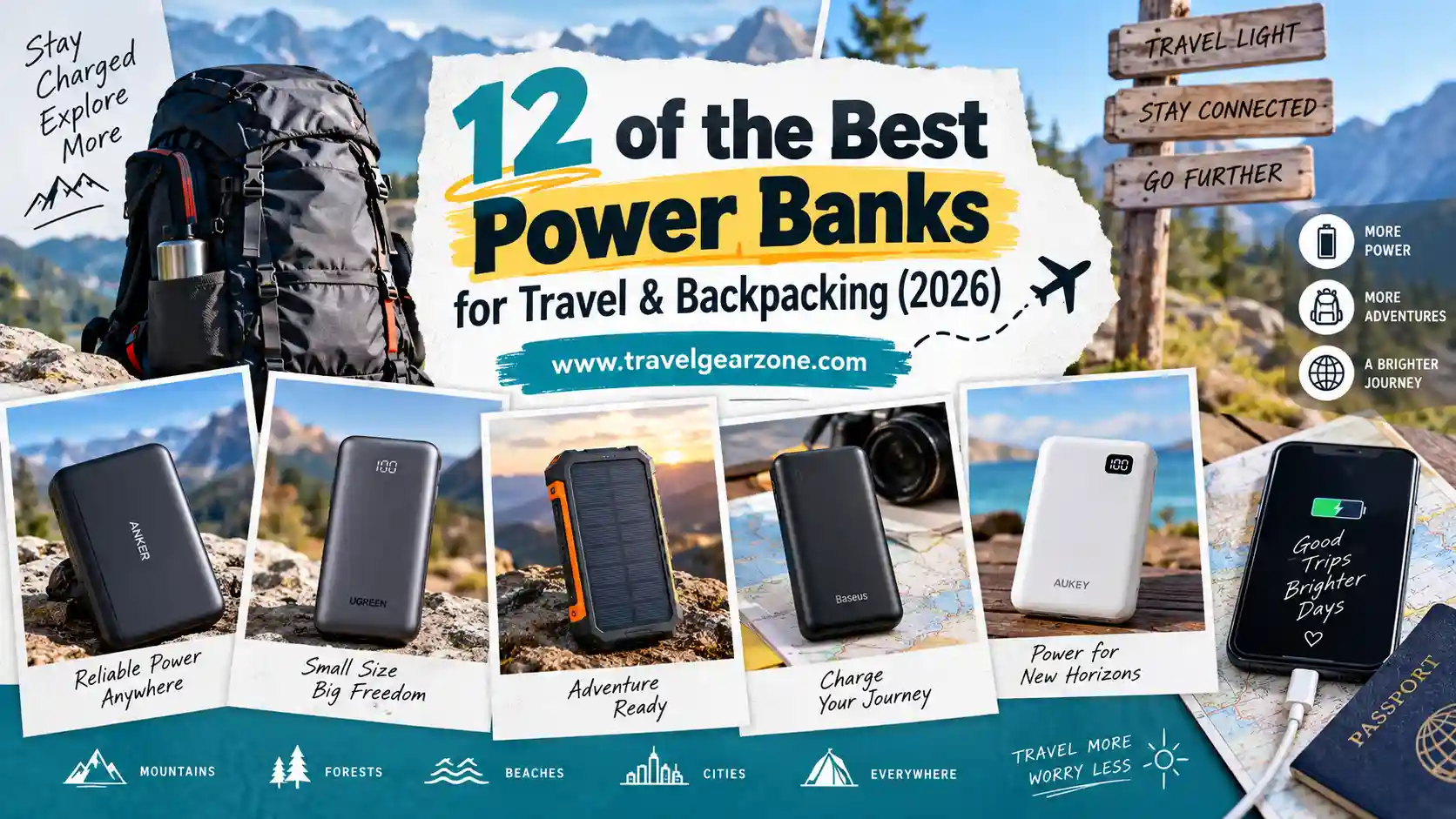
12 of the Best Power Banks for Travel & Backpacking (2026)

TravelGearZone is supported by our readers. Buying through our links helps us earn an affiliate commission. Learn more
A dead phone at 30% battery in an unfamiliar city is a genuinely bad feeling — no maps, no translation app, no way to call your hotel. A good power bank for travel fixes that problem before it starts, but 2026 added a wrinkle most packing lists haven’t caught up with yet: the rules for flying with one changed.
The best power bank for travel balances capacity against weight, charges fast enough to matter, and stays comfortably under the airline limits that determine whether it flies with you at all. Some travelers need a slim, light everyday-carry option. Others need enough capacity to run a laptop through a long travel day, or a rugged pick that can survive a backpacking trip.
We evaluated twelve power banks across capacity, charging speed, weight, and airline compliance. The lineup runs from ultralight 10,000mAh picks under 200 grams to high-capacity 25,000mAh options that still clear airline limits without special approval.
For most travelers, the Anker Nano 10K is the strongest overall pick — it balances real charging speed, a manageable size, and a brand with a long track record, all while sitting safely under airline watt-hour limits.
Quick Comparison: Best Power Banks for Travel
| Product | Best For | Capacity / Wh | Max Output | Price |
|---|---|---|---|---|
| Anker Nano 10K | Best overall | 10,000mAh / ~37Wh | 30W | ~$49 |
| Anker 313 | Best budget | 10,000mAh / ~37Wh | 15W | ~$20–25 |
| INIU P50 | Best ultralight everyday carry | 10,000mAh / 36Wh | 45W | ~$35–45 |
| Nitecore NB10000 | Best lightest-in-class | 10,000mAh / ~38.5Wh | 20–22.5W | ~$40–65 |
| Anker PowerCore Slim 10K | Best simple, no-frills | 10,000mAh | 15W | ~$25–30 |
| Anker MagGo 10K | Best MagSafe / wireless | 10,000mAh / 38.5Wh | 27W wired, 15W wireless | ~$65–80 |
| INIU P63 | Best high-capacity, still compliant | 25,000mAh / 90Wh | 100W | ~$60–70 |
| UGREEN Nexode 145W | Best for laptop charging | 25,000mAh / 90Wh | 145W | ~$70 |
| CUKTECH 40W | Best built-in cable value | 20,000mAh | Check current listing | ~$20-$30 |
| Charmast Built-in Cables | Best for group/family travel | Multi-cable design | Check current listing | ~$40 |
| ELECOM Nestout 15000 | Best rugged/weatherproof for backpacking | 15,000mAh / ~55.5Wh | 32W | ~$60-$70 |
| Anker Prime 26K | Best premium splurge | 26,250mAh / ~99.75Wh | 300W | ~$180–230 |
Prices shift often, and a couple of specs above (CUKTECH, Charmast) need a live check before you buy — see the note in their reviews below. The Anker Prime 26K’s watt-hour rating sits right at the edge of the airline limit explained further down; confirm the exact figure printed on the unit before flying with it.
Read Also: 10 Best Sleeping Bags for Camping Cold Weather
How We Selected These Power Banks
We evaluated these power banks around the tradeoff that actually matters for travel: capacity versus weight. A higher-capacity power bank means fewer recharges, but it also means more to carry — so we looked for options that made sense across a range of travel styles, from ultralight everyday carry to genuine backpacking durability.
Charging speed mattered too, since a slow power bank charging a phone overnight is a minor inconvenience, but a slow one trying to keep a laptop alive during a work trip is a real problem. And we weighed airline compliance carefully — every pick on this list falls at or under the current watt-hour limits explained in the buying guide below, which matters more in 2026 than it has in past years.
We did not treat the highest capacity as automatically the best choice. A compact 10,000mAh pick is the right call for most trips, while the higher-capacity options here earn their extra weight only if you’re actually charging a laptop or multiple devices.
1. Anker Nano 10K: Best Overall
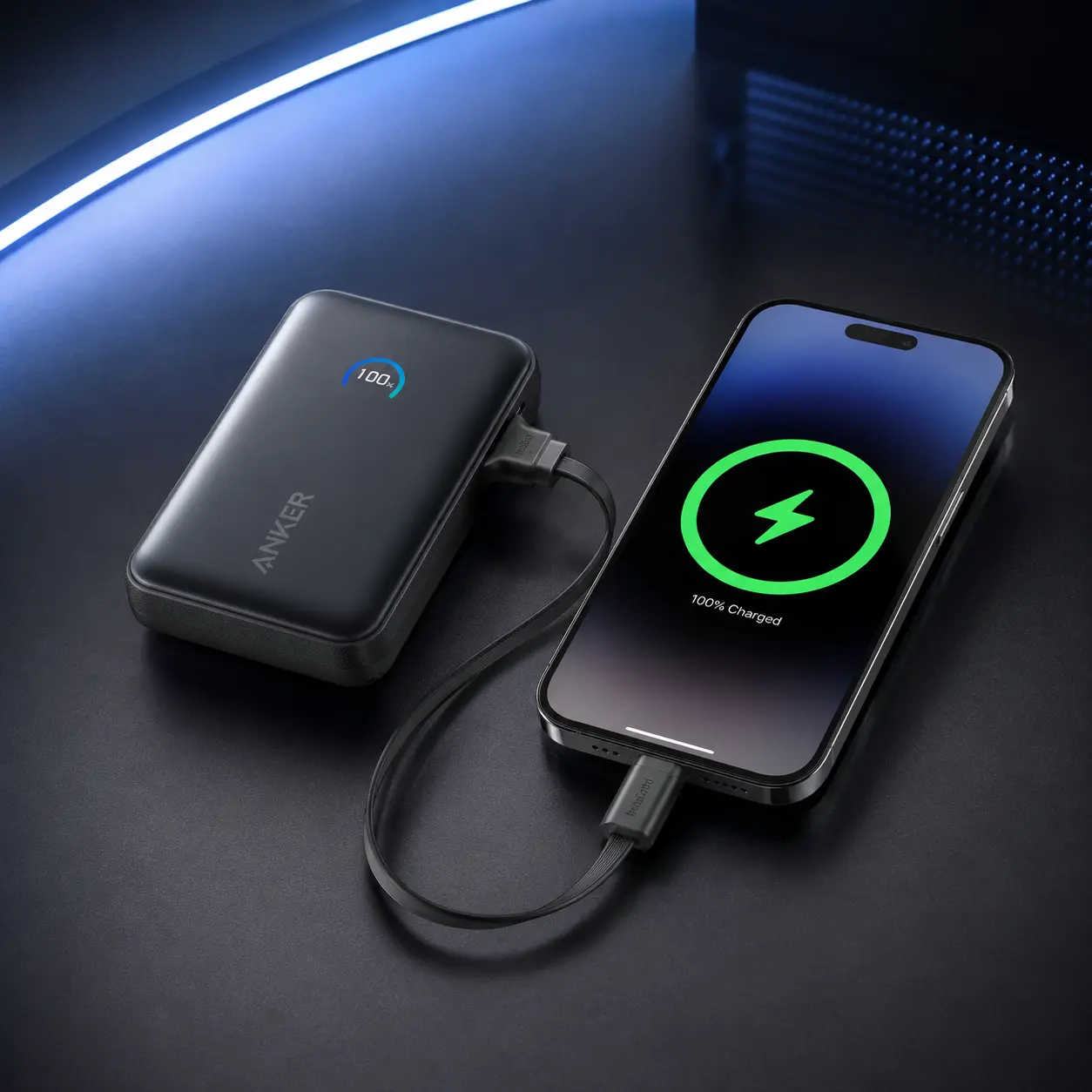
Verdict: The safest default pick for most travelers.
The Anker Nano 10K delivers 30W of output from a 10,000mAh cell, weighing around 215 grams — light enough for daily carry without feeling like a compromise. At roughly 37Wh, it sits well under airline limits with no special approval needed.
The tradeoff is that 30W, while solid, won’t match the laptop-charging speed of the higher-capacity picks further down this list. For phones, tablets, and everyday travel electronics, though, it’s plenty.
Pros:
Cons:
Best for: Travelers who want one reliable everyday power bank without researching every spec.
2. Anker 313: Best Budget
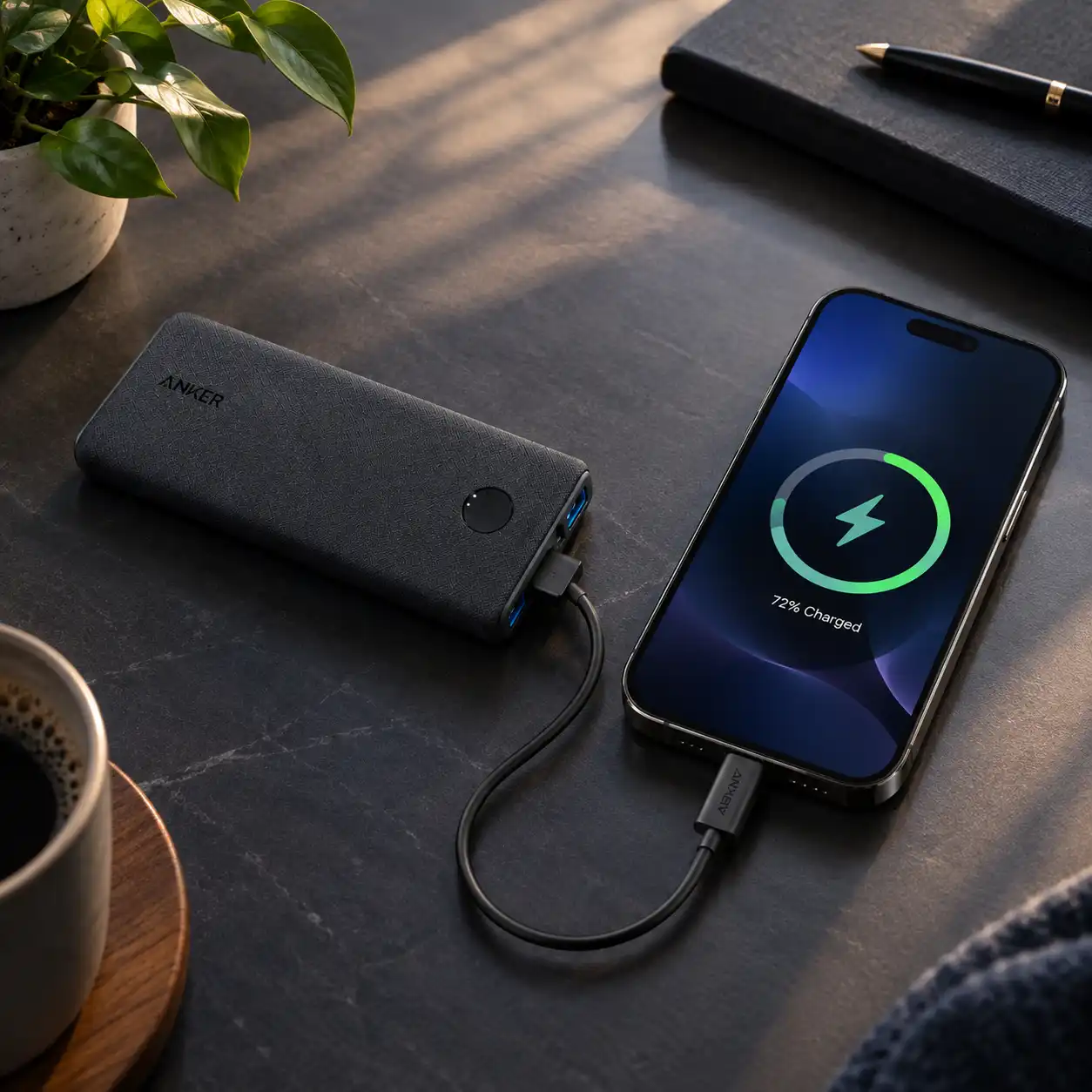
Verdict: The cheapest sensible pick, not just the cheapest available.
The Anker 313 offers the same 10,000mAh capacity as several pricier options here, at a more modest 15W output. It weighs 213 grams — nearly identical to the Nano 10K — and sits at roughly 37Wh, safely under airline limits.
The tradeoff is charging speed. 15W will fully charge most phones overnight without issue, but it’s noticeably slower than the 30–45W picks above it if you need a fast top-up before a flight.
Pros:
Cons:
Best for: Budget-conscious travelers who don’t need fast charging, just reliable charging.
3. INIU P50: Best Ultralight Everyday Carry
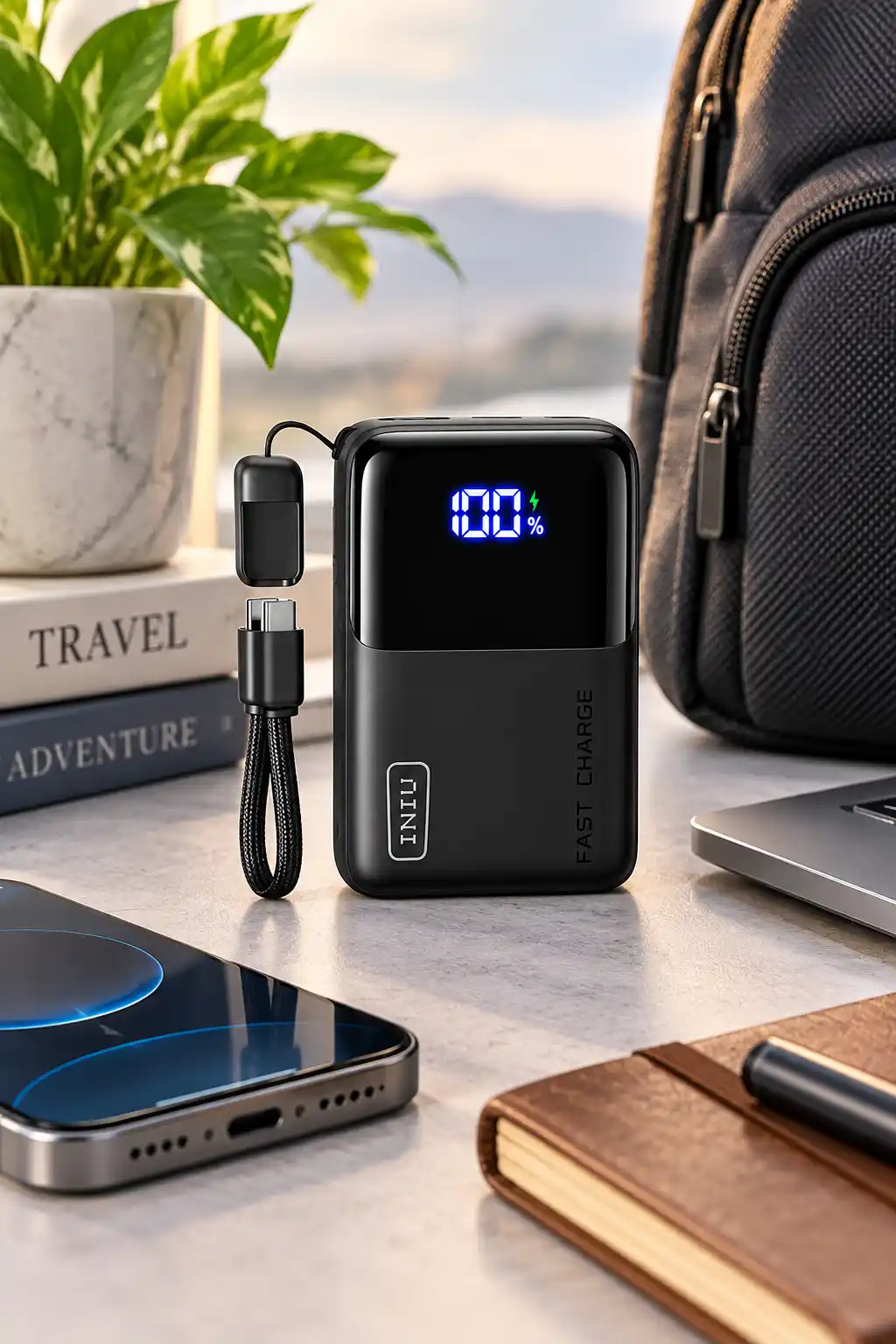
Verdict: Genuinely fast charging in one of the lightest 10,000mAh bodies available.
The INIU P50 packs 45W of output — faster than the Anker Nano 10K — into a 10,000mAh cell weighing only around 160 grams. At 36Wh, it clears airline limits with room to spare.
The tradeoff is brand recognition. INIU doesn’t have quite the same decades-long track record as Anker, though it’s built a solid reputation specifically in the travel power bank space.
Pros:
Cons:
Best for: Travelers who want the fastest charging in the lightest possible package.
4. Nitecore NB10000: Best Lightest-in-Class

Verdict: If shaving grams matters more than anything else, this is the pick.
The Nitecore NB10000 trims down to around 150 grams — the lightest 10,000mAh option on this list — while still delivering a respectable 20–22.5W of output and roughly 38.5Wh of capacity, comfortably under airline limits.
The tradeoff is price and charging speed. Nitecore’s ultralight engineering carries a premium over Anker or INIU, and the output tops out lower than the faster-charging picks above.
Pros:
Cons:
Best for: Ultralight backpackers who count every gram in their pack.
5. Anker PowerCore Slim 10K: Best Simple, No-Frills Slim Pick
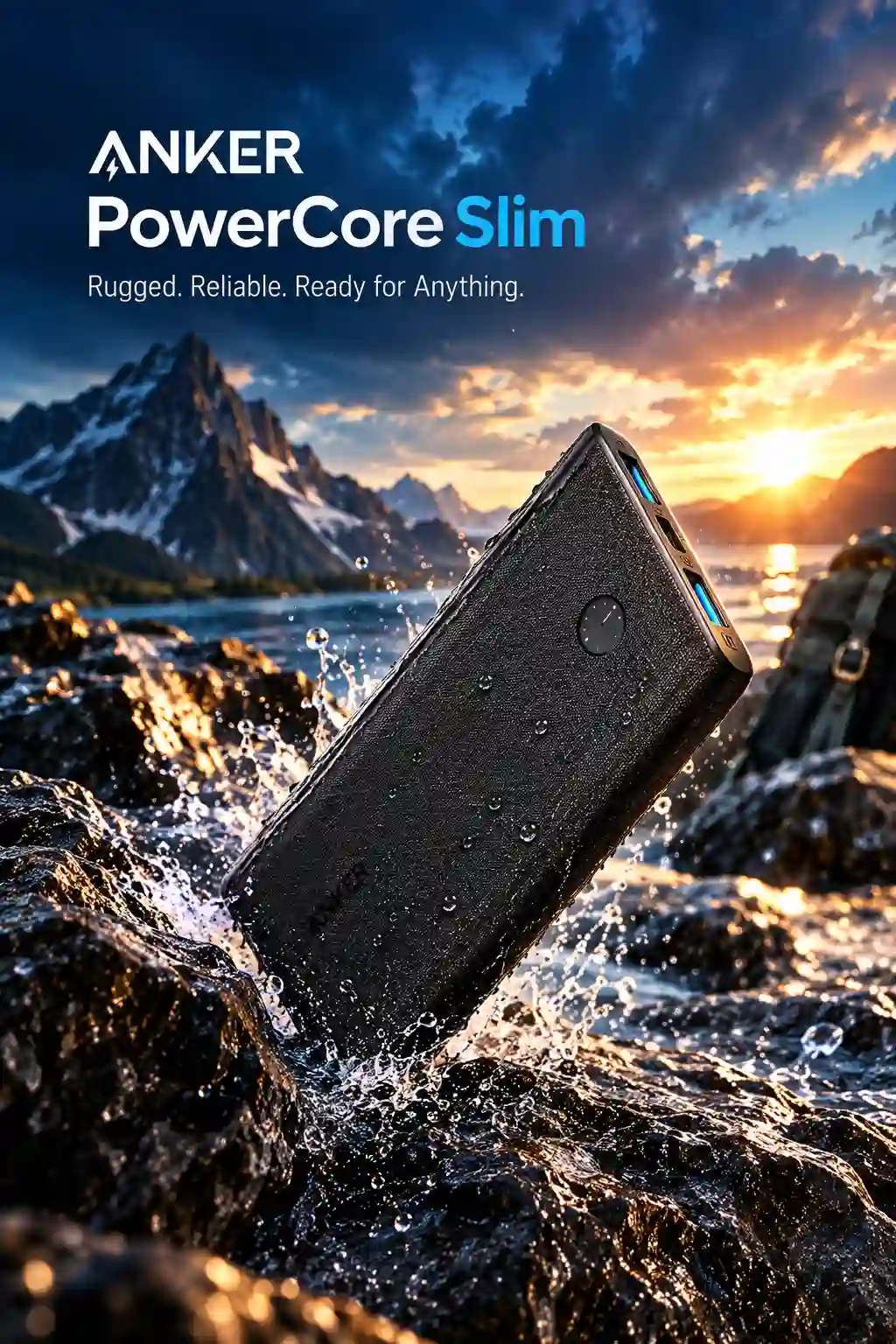
Verdict: A straightforward, slim option for travelers who just want something that works.
The Anker PowerCore Slim 10K keeps things simple — a 10,000mAh cell in a slim, 240-gram body with 15W output. It doesn’t chase fast-charging specs or added features; it just charges your phone reliably.
The tradeoff is the same as with the Anker 313: 15W is on the slower end compared to the GaN-equipped and higher-output picks on this list.
Pros:
Cons:
Best for: Travelers who want a no-fuss slim power bank without extra bells and whistles.
6. Anker MagGo 10K: Best MagSafe / Wireless
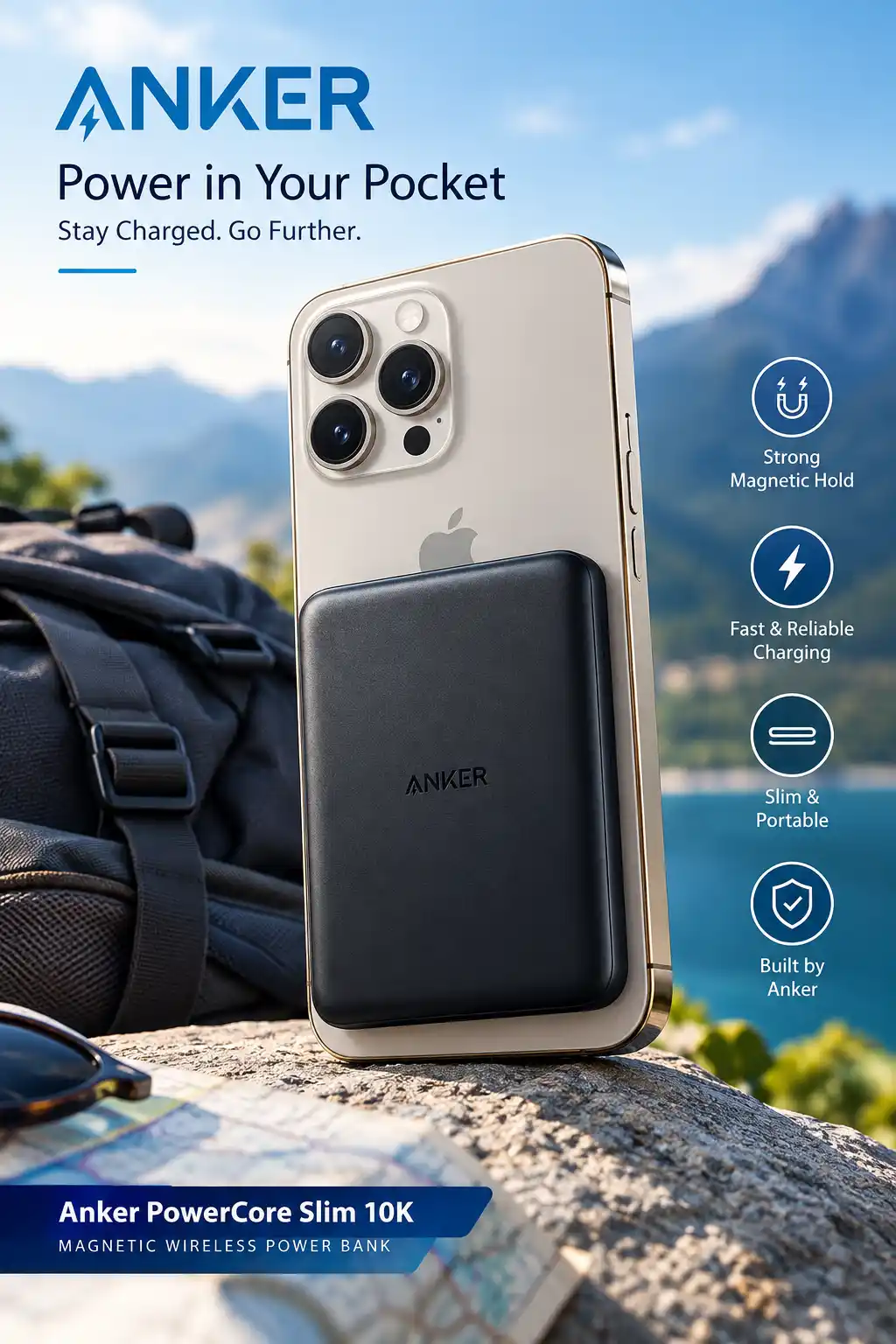
Verdict: The pick for iPhone users who want magnetic, cable-free charging on the go.
The Anker MagGo 10K supports Qi2 wireless charging alongside a wired USB-C port, delivering 15W wireless or 27W wired. At 10,000mAh and roughly 38.5Wh, it’s well within airline limits, and its magnetic design lets it snap directly to the back of a compatible iPhone.
The tradeoff is efficiency — wireless charging is inherently less efficient than a direct cable connection, so you’ll get somewhat fewer full phone charges out of the same capacity compared to a wired-only pick.
Pros:
Cons:
Best for: iPhone users who prioritize magnetic convenience over squeezing out every bit of capacity.
Read Also: Best Carry-On Backpack for International Flights (Frequent Flyers’ Picks)
7. INIU P63: Best High-Capacity, Still Compliant
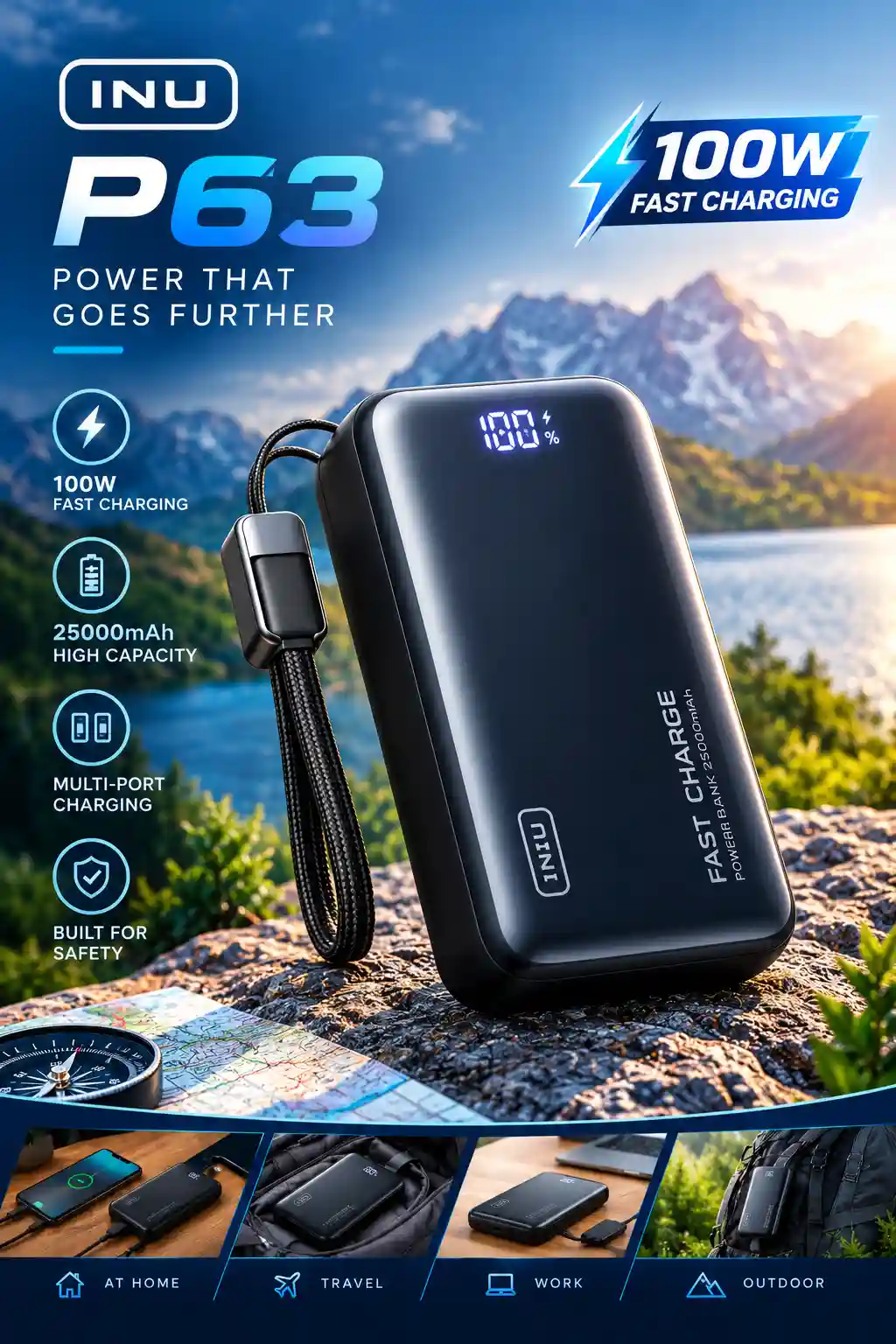
Verdict: The most capacity you can carry without needing airline approval.
The INIU P63 pushes to 25,000mAh at roughly 90Wh — close to the 100Wh threshold where airline approval becomes necessary, but still comfortably under it. With 100W output, it can meaningfully charge a laptop, not just top up a phone.
The tradeoff is weight — at around 400 grams, it’s noticeably heavier than the 10,000mAh picks on this list, though still lighter than dedicated laptop power banks.
Pros:
Cons:
Best for: Travelers who want serious capacity for multi-day trips without airline approval hassles.
8. UGREEN Nexode 145W: Best for Laptop Charging
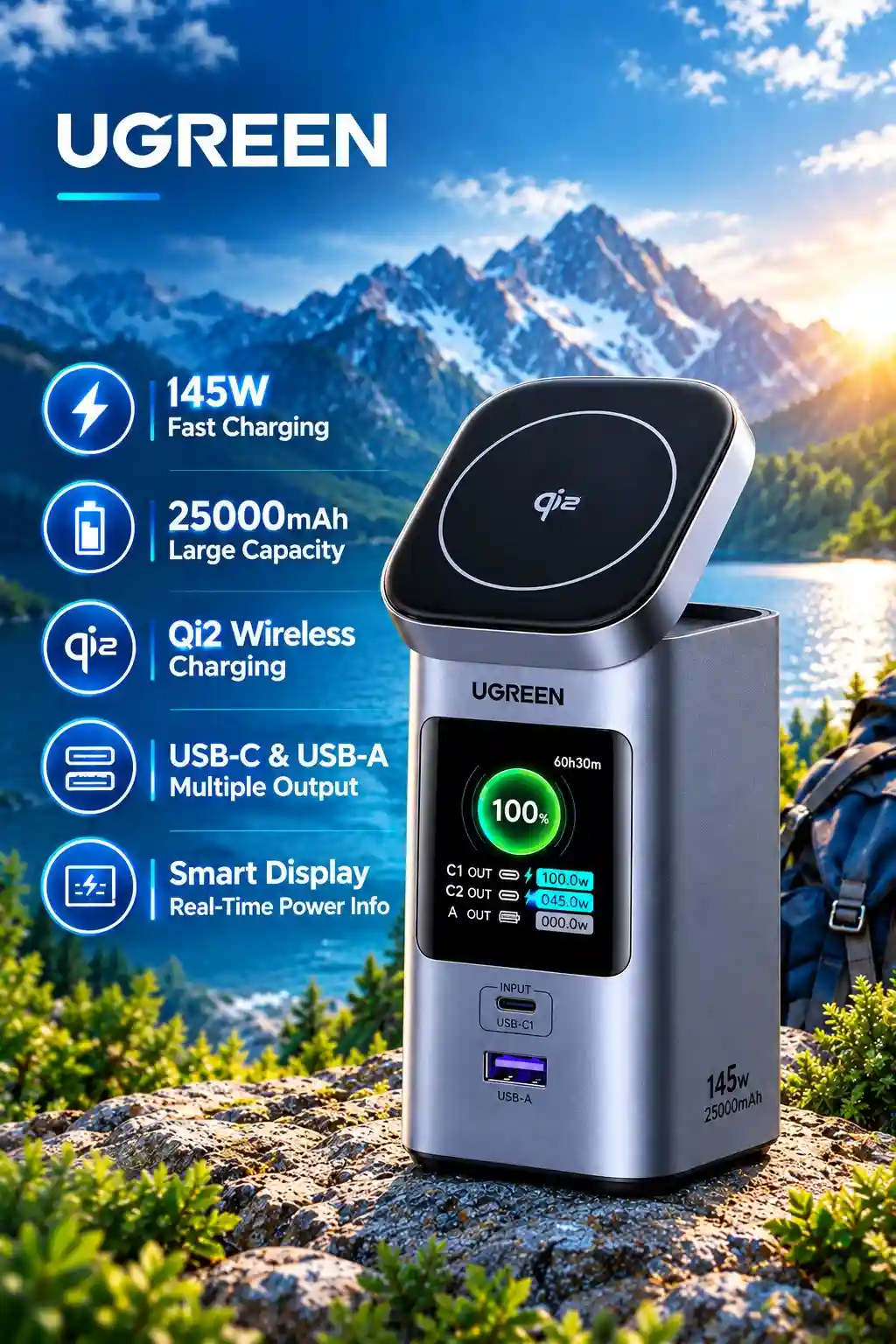
Verdict: The pick if you specifically need to charge a laptop away from a wall outlet.
The UGREEN Nexode 145W matches the INIU P63’s 25,000mAh and roughly 90Wh capacity, but pushes output up to 145W and enough to genuinely fast-charge many laptops, not just phones and tablets.
The tradeoff is weight, at roughly 513 grams — this is a pick you carry because you specifically need laptop charging power, not a casual everyday-carry choice.
Pros:
Cons:
Best for: Travelers who need to charge a laptop on the go, not just phones and tablets.
9. CUKTECH 40W: Best Built-In Cable Value
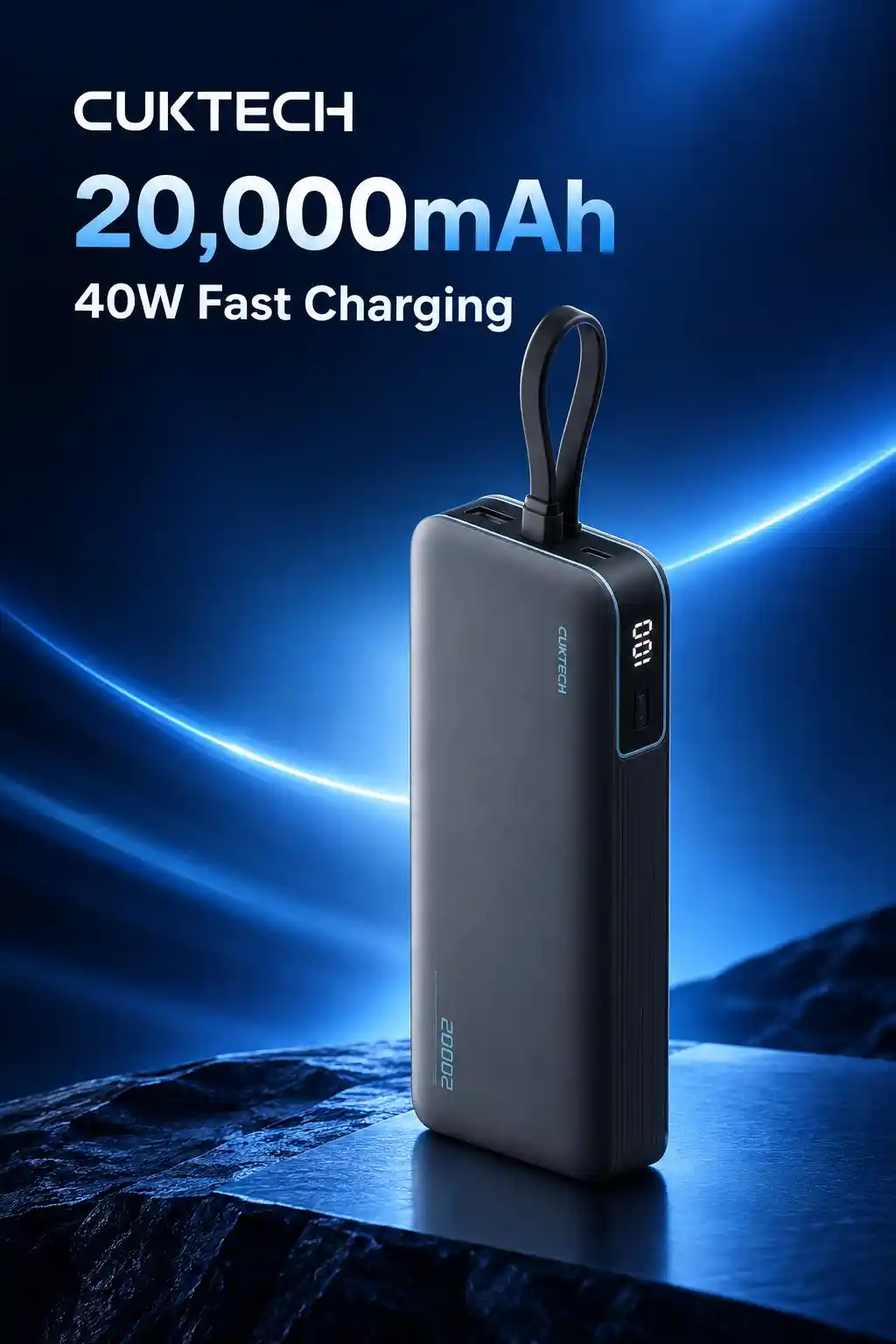
Verdict: A practical pick if you’re tired of hunting for a charging cable.
The CUKTECH 40W bundles a 20,000mAh cell with a built-in charging cable, so you’re not digging through a bag for a separate cord. This convenience-first design has made it a standout budget pick in several current comparison roundups.
We couldn’t fully verify this unit’s exact weight and output specs across sources at the time of writing — confirm current specifications directly from the retailer before purchasing, since built-in-cable power banks vary meaningfully in real-world output depending on cable gauge.
Pros:
Cons:
Best for: Travelers who consistently forget or lose charging cables.
10. Charmast Built-in Cables: Best for Group / Family Travel
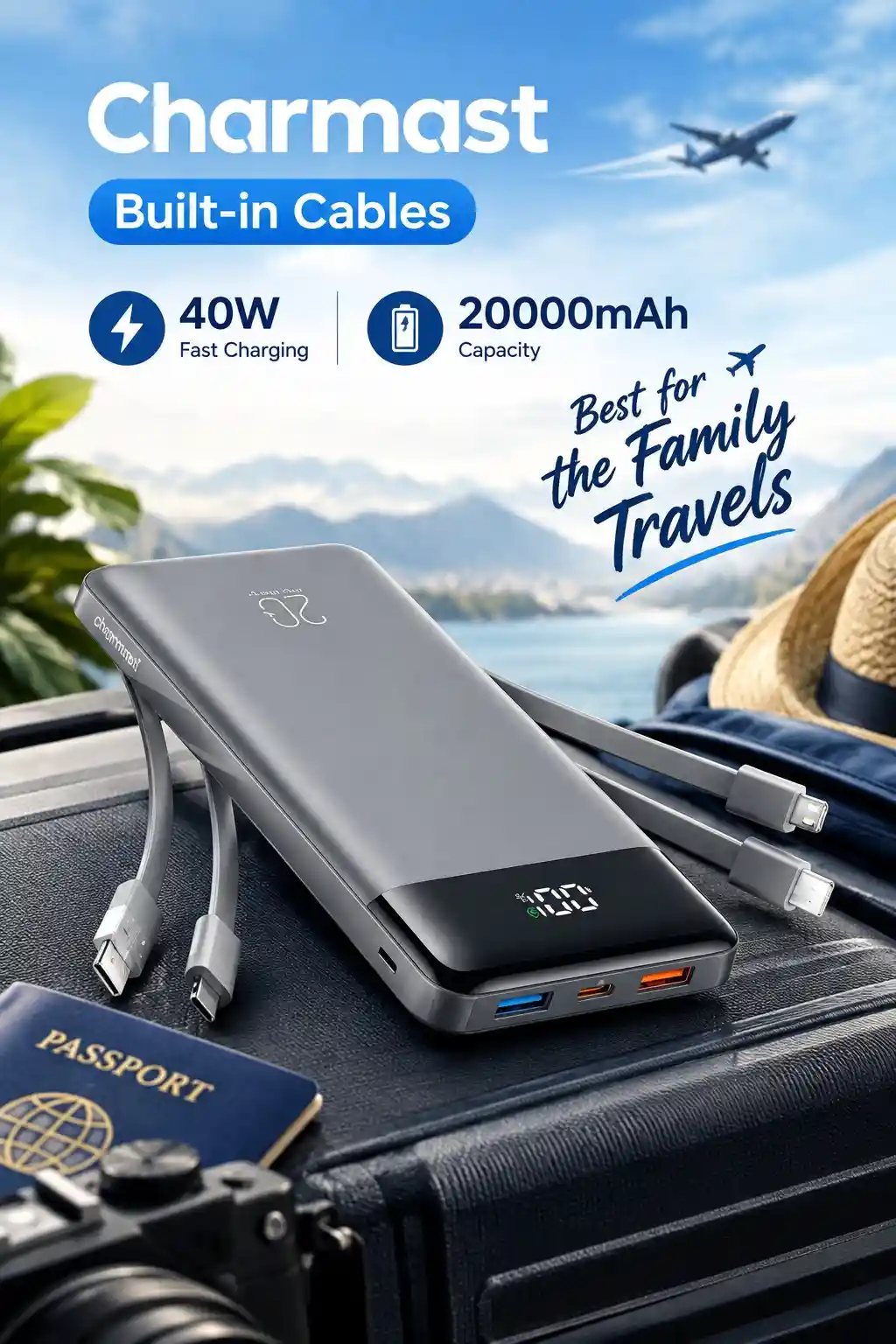
Verdict: The pick for charging several people’s devices from one unit.
Charmast’s built-in-cable design supports multiple simultaneous device connections, making it a practical option for families or groups traveling together who want to share one power bank rather than pack several.
As with the CUKTECH pick above, exact weight and output specs weren’t fully confirmed across our sources — verify current specifications directly before purchasing.
Pros:
Cons:
Best for: Families or groups who want to share one power bank across several devices.
11. ELECOM Nestout 15000: Best Rugged/Weatherproof for Backpacking
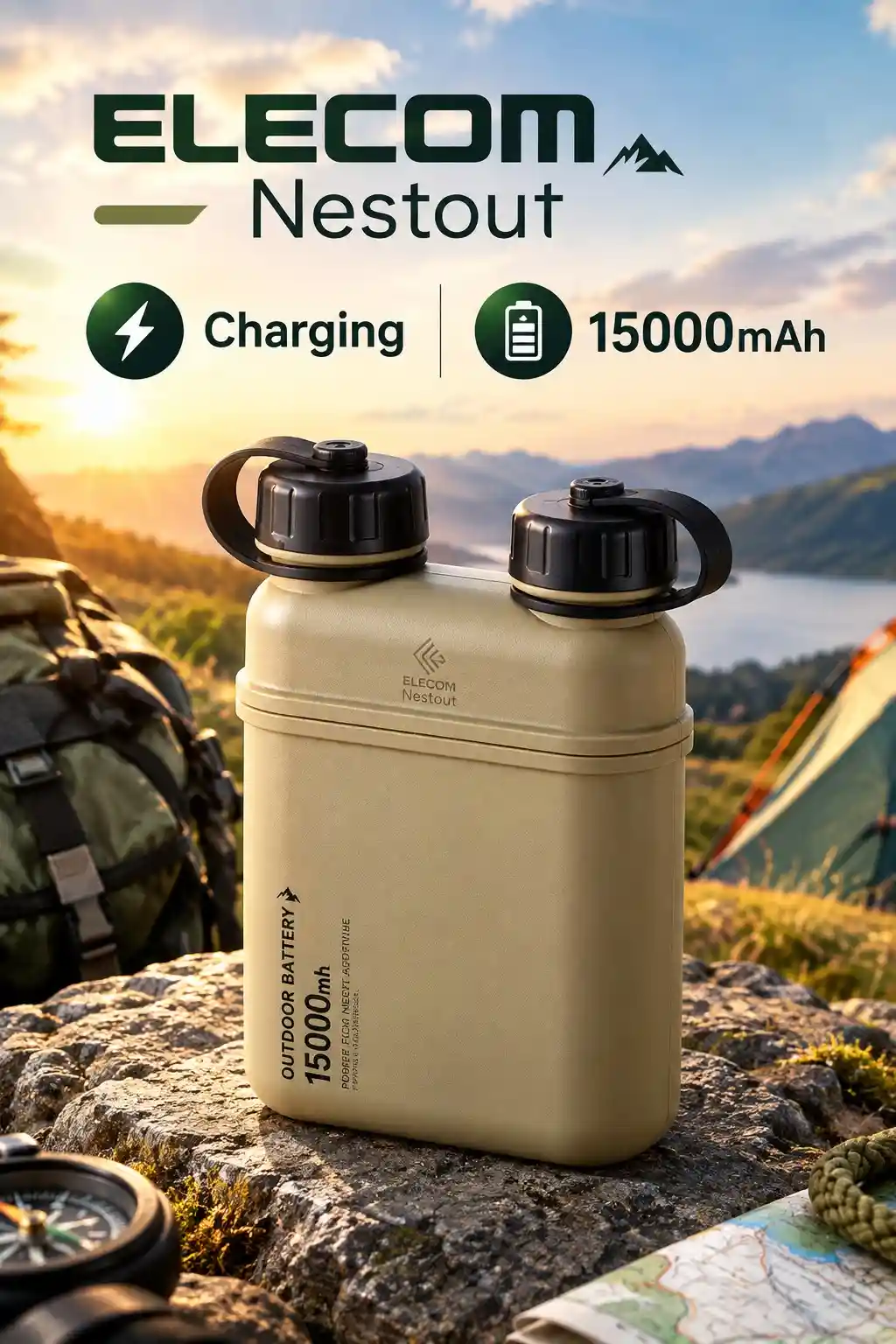
Verdict: The pick built to survive actual backpacking conditions, not just a suitcase.
The ELECOM Nestout 15000 carries an IP67 rating, meaning it’s genuinely built to handle dust and water exposure — a real consideration for backpackers rather than just city travelers. At 15,000mAh, roughly 55.5Wh, and 32W total output across its ports, it strikes a middle ground between the ultralight city-focused picks and the heavier laptop-charging options on this list.
The tradeoff is weight, at 365 grams — heavier than the 10,000mAh picks, though that extra weight buys genuine durability that matters if your trip includes rough conditions.
Pros:
Cons:
Best for: Backpackers whose trips involve real exposure to dust, water, or rough handling.
12. Anker Prime 26K: Best Premium Splurge
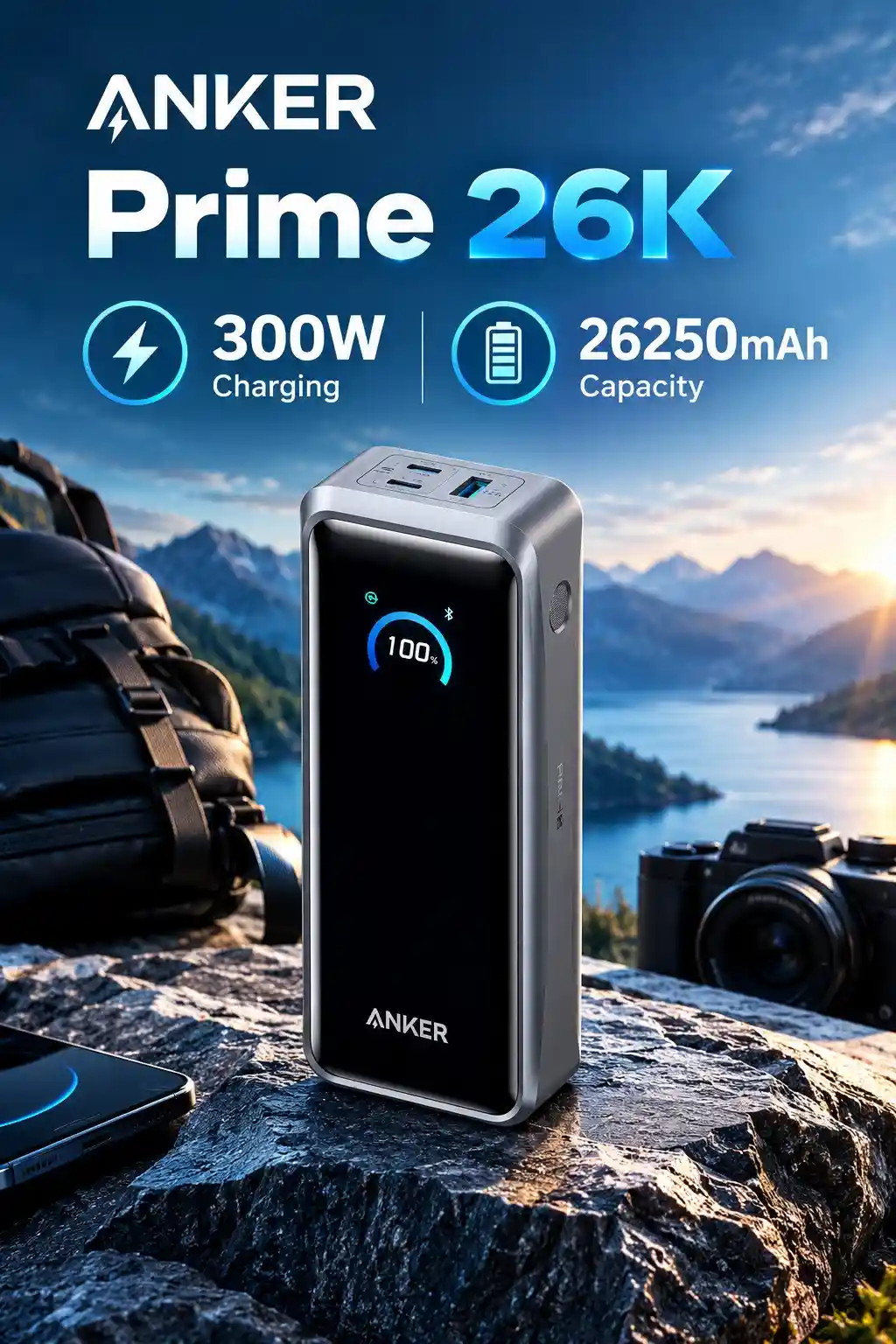
Verdict: The most capable pick here, if you’re comfortable paying for it and double-checking the fine print.
The Anker Prime 26K delivers a substantial 26,250mAh capacity and up to 300W output — enough to fast-charge a laptop and multiple devices simultaneously. It’s the most expensive pick on this list, typically running $180 to $230.
Here’s the important flag: at roughly 99.75Wh, this power bank sits right at the edge of the 100Wh no-approval threshold. That’s close enough that a labeling update or manufacturing variance could push a given unit over the line, which would change its airline status. Check the exact watt-hour rating printed on your specific unit before flying with it, rather than assuming the commonly cited figure applies to every unit sold.
Pros:
Cons:
Best for: Frequent travelers who need serious charging capacity and don’t mind paying for it.
What to Look for in a Travel Power Bank
Capacity vs. Weight
More capacity means fewer recharges, but also more weight in your bag. A 10,000mAh power bank typically charges a modern smartphone two to three times and weighs 150–250 grams. A 20,000–25,000mAh option roughly doubles that charging capacity but also close to doubles the weight. Match the capacity to your actual trip — a weekend city trip rarely needs the same capacity as a multi-day backpacking trip with no outlet access.
The 2026 Airline Rules read This Before You Buy
This is more complicated than it used to be, and it’s worth understanding in detail before choosing a power bank.
The baseline rule hasn’t changed: power banks are treated as spare lithium batteries. Under 100 watt-hours (Wh), they’re permitted in carry-on baggage without special approval — never in checked luggage. Between 100Wh and 160Wh, you need airline approval in advance, and you’re typically limited to two units. Over 160Wh, they’re prohibited on passenger aircraft entirely.
What’s genuinely new in 2026: a global aviation standard (IATA’s DGR 67th Edition, effective January 1, 2026) bans charging a power bank itself from an in-seat USB port. Separately, several major US carriers implemented rules around May 1, 2026 requiring power banks to stay within reach — not stowed in an overhead bin — and prohibiting recharging the power bank during the flight (using it to charge your phone is still fine). Some airlines have gone further still and banned power bank use in the cabin entirely following onboard battery incidents, and Japan’s transport ministry moved to ban in-flight power bank use and charging starting mid-April 2026.
The practical takeaway: every pick on this list falls under the 100Wh threshold except the Anker Prime 26K, which sits close enough to the line that you should verify the exact rating on your specific unit. But because airline-specific policies have been changing quickly and can vary by carrier, check your airline’s current policy before you fly — don’t rely solely on the TSA’s baseline rule if you’re flying internationally or with a carrier that’s added stricter rules of its own.
Charging Speed and Ports
USB-C with Power Delivery (PD) charges significantly faster than older USB-A connections. If you’re only charging a phone, 15–30W is plenty. If you want to charge a laptop, look for 60W or higher — the INIU P63, UGREEN Nexode, and Anker Prime 26K on this list all clear that bar.
MagSafe and Wireless Charging
Magnetic wireless power banks like the Anker MagGo 10K are genuinely convenient no cable to manage, and the bank stays attached to your phone as you move. The tradeoff is charging efficiency: wireless charging loses more energy as heat than a direct cable connection, so you’ll get fewer full charges out of the same rated capacity.
Durability for Backpacking
If your trip involves real outdoor exposure dust, rain, drops a standard consumer power bank isn’t built for it. Look for an IP rating (the ELECOM Nestout’s IP67 rating is a genuine standout here) if your travel style goes beyond hotels and city streets.
Conclusion
For most travelers, the Anker Nano 10K is the safest place to start it balances real charging speed, manageable weight, and a brand with genuine staying power, all comfortably under airline limits.
If capacity matters more than anything else, the INIU P63 gets you to 25,000mAh without crossing into airline-approval territory, while the UGREEN Nexode 145W is the better choice specifically if you need to charge a laptop. And if your trip involves rough outdoor conditions, the ELECOM Nestout’s IP67 rating makes it the more sensible choice over a standard city-focused pick.
Whichever you choose, don’t skip the airline rules section above 2026’s changes genuinely affect how and where you can use a power bank in flight, not just what you’re allowed to pack. Check out our [best universal travel adapter] guide next to round out your travel tech kit.
Frequently Asked Questions
Can you bring a power bank on a plane in 2026?
Yes, in your carry-on baggage only — never in checked luggage. Power banks under 100Wh are permitted without special approval on virtually every commercial airline. What’s changed in 2026 is how you can use one in flight: newer rules ban charging the power bank itself from an in-seat USB port and, on many carriers, ban recharging it mid-flight altogether.
What size power bank is TSA-approved?
The standard limit is 100 watt-hours (Wh), which works out to roughly 27,000mAh at typical battery voltage. A 10,000mAh power bank is about 37Wh, and a 20,000mAh model is about 74Wh both comfortably under the limit. Anything between 100Wh and 160Wh needs airline approval in advance and is capped at two units per passenger; anything over 160Wh isn’t permitted on passenger aircraft at all.
Can I charge my power bank during a flight?
As of 2026’s updated rules, generally no — you can use your power bank to charge your phone or other devices, but recharging the power bank itself from an in-seat USB port or outlet is now banned under IATA’s updated guidelines, and several airlines have added their own stricter rules on top of that.
How many power banks can I bring on a plane?
Under the 100Wh threshold, there’s no strict federal quantity limit, though airlines can and do set their own caps some carriers allow just one. Between 100Wh and 160Wh, the standard limit is two units per passenger with airline approval. Check your specific airline’s current policy before packing multiple units.
Do power bank rules differ by airline?
Yes, and this matters more in 2026 than in past years. The TSA/FAA rule sets the baseline (100Wh without approval), but individual airlines have added their own stricter rules on top of it some ban in-flight power bank use entirely, others limit you to fewer units than the federal maximum. Always check your specific airline’s current policy before flying, especially internationally.
What’s the best power bank capacity for backpacking without adding too much weight?
For most backpacking trips, 10,000–15,000mAh strikes a reasonable balance enough for two to three phone charges without adding much bulk to your pack. If your trip involves multiple days without reliable outlet access, stepping up to 20,000–25,000mAh (like the INIU P63) trades some weight for meaningfully more charging capacity, while still staying under airline limits.