12 Best Compression Socks for Travel That Actually Reduce Swelling

Affiliate Disclosure: TravelGearZone is supported by our readers. Buying through our links helps us earn an affiliate commission. Learn more
If you’ve ever stepped off a long-haul flight with heavy legs, tight shoes, or swollen ankles, you know the struggle is real. The best compression socks for travel aren’t just another gear fad—they’re a proven way to improve blood flow, reduce edema, and make air travel far more comfortable.
By applying graduated compression, these socks gently support your circulatory system, helping prevent poor circulation and even dangerous blood clots during periods of inactivity.
As a frequent traveler myself, I’ve tested dozens of compression sock options across red-eye flights, road trips, and long desk workdays. This guide breaks down how to pick the right pair quickly, then shares the 12 best picks (including some comfy compression socks and medical-grade compression socks) that actually do what they promise.
Whether you need everyday compression socks for shorter hops or maximum compression for special conditions, this list will help you find your match without second-guessing.
Quick Fit Finder: Choose Your Perfect Pair in 60 Seconds
Finding the right fit doesn’t have to feel like decoding medical jargon. Here’s a traveler-friendly way to choose:
- Step 1: Measure your leg. Wrap a tape around the narrowest part of your ankle and the widest part of your calf. Note the numbers in cm or inches—this is the determinant of size.
- Step 2: Pick your compression level. For most travelers, 15–20 mmHg Support offers enough graduated compression to aid circulation and reduce swelling. If you’ve had issues like varicose veins or pre-existing conditions, talk to a clinician about the 20–30 mmHg range.
- Step 3: Choose height & fabric. Knee-high is best for flights, while crew length or calf sleeves may work for short trips. Merino wool compression blends help with odor, while breathable mesh is great in hot climates.
- Step 4: Check sizing & returns. A correct size matters more than color or style. Always look for brands with flexible return policies in case the fit feels off.
This little checklist saves time and prevents wasted purchases of products that aren’t suited for your needs.
The 12 Best Compression Socks for Travel
Here’s my breakdown by star rating and comfort levels—tested, compared, and narrowed down to socks that truly stand out.
1. Best Overall: Charmking Compression Socks
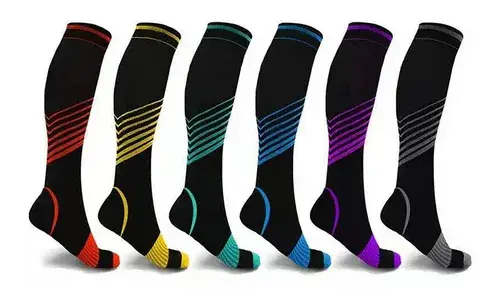
- Specs: 15–20 mmHg | Knee-high | Nylon-spandex blend | S–XXL | Cold wash, air dry
- Why we like it: Affordable, effective compression socks with strong elasticity, suitable for most shoe sizes. They balance comfort levels with real swelling reduction.
- Good to know: They run slightly long; if you’re under 5’5″, consider sizing down.
2. Best Budget 3-Pack: Amazon Basic Care Medical Compression Stockings
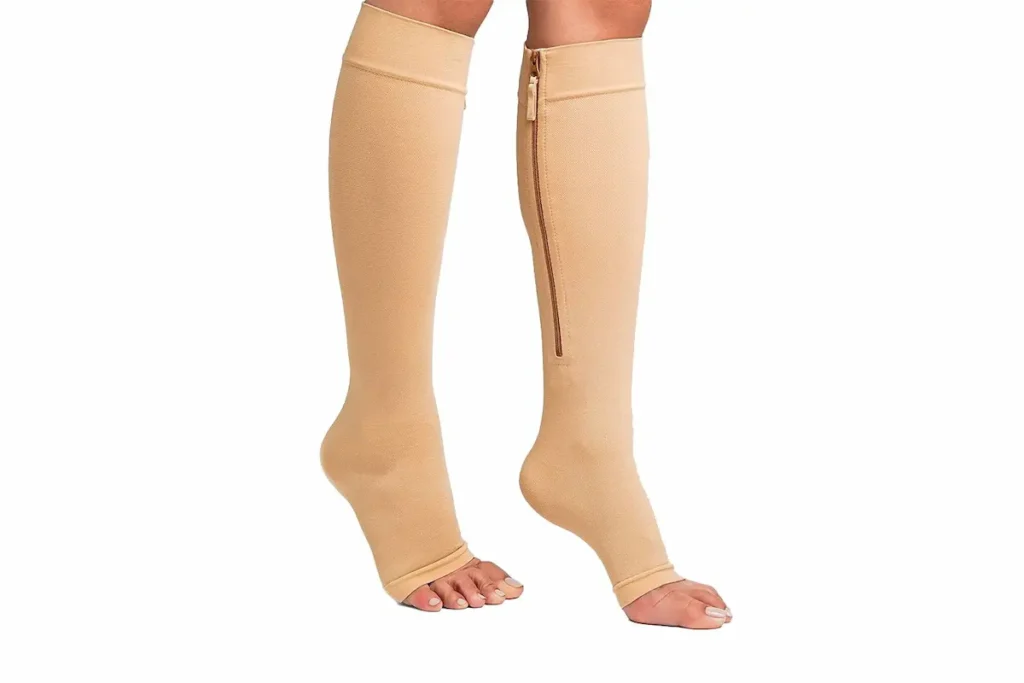
- Specs: 15–25 mmHg | Knee-high | Breathable nylon | S–XL | Wash bag recommended
- Why we like it: Solid compression strength, everyday compression socks perfect for frequent travelers who want value.
- Good to know: Fabric feels thinner than premium pairs, so durability is medium.
3. Best for Long-Haul Flights: Trtl Compression Socks
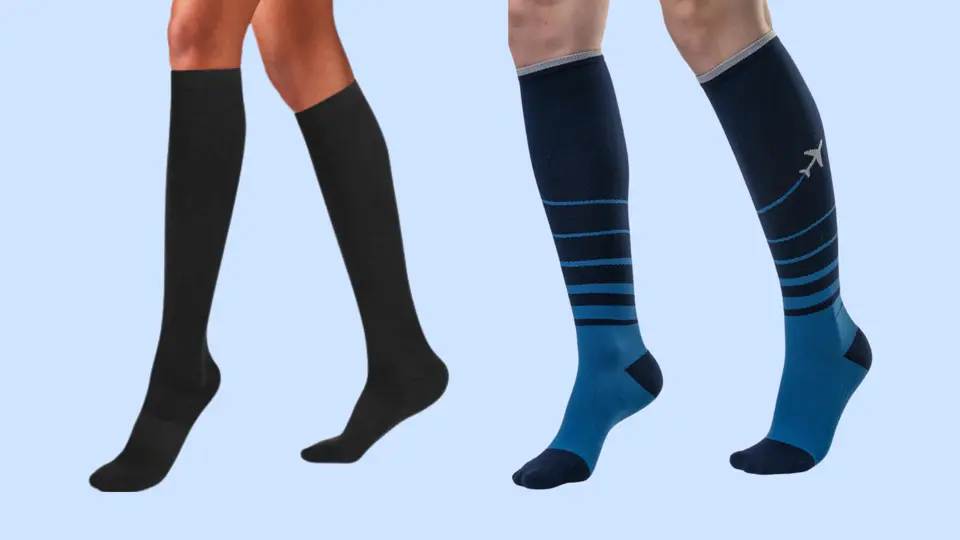
- Specs: 20–30 mmHg | Knee-high | Cushioned heel, seamless toe | XS–XL | Air dry only
- Why we like it: True graduated compression rating that helps prevent blood pooling on long flights. Plushest pair I tested for overnight use.
- Good to know: Higher compression grade means they take effort to put on.
4. Best Wide-Calf: SocksLane Cotton Compression Socks
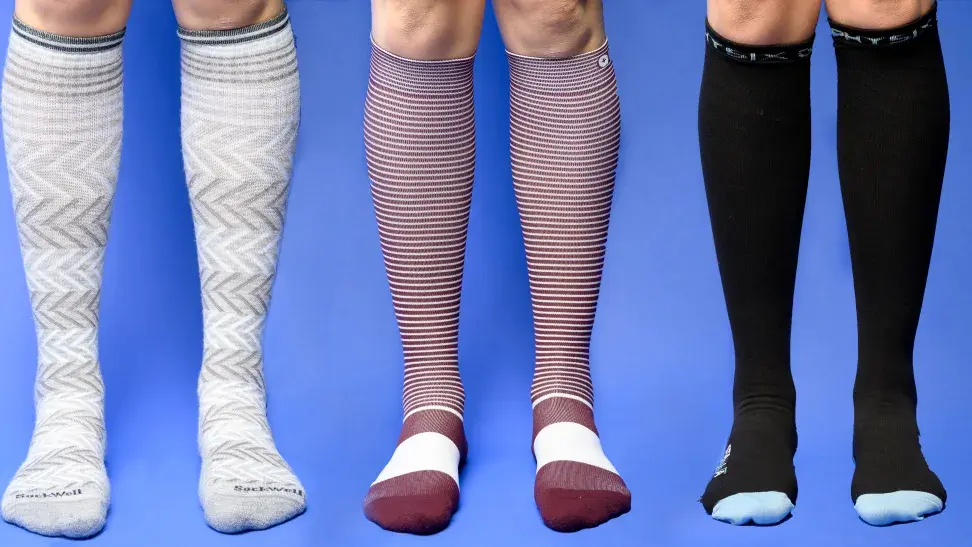
- Specs: 15–25 mmHg | Knee-high | Cotton/nylon blend | S–3XL | Machine wash cold
- Why we like it: Designed with a wider calf circumference, these provide a snug fit without cutting off circulation. They deliver effective graduated compression and support peripheral circulation.
- Good to know: Slightly thicker fabric than a normal ankle sock, so they’re best for sneakers or boots rather than dress shoes.
5. Best for Hot Climates: Bombas Performance Compression Socks
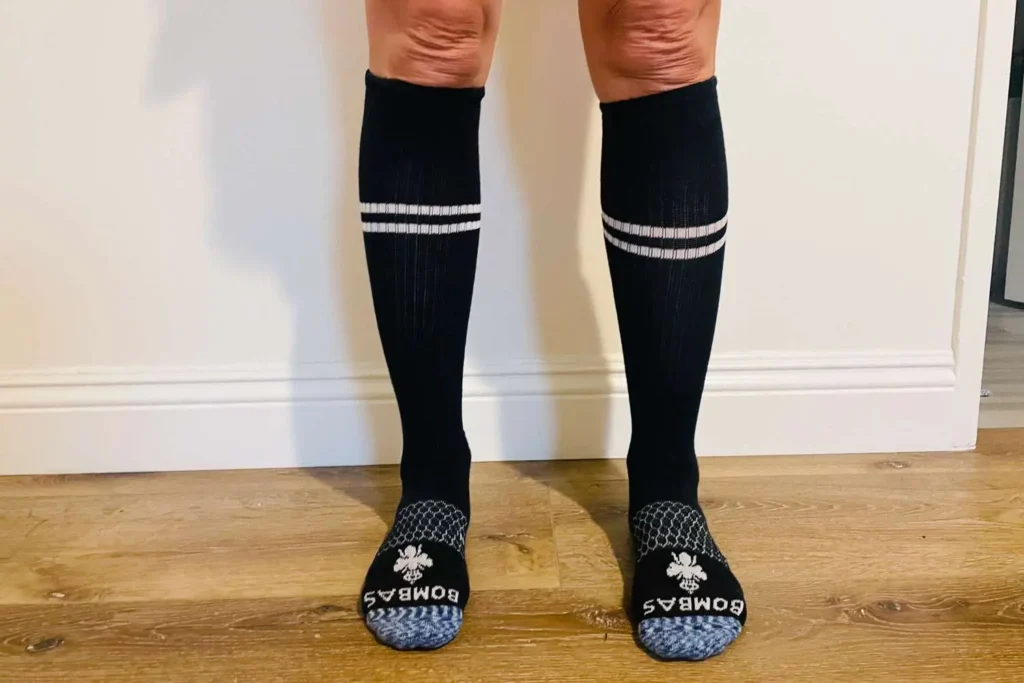
- Specs: 15–20 mmHg Support | Crew height | Nylon-spandex blend with mesh zones | XS–XL | Quick-dry care
- Why we like it: Lightweight pair with breathable mesh panels that aid circulation while preventing sweaty discomfort. Ideal for tropical destinations or summer road trips.
- Good to know: Runs small; if you’re between medium size ranges, size up for the correct fit.
6. Best Odor Control (Merino Blend): SocksLane Cotton Compression Socks – Merino Edition
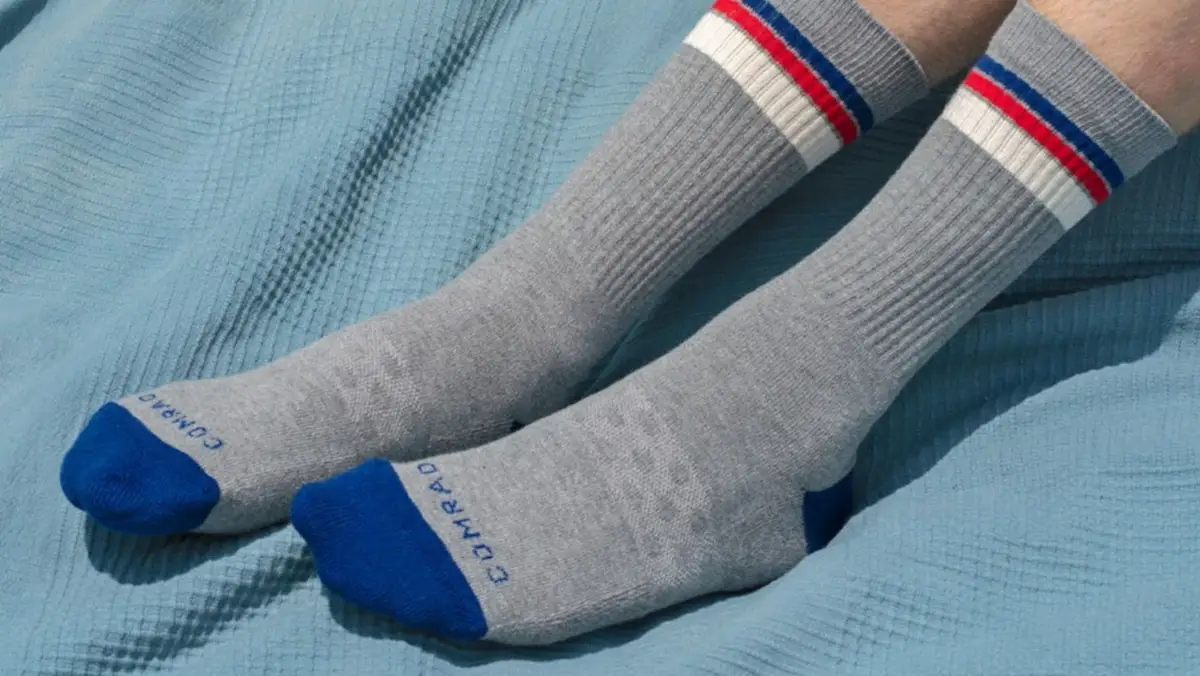
- Specs: 20–30 mmHg | Knee-high | Merino wool/nylon | S–XL | Air dry only
- Why we like it: Merino naturally regulates temperature and odor while providing maximum compression for swollen ankles and poor circulation. Great for long-haul flights or red-eye travel.
- Good to know: Higher compression rating (20–30 mmHg range) means you’ll feel more gradient pressure—talk to a clinician if you’re prone to venous insufficiency or heart disease.
Read Also: Top 10 Best Waterproof Shoes for Women with Arch Support: Tested & Reviewed
7. Best for Sensitive Skin: Neo G Travel & Flight Compression Socks
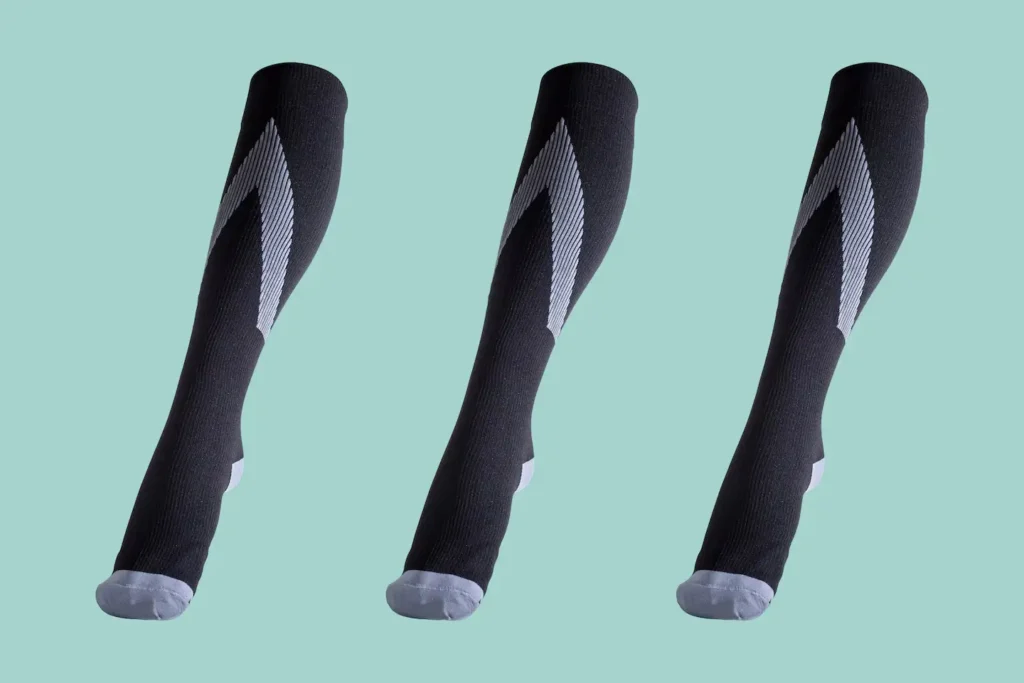
- Specs: 15–20 mmHg Support | Knee-high | Soft interior, seamless toe | S–XL | Cold wash, line dry
- Why we like it: These are comfy compression socks with a plush interior and seamless design, great for travelers prone to inflamed ankle or skin irritation. They offer solid mmHg support and help with peripheral circulation.
- Good to know: According to a Customer ReviewNeo G Travel & Flight Compression Socks section, sizing runs tight around the heel cup—order up if between sizes.
8. Best for Dress Shoes: 15–25 mmHg PC Dress Socks
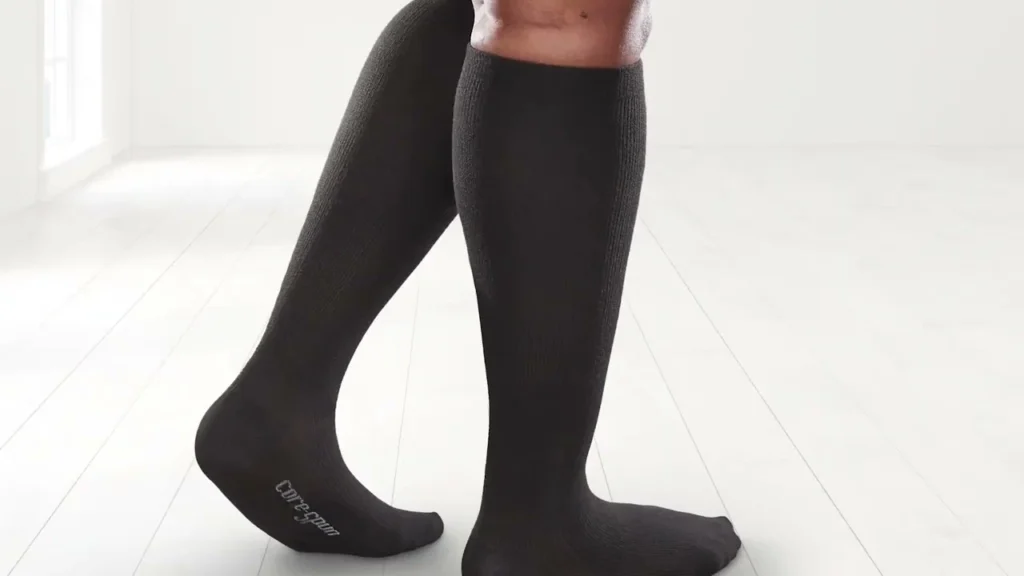
- Specs: 15–25 mmHg | Crew height | Nylon-spandex | M–XL | Easy wash, quick dry
- Why we like it: Thin enough to slide under slacks or office wear without bulk. They still deliver a medium compression level that reduces leg swelling on business trips. Perfect pair of dress socks for city commuters.
- Good to know: These aren’t the plushest pair, but their discreet look makes them a reliable choice for professionals.
9. Best for Road Trips & Office Days: Everyday Compression Socks by Trtl
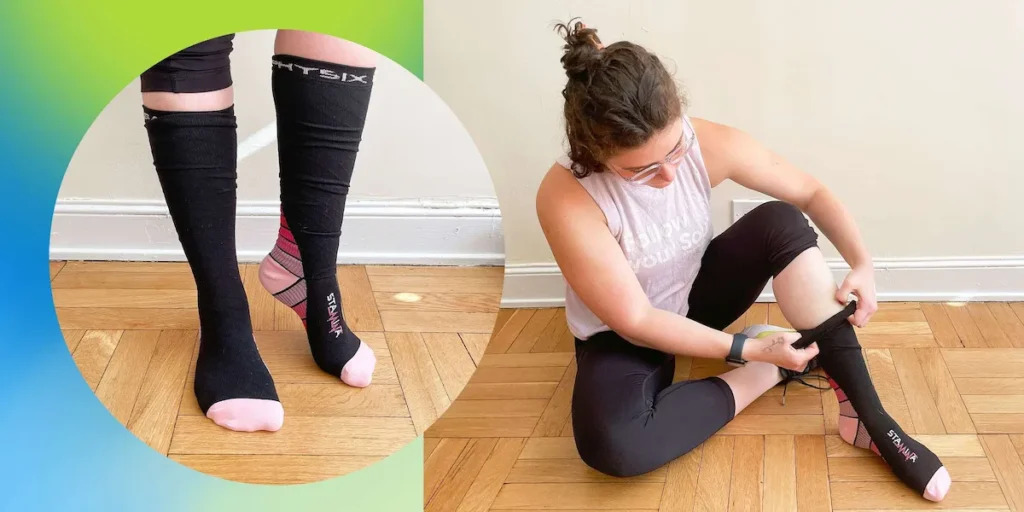
- Specs: 10–15 mmHg Calf Sleeves | Crew height | Nylon mesh | S–L | Gentle wash, air dry
- Why we like it: Light, everyday compression socks that aid circulation without feeling restrictive. A great lightweight pair for desk work, road trips, or low-risk travelers who just want mild support.
- Good to know: If you spend long hours at a desk, these help prevent blood pooling without the squeeze of higher compression grade socks.
10. Best for Pregnancy Travel (Non-medical): Maternity Compression Socks by Charmking
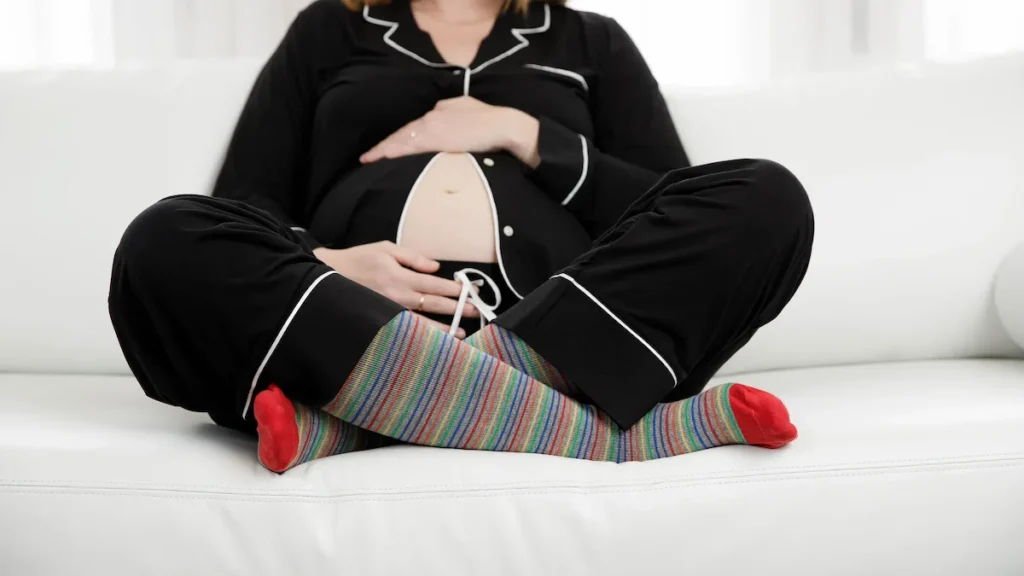
- Specs: 15–20 mmHg Support | Knee-high | Nylon-spandex | S–XL | Machine wash, air dry
- Why we like it: Softer cuff and moderate compression make these a great choice for pregnant travelers seeking comfort without feeling squeezed. They help prevent leg swelling and aid peripheral circulation during long flights.
- Good to know: Not a replacement for medical-grade compression socks—if you have circulatory conditions or pre-existing conditions, consult your clinician first.
11. Best High-Compression: 20–30 mmHg Marathon Elite Socks
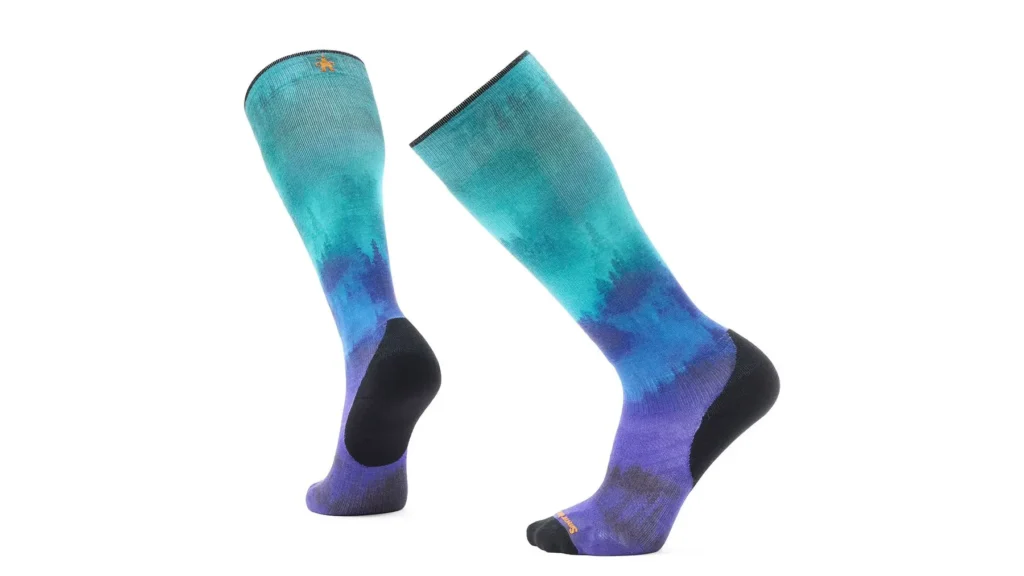
- Specs: 20–30 mmHg | Knee-high | Cushioned heel, seamless toe | S–XXL | Cold wash only
- Why we like it: Designed for those who need maximum compression strength, these socks deliver firm support and boost in circulation. They’re often recommended for venous insufficiency or after a blood clot forms.
- Good to know: Because of their high actual pressure, they can be challenging to put on. This is where a sock aid device or instruction from a clinician can help.
12. Best Eco Pick: 25–35 mmHg Upcycle Marathon Socks
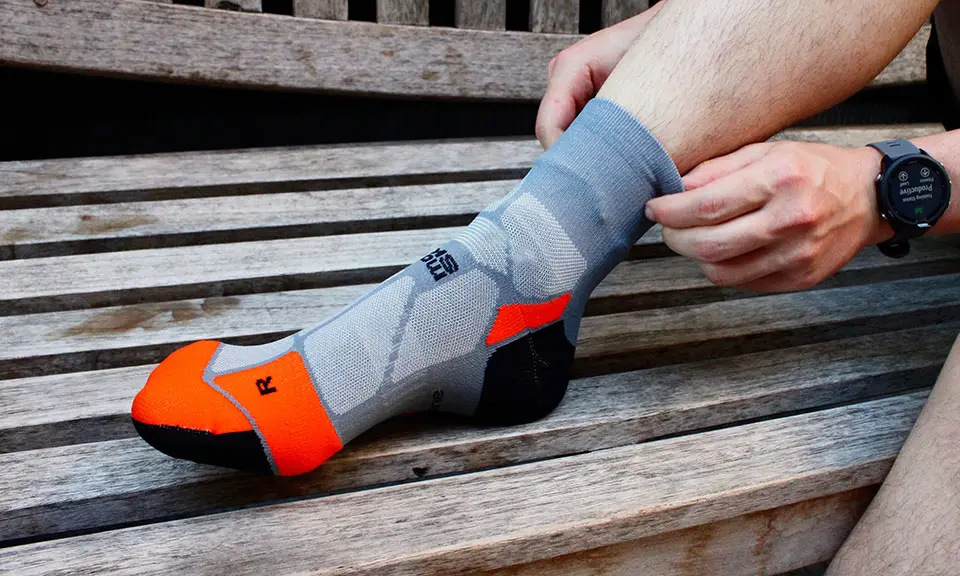
- Specs: 25–35 mmHg | Knee-high | Recycled yarns, spandex | M–XL | Cold wash, garment bag
- Why we like it: Innovative products made with eco-friendly fibers while still offering robust compression garments. Great for frequent travelers who care about sustainability without compromising support.
- Good to know: Higher compression grade means these are better suited for circulatory conditions and not casual wear. Always check product details for sizing and product suitability.
Compression Socks 101 for Travelers
What They Actually Do
Compression socks aren’t just another travel gadget; they’re compression garments designed with graduated compression. This means the pressure is tighter at the ankle and gradually lessens as it moves up the leg, which helps the circulatory system push blood back toward the heart. By keeping blood pumping efficiently, these socks reduce edema, prevent blood pooling, and may even lower the risk of deep vein thrombosis (DVT) during long stretches of inactivity like air travel.
The American Heart Association highlights that poor circulation during long-haul flights can increase the chance of dangerous blood clots forming in the legs. For most healthy, low-risk travelers, everyday compression socks provide enough support to stay comfortable, while those with circulatory conditions or pre-existing conditions should talk to a clinician about higher compression levels.
The mmHg Cheat Sheet
Compression strength is measured in millimeters of mercury (mmHg). Here’s a simple guide for travelers:
- 8–15 mmHg: Very light, often used for mild swelling or prevention.
- 10–15 mmHg Calf Sleeves: A gentle option for casual road trips or desk work.
- 15–20 mmHg Support: The sweet spot for most frequent travelers—provides solid comfort without being overly tight. (You’ll often see 15–20 mmHg help referenced in product descriptions.)
- 20–30 mmHg range: Firm support, sometimes considered medical-grade compression socks; helpful for those with venous insufficiency or circulatory conditions.
- 30–40 mmHg: Maximum compression, usually reserved for clinical use and only under medical supervision.
Remember, the correct size and compression rating are critical. A mismatch can cause discomfort, so always follow product details closely and consider product suitability before buying.
Sock Height & Variations
Choosing the right style depends on your trip:
- Knee-high: Best for flights, offering full-calf support. Many mmHg Support Knee options fall here.
- Crew: Great for everyday wear or when you want a more discreet fit, such as under dress pants.
- Open-toe compression: Useful if you prefer your toes uncovered or have an inflamed ankle that needs flexibility.
- Sleeves vs socks: Calf sleeves provide gradient pressure to the leg but don’t cover the foot, which can lead to swollen ankles if worn on long flights.
American Heart Association News Stories often remind travelers that inactivity—even something as ordinary as sitting for hours—can slow oxygen blood flow and increase clot risks. So, pairing the right compression sock options with movement breaks is the best prevention strategy.
When Not to Use Compression Socks
While compression socks are safe for most people, there are exceptions. Avoid wearing them without medical input if you have peripheral arterial disease, severe neuropathy, or certain skin conditions. Travelers with heart disease or advanced circulatory conditions should seek professional guidance.
Condé Nast Traveler recently featured educational products on this topic, noting that while compression socks are excellent for many, they’re not a one-size-fits-all solution. Always check with your doctor if you’re unsure, especially when considering medical-grade compression or maximum compression levels.
How to Measure & Get the Right Fit
When to Measure
Timing matters. For the most accurate fit, measure in the morning before your legs swell from daily activity. Evening measurements may exaggerate calf circumference, leading you to choose the wrong compression grade.
Tape Placement
Grab a simple fabric tape measure and follow this 3-point guide:
- Ankle: Wrap the tape around the narrowest point just above the ankle bone.
- Calf: Measure the widest part of your calf for the determinant of size.
- Length: Measure from the floor to just below the knee crease if you’re buying mmHg Support Knee styles.
This ensures the correct size and makes sure the compression level feels supportive, not restrictive.
Sizing Strategy
If you’re in between sizes, prioritize the calf measurement over shoe size. A medium size calf with a smaller foot usually does better sizing up to avoid a “sausage cuff.” Remember, every pair of compression socks has unique elasticity depending on product development and fabric blend, so always check product details carefully.
Try-On Checklist
- Heel cup should align snugly, not slide.
- Toes should feel free—not cramped.
- No bulging or tight band marks after 30 minutes of wear.
- For long-haul flights or frequent travelers, having a favorite pair that feels comfortable is more important than picking the average pair recommended online.
Condé Nast Traveler editors often point out that the plushest pair may not always equal the best fit. The right fit is about comfort levels, not just star rating.
Travel-Day Playbook to Reduce Swelling
Before You Go
Getting ahead of swelling starts before you even reach the airport. Pre-hydrate with water or herbal tea, and keep salty snacks to a minimum since excess sodium can worsen edema. Choose roomy shoes with a cushioned heel and breathable mesh so your compression socks feel comfortable during boarding. According to American Heart Association News, small habits like lowering salt intake can help reduce leg swelling for frequent travelers.
On the Move
Once you’re seated, don’t just rely on your pair of compression socks—add movement. Try ankle pumps every 30–60 minutes, and when the seatbelt light is off, walk the aisle briefly. Crossing your legs may feel comfortable, but it slows peripheral circulation. Compression garments combined with small stretches are simple ways to keep blood pumping and Increases Blood Flow during long-haul flights.
Seat Hacks
Your seat setup matters too. Keep your footrest adjusted so your knees are slightly bent. Slip on compression socks before boarding to avoid fighting with them in tight quarters. Keep your shoes slightly loosened to accommodate natural swelling and improve comfort levels. Even Condé Nast Traveler has called these tricks “favorite travel products” because they make economy class feel just a little more bearable.
After Landing
Once you arrive, don’t just head straight for baggage claim. Take a short walk, do gentle calf raises, and sip water to rehydrate. If possible, elevate your legs for 10–15 minutes once you’re settled at your hotel. These habits give a noticeable boost in circulation and help prevent that heavy-leg feeling so many travelers associate with long flights.
Fabric & Durability: What Actually Lasts
Understanding Fabric Blends
Not all compression garments are built the same. Most everyday compression socks use a nylon–spandex blend, which provides elasticity and consistent compression strength. Athletic pairs often include cushioned heel zones and breathable mesh for performance. If you prefer odor resistance, merino wool compression socks are worth considering.
Care for Longevity
Compression rating and elasticity wear out if socks aren’t cared for properly. Always cold wash and air dry to preserve the gradient pressure. Avoid fabric softeners or high heat, since both break down fibers. Even the plushest pair can lose shape quickly if tossed into a hot dryer.
How Long Do They Last?
On average, a favorite pair will last 4–6 months with frequent travel use, while an average pair worn only occasionally may stretch to a year. Watch for signs like loose bands, decreased comfort levels, or reduced squeeze at the ankle. Some brands list Product Dimensions in their product details, but durability really comes down to usage patterns and care.
Condé Nast Traveler’s commerce editor Compression level reviews often highlight that innovative products don’t always equal long-lasting ones. Sometimes the simplest design ends up being the most reliable. Travelers I’ve spoken to often keep a couple of favorite pairs on rotation—one for long-haul flights and one for desk work or short road trips.
Comparison Tables
Table 1: Specs at a Glance
| Product | Compression (mmHg) | Height | Fabric | Sizes | Wide-Calf Option | Notes |
|---|---|---|---|---|---|---|
| Charmking Compression Socks | 15–20 | Knee-high | Nylon-spandex | S–XXL | Yes | Everyday pick, comfy compression socks |
| Amazon Basic Care Medical Compression Stockings | 15–25 | Knee-high | Nylon | S–XL | No | Budget-friendly medical compression socks |
| Trtl Compression Socks | 20–30 | Knee-high | Cushioned heel | XS–XL | Limited | Great for long-haul air travel |
| SocksLane Cotton Compression Socks | 15–25 | Knee-high | Cotton blend | S–3XL | Yes | Wide-calf fit, durable cotton |
| Bombas Performance Compression Socks | 15–20 | Crew | Nylon/mesh | XS–XL | No | Lightweight pair for hot climates |
| Neo G Travel & Flight Compression Socks | 15–20 | Knee-high | Soft interior | S–XL | No | Sensitive-skin friendly |
| 15–25 mmHg PC Dress Socks | 15–25 | Crew | Nylon-spandex | M–XL | No | Pair of dress socks for office wear |
| Everyday Compression Socks (Trtl) | 10–15 | Crew | Nylon mesh | S–L | No | Casual use, road trips |
| Maternity Compression Socks (Charmking) | 15–20 | Knee-high | Nylon-spandex | S–XL | Yes | Comfortable option for pregnant travelers |
| 20–30 mmHg Marathon Elite Socks | 20–30 | Knee-high | Cushioned | S–XXL | Limited | Maximum compression, clinical-level use |
| 25–35 mmHg Upcycle Marathon Socks | 25–35 | Knee-high | Recycled fibers | M–XL | No | Eco-friendly innovative products |
| 15–25 mmHg Recovery Marathon Socks | 15–25 | Knee-high | Nylon-spandex | M–XL | Yes | Designed for athletic pairs and recovery days |
| 20–30 mmHg Knee Support Socks | 20–30 | Knee-high | Spandex blend | M–XL | Yes | Extra support for circulatory conditions |
Table 2: Best Use-Case Matrix
| Use Case | Best Pick | Why It Works |
|---|---|---|
| Long-haul flights / Red-eye flight | Trtl Compression Socks | Graduated compression strength, reduces blood pooling |
| Wide-Calf Travelers | SocksLane Cotton Compression Socks | Wide sizing and stability |
| Hot Climate Trips | Bombas Performance Compression Socks | Breathable mesh, lightweight pair |
| Business Travel (Dress Shoes) | 15–25 mmHg PC Dress Socks | Thin profile, discreet comfort levels |
| Road Trips & Desk Work | Everyday Compression Socks | Light support, prevents swollen ankles |
| Pregnancy Travel | Maternity Compression Socks | Softer cuff, gentle support for pregnant travelers |
| High-Risk / Venous Insufficiency | 20–30 mmHg Marathon Elite Socks | Firm compression garments, actual pressure tested |
| Eco-Conscious Travelers | 25–35 mmHg Upcycle Marathon Socks | Recycled fibers, durable construction |
| Recovery / Sports | 15–25 mmHg Recovery Marathon Socks | Boost in circulation for athletes |
| Knee Support | 20–30 mmHg Knee Support Socks | Stabilizes calf + knee joint, supports peripheral circulation |
Quick Takeaway
These tables highlight that not all compression sock options are created equal. Whether you need maximum compression for venous insufficiency or a lightweight pair for everyday desk work, there’s a match for every trip. Editorial assistant Compression level guides often emphasize one thing: knowing your mmHg Knee range and activity type is just as important as choosing your favorite pairs.
Buyer FAQs
Do compression socks really help on flights?
Yes. Numerous studies and American Heart Association News reports confirm that compression garments increase blood flow, reduce edema, and help prevent dangerous blood clots on long-haul flights. For Frequent Travelers, wearing a pair of compression socks is one of the simplest ways to stay comfortable and safe in the air.
What compression level should most travelers choose?
For low-risk travelers, 15–20 mmHg Support is ideal. It provides enough pressure to keep the circulatory system moving without feeling restrictive. Those with venous insufficiency or circulatory conditions may require the 20–30 mmHg range or even maximum compression levels, but this should only be used under medical guidance.
Knee-high vs crew for travel — what’s better?
Knee-high styles generally offer the most effective graduated compression since they cover the full calf. Crew options are fine for road trips or desk work. Some products, like 20–30 mmHg Knee Support Socks or mmHg Knee designs, are made specifically to stabilize both calf and knee areas.
Can I wear compression socks if I’m pregnant or diabetic?
Yes, but choose maternity compression socks with a softer cuff and medium compression level. Diabetic travelers should consult their doctor before use. Pregnant travelers often find that everyday compression socks help with swollen ankles and blood pooling during long flights.
Open-toe vs closed-toe — when to choose which?
Open-toe compression garments are useful if you want toe freedom or if you’re prone to inflamed ankle issues. Closed-toe designs remain more common for flights and road trips. Specialty items like Ankle and Elbow Sleeves are also available for localized support.
How long should I wear them on a travel day?
Most experts, including the American Heart Association, suggest wearing compression socks for the full duration of air travel and for a couple of hours after landing. For everyday desk work, 6–8 hours is sufficient.
Will they set off airport security?
No. Compression socks are made of textiles, not metals. They slide through TSA checks just like normal ankle socks.
How tight is “too tight”?
If you see red marks, experience tingling, or feel restricted beyond moderate compression, they’re either the wrong size or too strong for your needs. Always follow product description and sizing charts for the correct fit.
Can I sleep in them on a plane?
Yes — in fact, they’re designed for inactivity, which is exactly what happens during sleep on flights. American Heart Association News Stories even highlight that sleeping in them on overnight flights may lower the risk of a blood clot forming.
How many pairs do I need for a two-week trip?
Bring at least 2–3 pairs. One lightweight pair for shorter flights or road trips, and one maximum compression option for long-haul or recovery days. Many travelers rotate favorite pairs so elasticity doesn’t wear out too quickly.