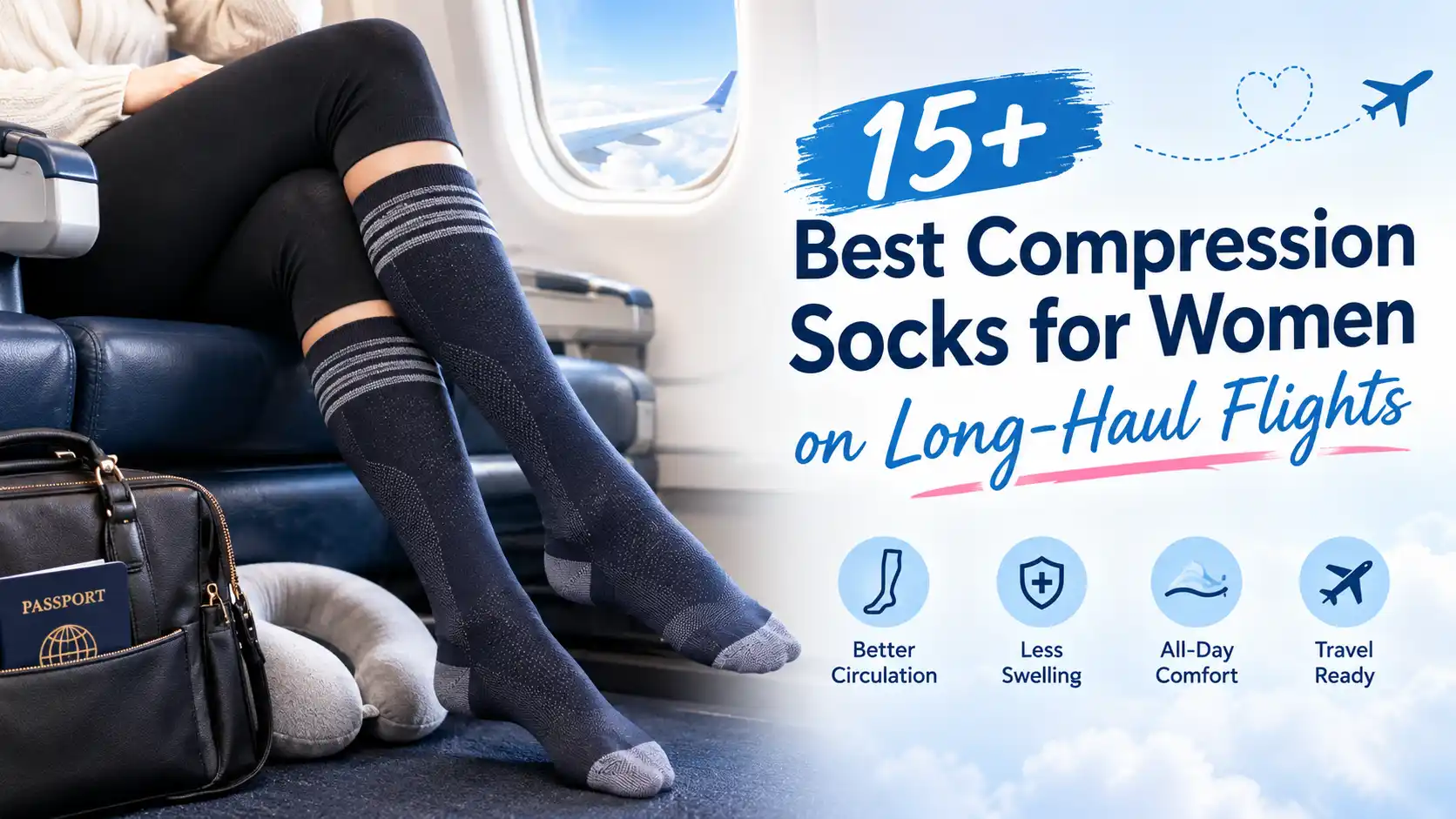
15+ Best Compression Socks for Women on Long-Haul Flights

Affiliate Disclosure: TravelGearZone is supported by our readers. Buying through our links helps us earn an affiliate commission. Learn more
Somewhere around hour nine of a flight from New York to Tokyo, plenty of travelers reach under the seat for their shoes and find they no longer slide on. Ankles puff up, calves feel heavy, and the walk to passport control drags. The right compression socks for long-haul flights help a lot here for women, but only if the pair actually fits your leg. Most roundups skip that part entirely. Our broader guide to compression socks for every traveler covers unisex picks; this one is built around women’s fit.
Women’s legs vary far more in calf circumference and length than basic “S/M, L/XL” sizing assumes. A sock that’s too loose does almost nothing. One that’s too tight at the knee band can dig in for twelve hours straight.
So this guide treats fit as seriously as fabric. We evaluated 16 women’s compression socks for flying on five things:
- Verified compression level
- Calf-size range
- Wide-calf and length options
- Breathability over a full travel day
- How easy they are to pull on in a cramped airport bathroom
You’ll also find a fit-finder table, an mmHg chart matched to flight length, and a plain-language summary of what the research says.
Quick Comparison Table
| Product | Best For | Compression | Fabric | Price Tier | Our Rating |
|---|---|---|---|---|---|
| Sockwell Women’s Circulator | Best overall | 15–20 mmHg | Merino/bamboo blend | $30-$35 | 4.8/5 |
| Comrad Knee-High | Widest size range | 15–20 mmHg | Nylon | $35-$40 | 4.7/5 |
| VIM & VIGR Graduated Compression Socks | Choosing your fabric | 15–20 mmHg | Nylon, merino, or cotton | $35-$40 | 4.7/5 |
| CEP Women’s Flight Socks | Firm support, 12+ hr flights | 20–30 mmHg | Polyamide/merino | $55-$60 | 4.6/5 |
| Sockwell Full Heart Wide Calf | Wide-calf merino | 15–20 mmHg | Merino/bamboo blend | $30-$35 | 4.6/5 |
| Bombas Women’s Travel Compression | First-time wearers | 15–20 mmHg | Check listing | $35 | 4.5/5 |
| Sigvaris Traveno 146 | Cotton lovers | 15–20 mmHg | Supima cotton blend | $35-$40 | 4.5/5 |
| Sigvaris Soft Opaque 841 | Petite or tall legs | 15–20 mmHg | Nylon/spandex | $60-$65 | 4.5/5 |
| JOBST Travel | Precise ankle sizing | 15–20 mmHg | Cotton blend | $35-$40 | 4.4/5 |
| Smartwool Run Targeted Cushion OTC | Hiking or running on arrival | 20–30 mmHg | Merino/nylon | $40-$45 | 4.4/5 |
| Lily Trotters | Easiest on and off | 15–20 mmHg | Nylon/spandex | –$ | 4.4/5 |
| Truform 1773 Sheer | Dressy trips, under skirts | 15–20 mmHg | Sheer nylon/spandex | $15-$20 | 4.3/5 |
| Physix Gear | Budget firm compression | 20–30 mmHg | Nylon/spandex | $15-$20 | 4.3/5 |
| VIM & VIGR Compression Tights | Full-leg coverage | 15–20 mmHg | Nylon/Lycra | $60 | 4.3/5 |
| Zensah Featherweight | Hot-weather destinations | 15-30mmHg | Polypropylene/polyamide | $50 | 4.1/5 |
| CHARMKING 8-Pack | Multipack value | 15–20 mmHg (labeled) | Nylon/spandex | $15-$25 | 4.0/5 |
How We Evaluated These Socks
“Flight socks” is a loose marketing label, so we started with the number that matters: the compression rating. Every pick here lists a graduated mmHg rating on the brand or retailer page. Graduated means firmest at the ankle and easing toward the knee. Where we couldn’t confirm a figure, we say so in the table.
Next we looked at fit:
- Each brand’s calf-circumference range
- Whether wide-calf versions exist
- Whether lengths suit both petite and tall travelers
For comfort over 10+ hours, we compared fabric blends, toe seams, and top bands. Then we read owner reviews for repeat complaints such as:
- Rolling down at the knee
- Running short or long
- Compression that felt lighter than labeled
We evaluated based on published specs, size charts, and verified owner feedback. Wear-testing wasn’t part of this roundup. This is gear guidance, not medical advice. If you have a clotting history, are pregnant, or take estrogen-containing medication, ask your doctor which compression level suits you before you fly.
1. Sockwell Women’s Circulator: Best Overall for Long-Haul Flights
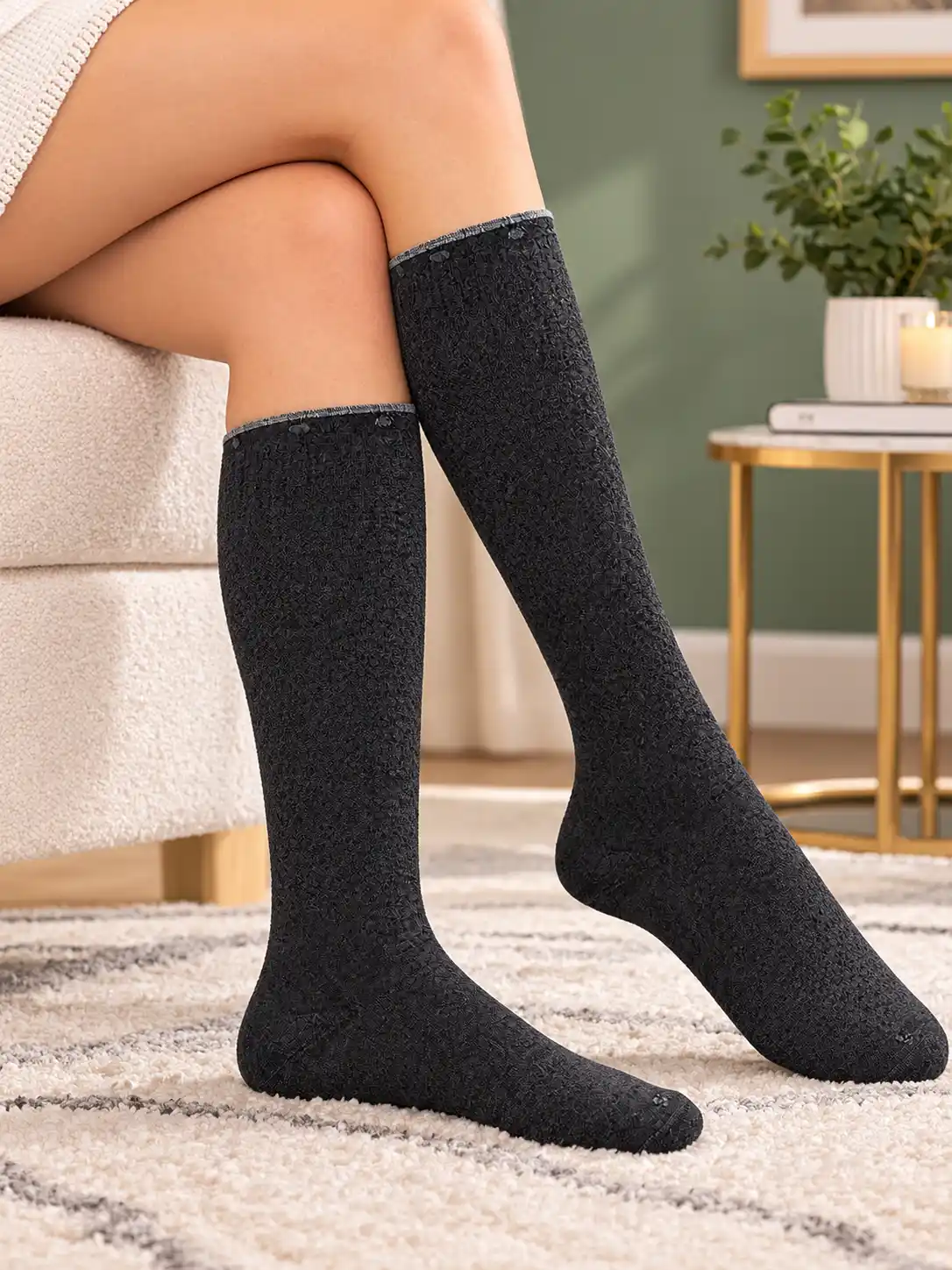
Verdict: The most balanced pick for most women, with moderate compression in a merino blend that stays comfortable for a full travel day.
The Circulator is a 15–20 mmHg graduated sock with four compression zones. Its blend of merino wool, bamboo rayon, nylon and spandex breathes better than all-nylon socks. That matters when the cabin is cold at takeoff and stuffy by the meal service. It has a seam-free toe and an ultra-light cushioned sole, and it’s made in the USA.
Sizing goes by shoe size: Small/Medium covers women’s US 4–7.5, and Medium/Large covers 8–11. Sockwell’s own pages disagree on whether to size up or down between sizes, and REI reviewers note a slightly large fit. If you’re between sizes, measure your calf before ordering.
Pros
Cons
Best for: Women taking 8–14 hour flights who want one dependable pair.
2. Comrad Knee-High Compression Socks: Best Size Range
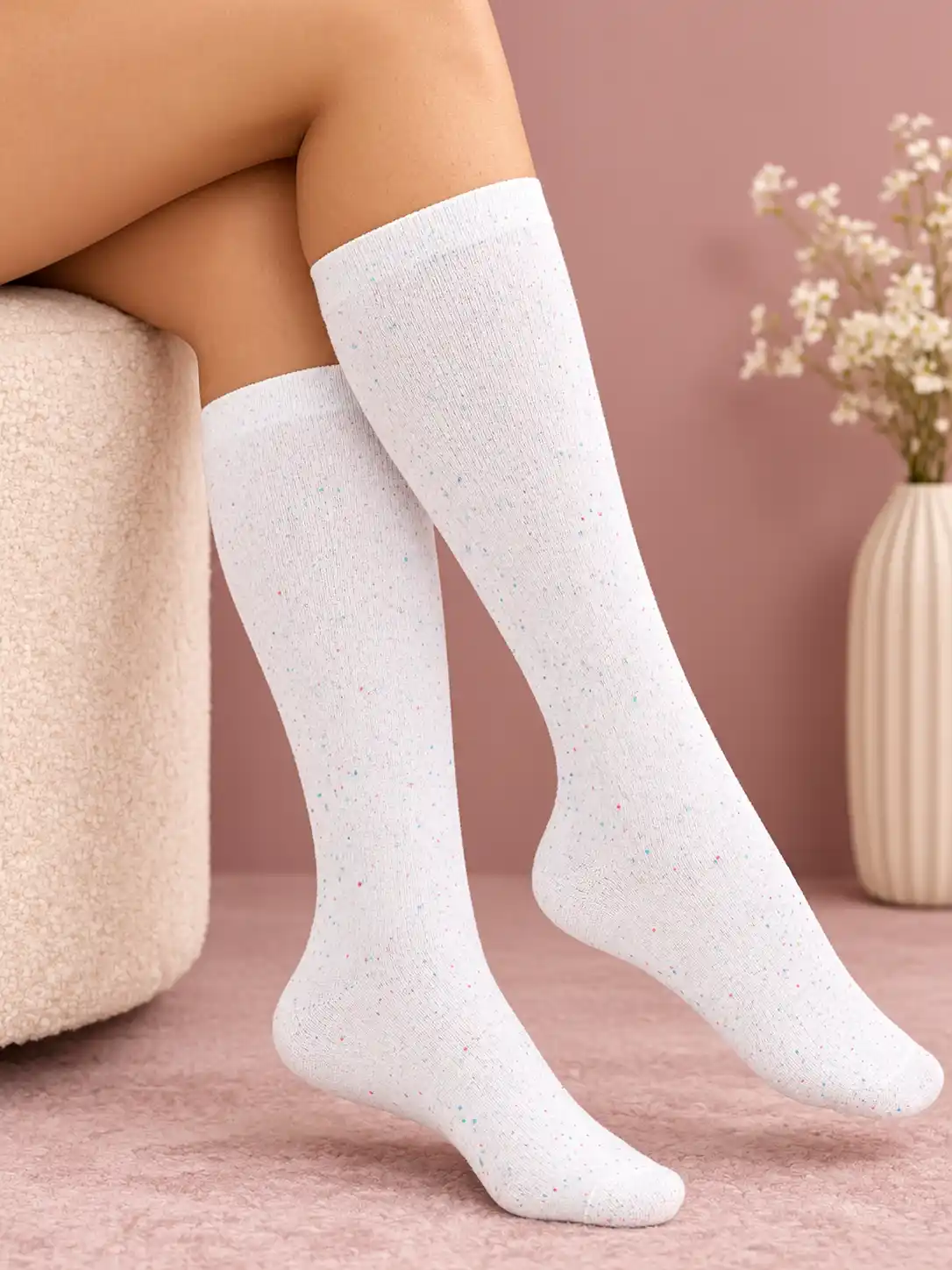
Verdict: The most inclusive calf sizing in this roundup, with the option to go firmer.
Comrad sizes by calf circumference, not just shoe size. That’s the single biggest fit advantage for women. Its chart runs:
| Size | Calf circumference |
|---|---|
| S | 10–14″ |
| M | 12–14″ |
| M Wide | 14–16″ |
| L | 15–17″ |
| L Wide | 17–19″ |
| XL | 18–20″ |
The standard knee-highs use moisture-wicking nylon in 15–20 mmHg or firmer 20–30 mmHg. Cotton versions are available if you dislike synthetic fabric against your skin. The modern colors and stripes don’t look medical, which helps if you’re going straight from the airport to dinner.
The honest catch is length. One owner says the calf length varies between pairs and some reach over the knee. Another, at 5’4″, says Comrad finally fit without trimming.
Pros
Cons
Best for: Women with wider or athletic calves who are tired of guessing.
3. VIM & VIGR Graduated Compression Socks: Best for Choosing Your Fabric
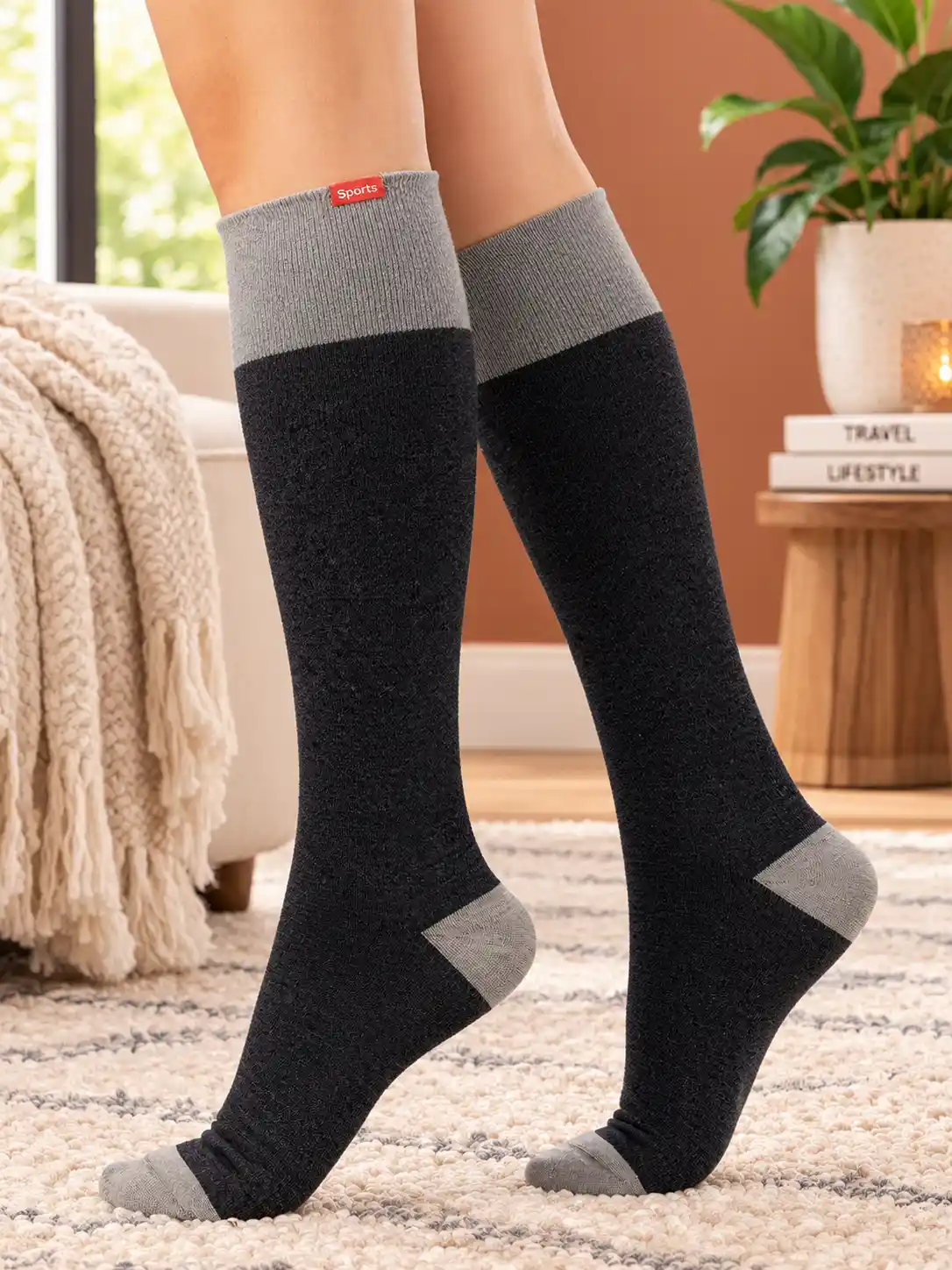
Verdict: Pick cotton, nylon, merino or moisture-wicking nylon, and every style comes in a wide-calf fit.
VIM & VIGR is the easiest way to match fabric to your route. Merino suits overnight flights in cold cabins, and moisture-wicking nylon suits landing in Bangkok or Dubai. All of its legwear comes in 15–20 mmHg, and select styles go to 20–30 or 30–40.
Wide-calf sizes fit 17–21″ calves, while the standard sizes cover 12–15″ and 15–18″. The brand says it develops its products with vascular surgeons and vein clinics, and that they’re listed with the FDA. One useful note: the nylon knit is denser than the cotton, so it feels tighter even though the rating is the same.
Pros
Cons
Best for: Frequent flyers who want a cold-cabin pair and a hot-destination pair from one brand.
4. CEP Women’s Flight Compression Socks: Best Firm Compression for Ultra-Long Flights
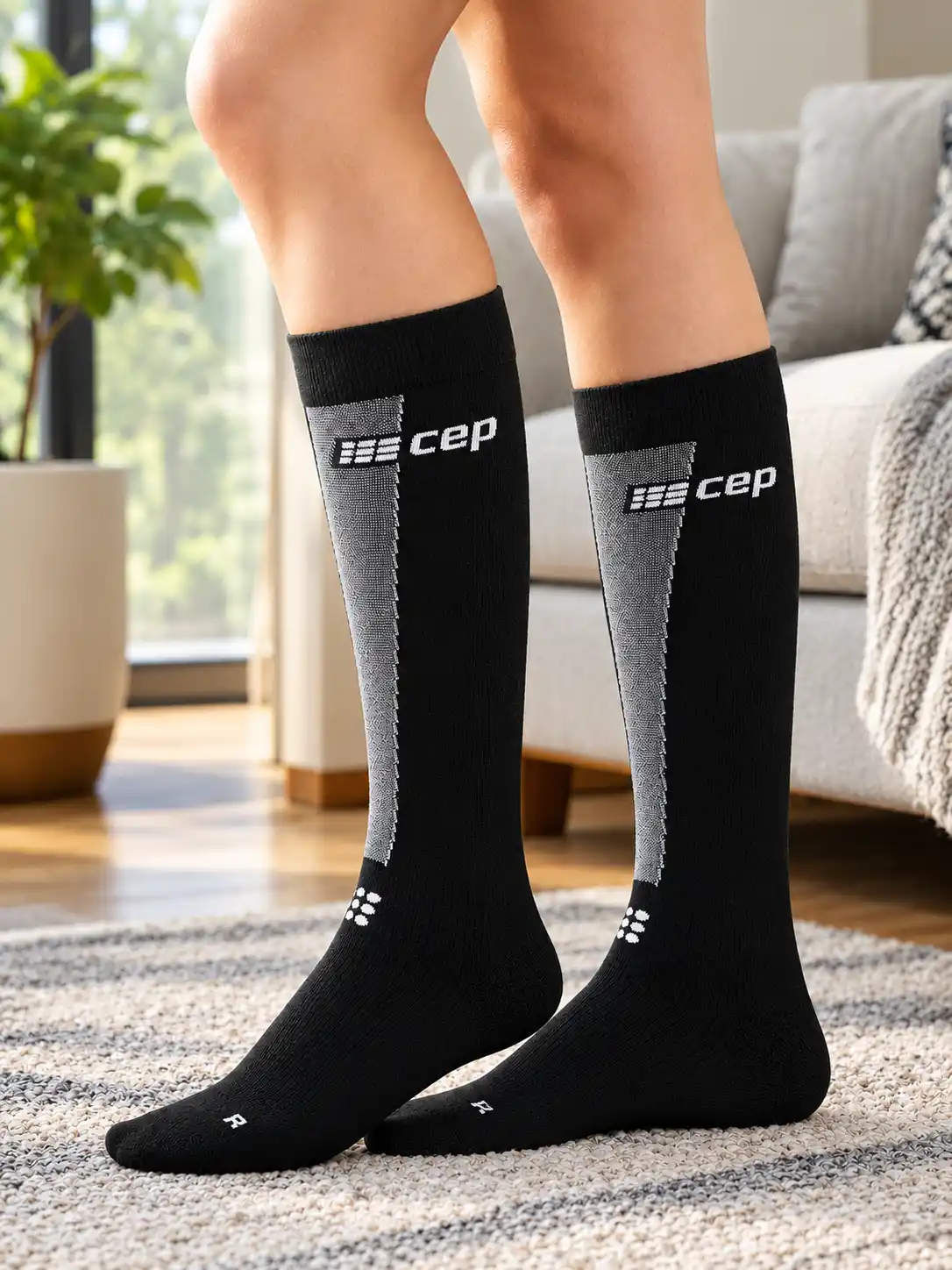
Verdict: Firm 20–30 mmHg support in a merino blend, built specifically for flying.
Most travel socks stop at 15–20 mmHg. CEP’s Flight sock goes firmer at 20–30 mmHg, which is generally treated as medical-grade compression. That makes it a candidate for 14+ hour flights to Sydney or Singapore, or for travelers whose doctor has suggested firmer support.
The fabric is 49% polyamide, 36% merino and 15% spandex, which is a higher merino share than most performance socks. It adds a padded footbed and a no-slip fit backed by a blister-free guarantee. Pricing runs from the mid-$40s at running retailers to $55 direct from CEP.
Pros
Cons
Best for: Women on the longest routes, or those with a doctor’s go-ahead for firmer compression.
5. Sockwell Women’s Full Heart Wide Calf: Best Wide-Calf Merino
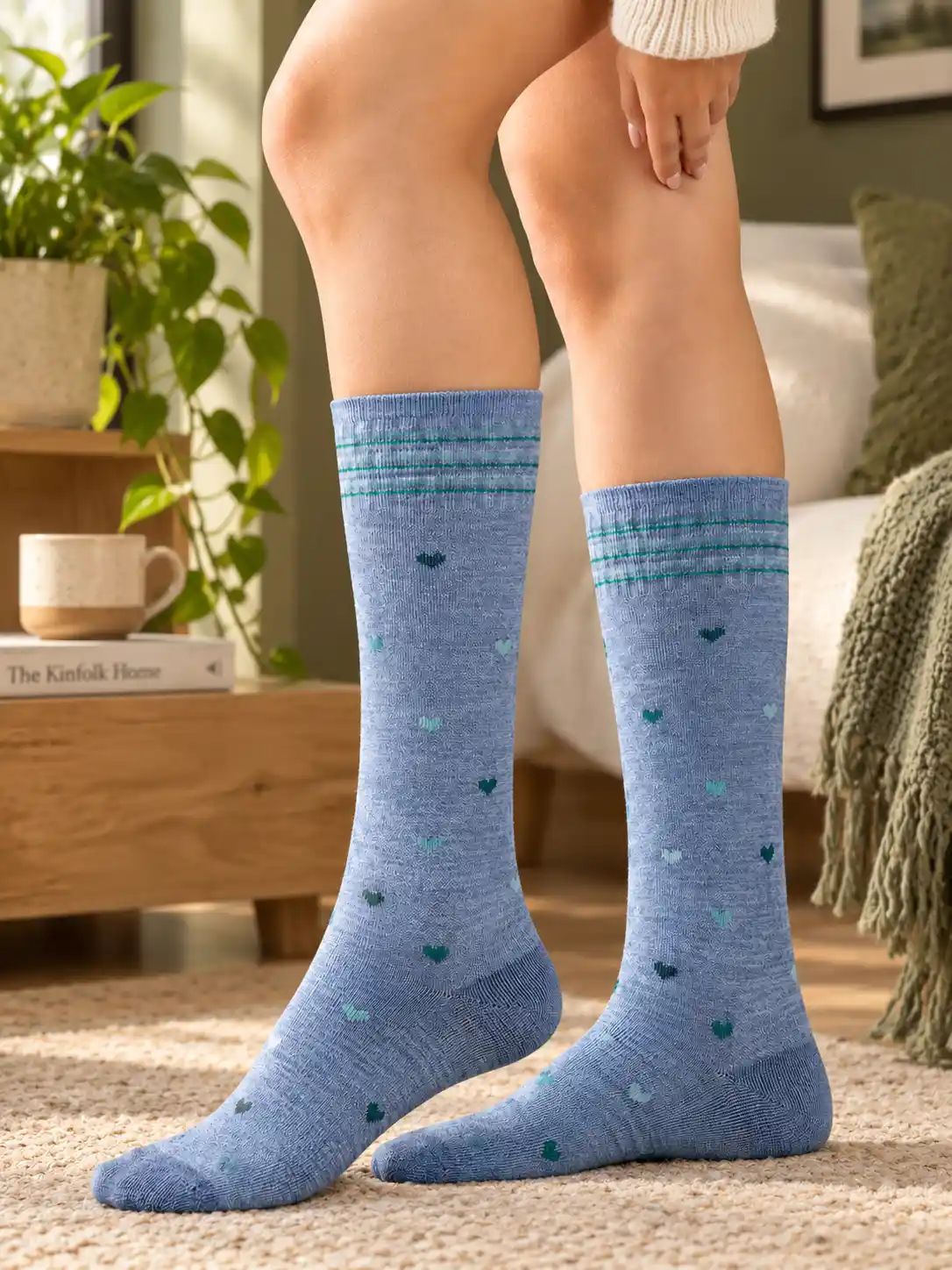
Verdict: The Circulator’s comfort with extra room in the calf, for women who find standard compression socks pinch at the knee band.
The Full Heart keeps the moderate 15–20 mmHg graduated compression and the merino and bamboo blend that make Sockwell comfortable on long flights. The difference is the leg. Sockwell lists the wide-calf fit at roughly 17.5 inches in circumference, with about 30% more stretch than its standard styles. It also adds arch support and a seamless toe closure.
The roughly 17.5-inch figure is the limit to keep in mind. If your calf measures well above that, VIM & VIGR’s wide calf (up to 21″) or Comrad’s XL (18–20″) is a safer fit. Some retailers won’t take Sockwell products back, so check the return policy before you order.
Pros
Cons
Best for: Women with calves around 16–18″ who want natural fibers.
6. Bombas Women’s Travel Compression Knee High: Best for First-Time Wearers
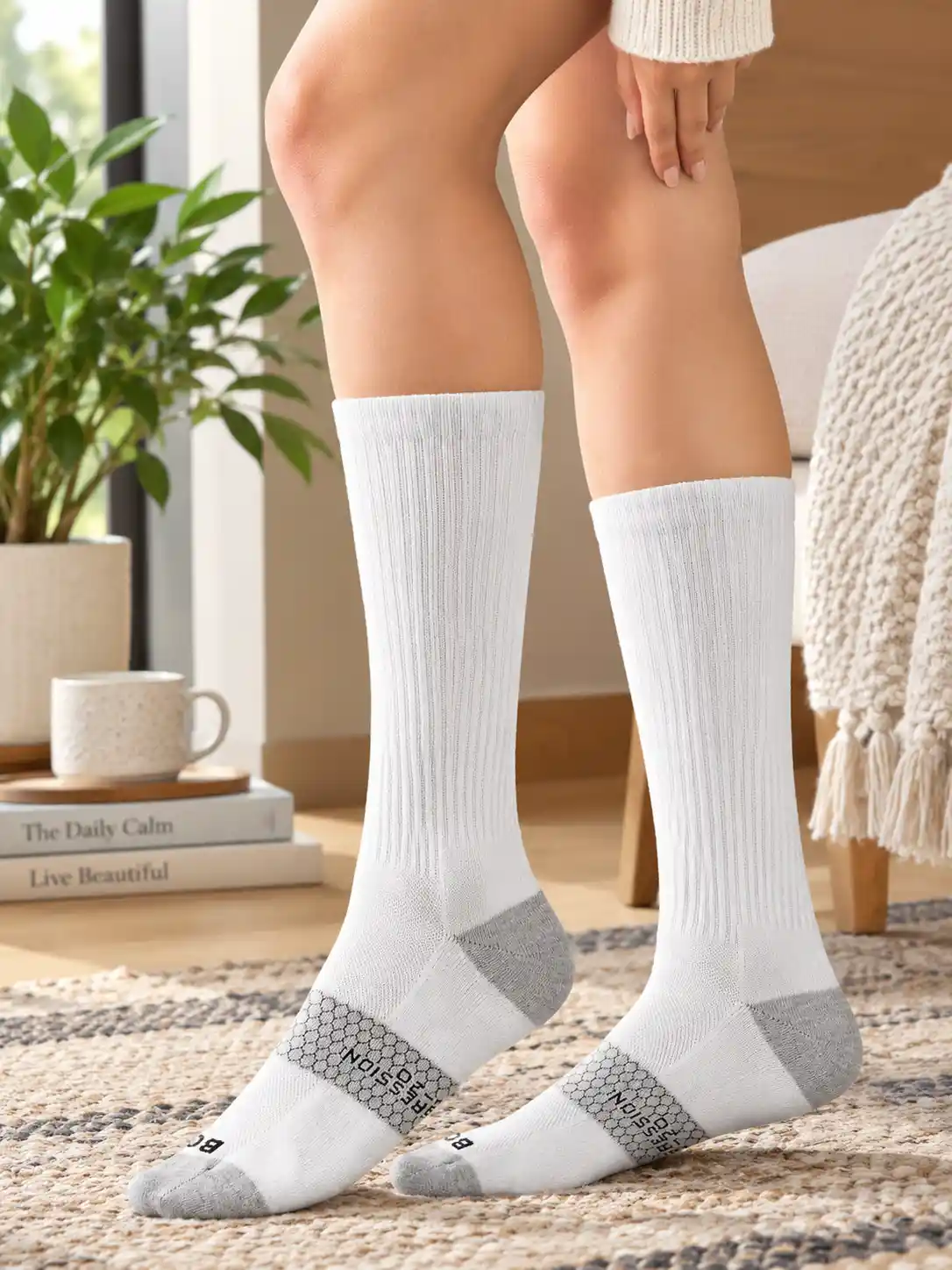
Verdict: A gentle, travel-specific starting point from a brand known for comfort.
Bombas designed this knee-high specifically for flights and long travel days. It uses moderate 15–20 mmHg graduated compression, and Bombas calls it the softest compression sock it makes. That makes it a sensible first pair if you’re nervous about how tight compression will feel at hour ten. Bombas also sells it in a 2-pack with its gripper slippers, which suits the hotel end of the trip.
We couldn’t confirm the fabric blend or calf-circumference range from listings available at the time of writing. Check both on the current product page before ordering, especially if your calves sit outside the average range. If you want natural fiber, Bombas also makes a merino-blend everyday compression sock at the same 15–20 mmHg level.
Pros
Cons
Best for: Women trying compression socks for the first time on a long-haul flight.
7. Sigvaris Traveno 146: Best Cotton Compression Travel Socks
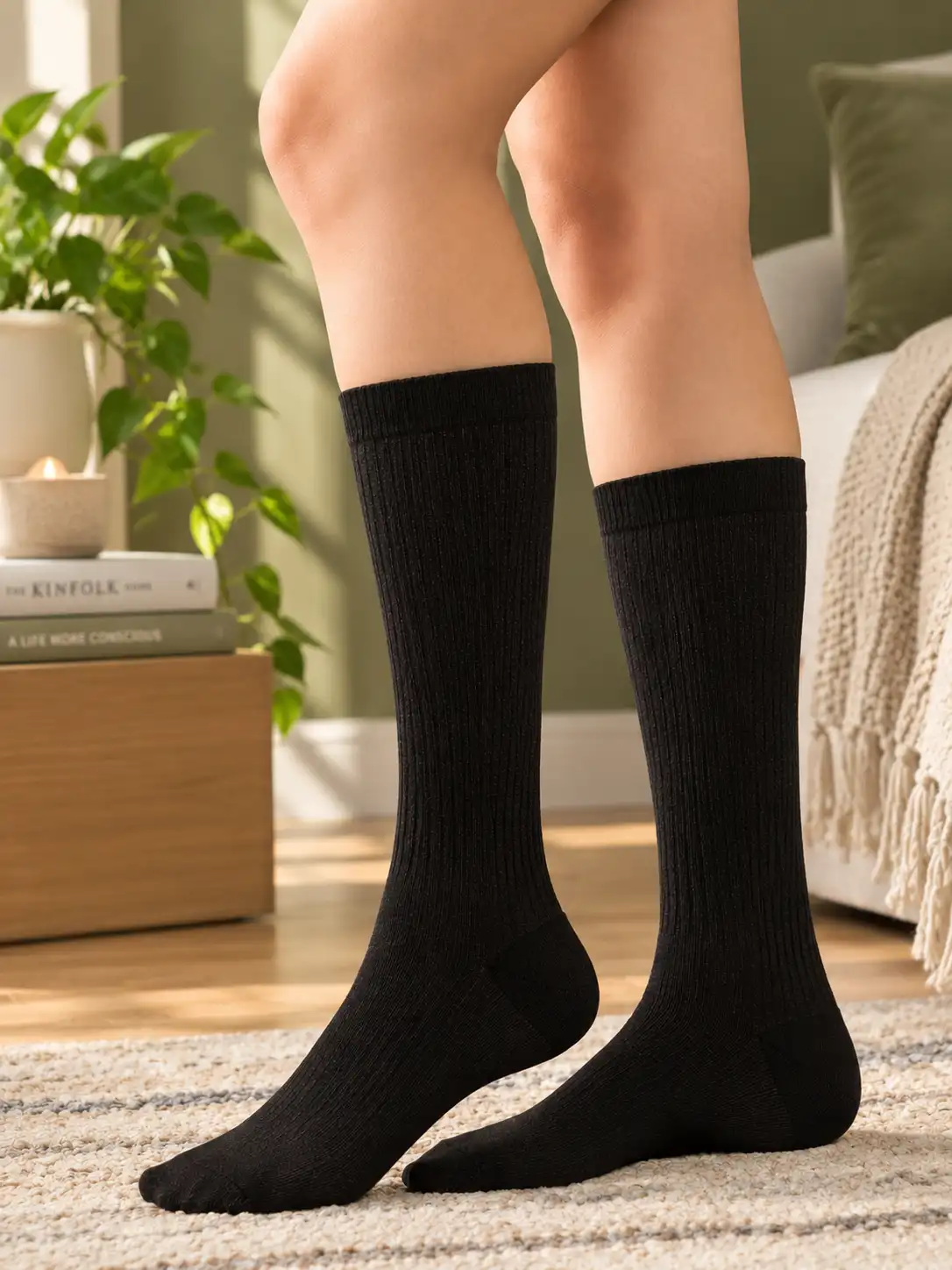
Verdict: Medical-brand construction in a soft Supima cotton blend, for women who don’t like synthetic fabric against their skin.
Sigvaris is a long-established compression brand, and the Traveno is its dedicated travel line. The women’s 146 delivers 15–20 mmHg in a blend of 66% Supima cotton, 26% nylon and 8% spandex, and it’s latex free. Two small details matter over a long flight: a flat, low-friction toe seam, and a knit-in top band designed not to pinch. Sigvaris lists travelers, expecting mothers and people with a family history of venous problems among its intended users.
Sizing takes three measurements: ankle, widest part of the calf, and leg length measured seated with the knee bent. That’s more effort up front, but the fit is more precise.
Pros
Cons
Best for: Women with sensitive skin, or those who prefer natural fibers on cooler routes.
8. Sigvaris Soft Opaque 841: Best for Petite or Tall Legs
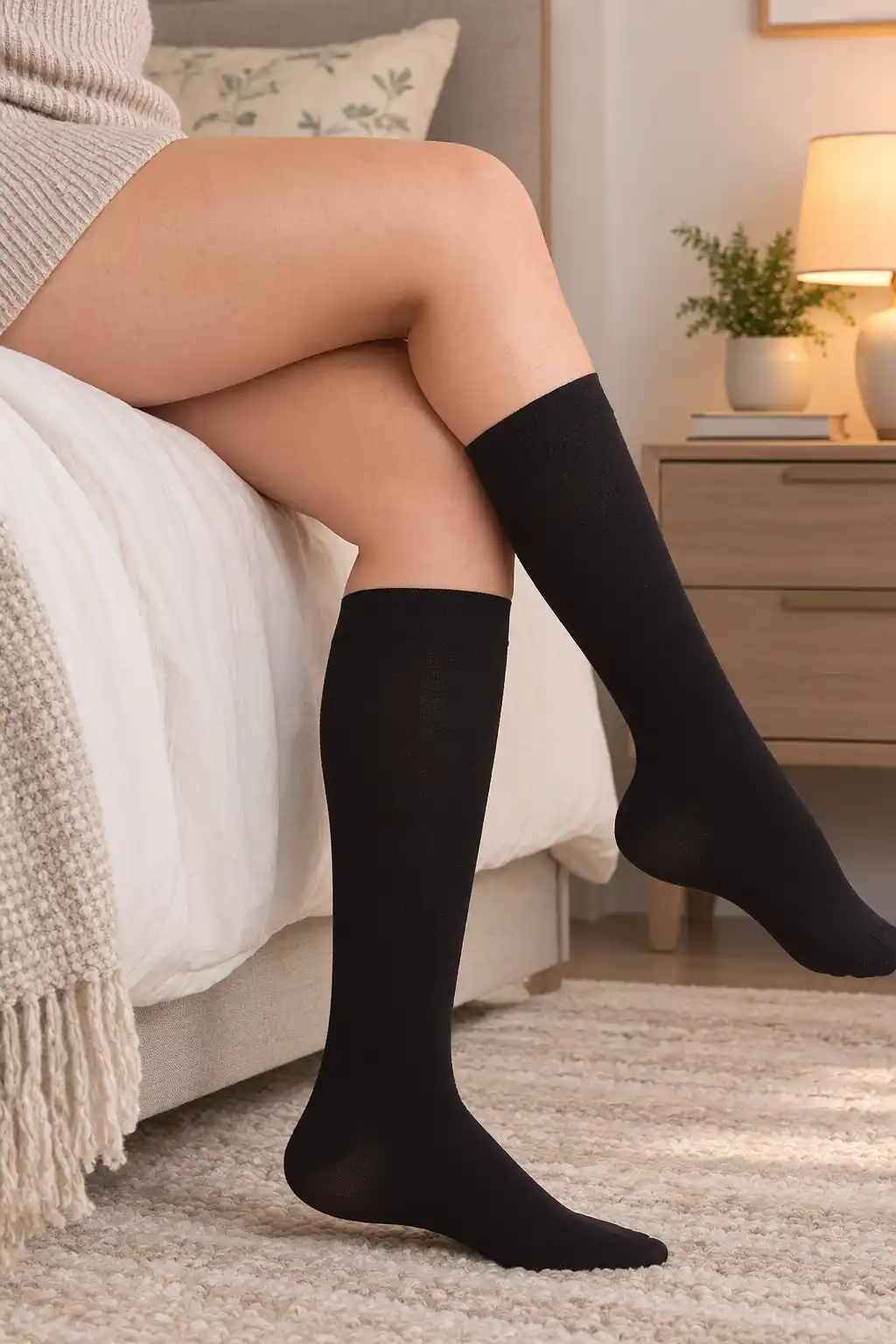
Verdict: The only pick here sold in both short and long lengths at every size, so the band sits where it should.
A knee-high that’s too long bunches behind the knee, and one that’s too short cuts into the calf. The Soft Opaque solves both with six sizes, small through large in short and long lengths. That makes it the most practical choice for petite and tall women.
It delivers 15–20 mmHg graduated compression in nylon and spandex. Double-covered yarns help it glide on and off more easily than many medical-style stockings. Sigvaris recommends it for pregnancy and long-distance travel among other uses. It comes in closed-toe and open-toe versions, and there’s a thigh-high version with a grip-top band if you prefer full-leg coverage.
Pros
Cons
Best for: Women under about 5’3″ or over 5’9″ whose socks never sit right at the knee.
9. JOBST Travel Socks: Best for Precise Ankle-Based Sizing
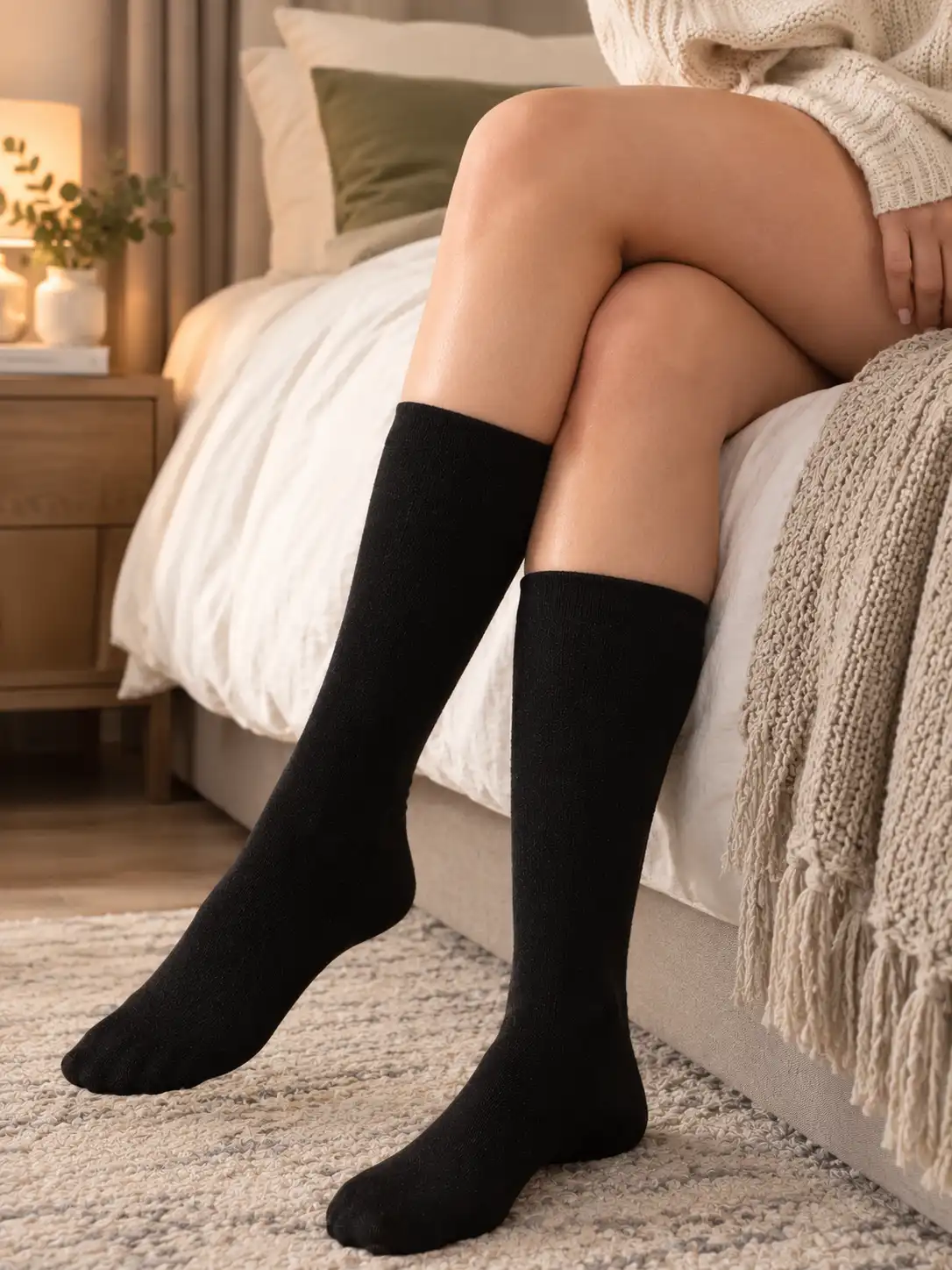
Verdict: A pharmacy-grade compression travel sock sized by ankle measurement, the part of the leg where graduated compression matters most.
JOBST is a long-standing medical compression brand, and its Travel line is made for long stretches of sitting on planes, trains and buses. It delivers 15–20 mmHg graduated compression in a knee-high with a reinforced heel and toe. The ribbed pattern looks closer to a dress sock than a medical stocking, so it works with both business and casual clothes.
Sizing is the standout. Instead of broad shoe-size bands, each size covers a narrow ankle range; Size 3, for example, fits a 22–25 cm ankle. JOBST also gives a simple check: a knee-high should end about two finger-widths below the crease behind the knee.
Listings describe the fabric differently. Some call it a cotton blend, while one lists 78% polyamide and 22% elastane. US pricing and stock vary, and some retailers don’t accept returns, so confirm all three on the listing you’re buying from.
Pros
Cons
Best for: Women who want medical-brand compression and are willing to measure their ankle for the right size.
10. Smartwool Women’s Run Targeted Cushion Compression OTC: Best for Active Arrivals
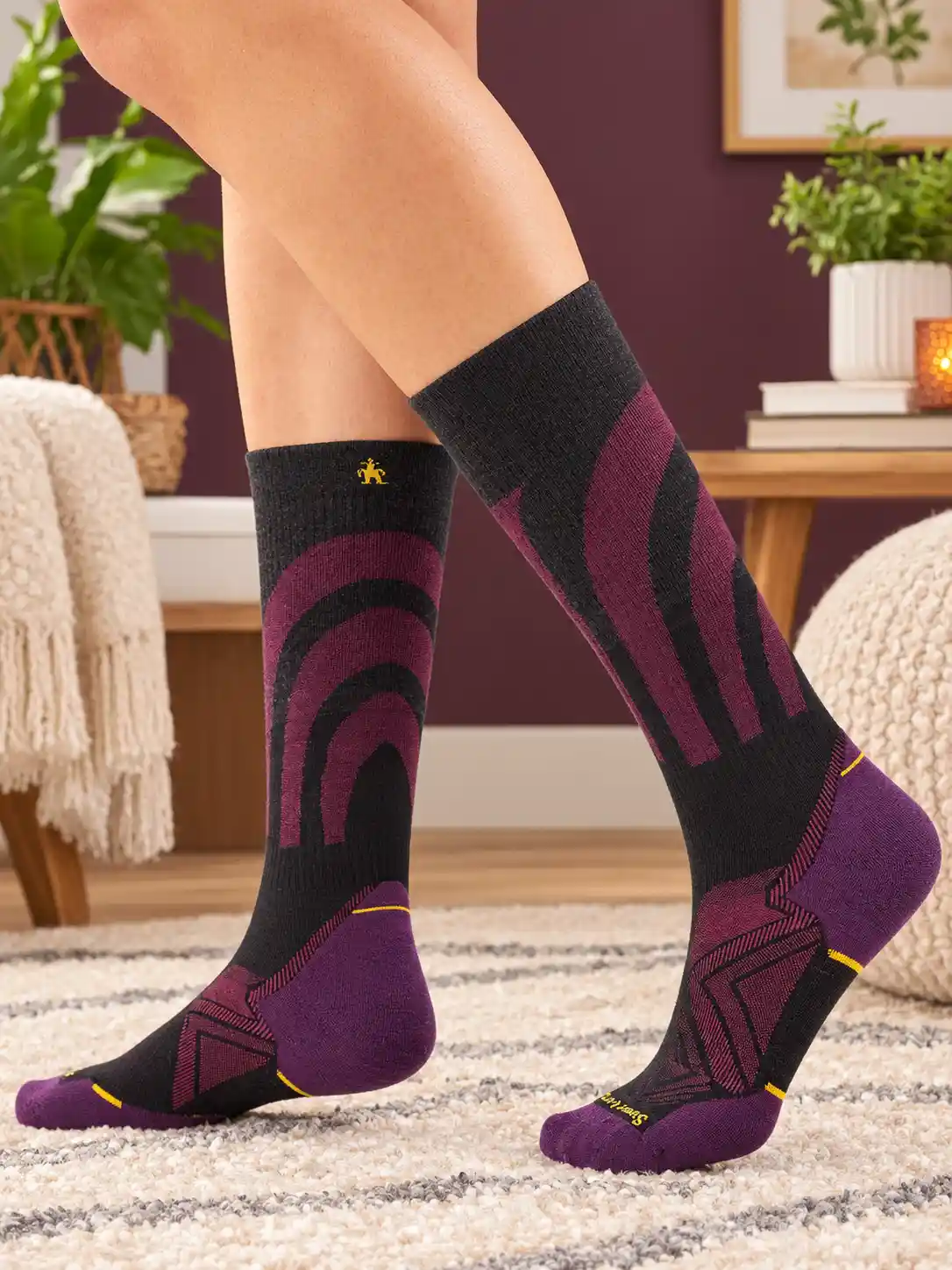
Verdict: Firm 20–30 mmHg compression in a women’s-specific merino sock, for travelers heading straight onto a trail or a city run.
This is technically a running sock, and that’s why it earns a place here. If your trip starts with a hike in Patagonia or a long sightseeing day on foot, you get firm graduated compression and real cushioning in one pair. It also suits flying in on the same day as a race. Pair them with waterproof shoes made for women’s feet if your trip starts on muddy trails.
The fabric is about half merino wool, with nylon (much of it recycled) and elastane. It has a virtually seamless toe, mesh zones for breathability, and reinforced durability zones. It’s made in the USA from imported yarn.
Women’s sizes run Small to Large by shoe size, and Smartwool also lists calf ranges from about 11″ up to 18″ across those sizes. The trade-offs are warmth and price. The cushioning can feel warm on a long flight, and expect to pay roughly $40–50 a pair.
Pros
Cons
Best for: Women who fly in and immediately hike, run, or walk all day.
11. Lily Trotters Compression Socks: Easiest On and Off
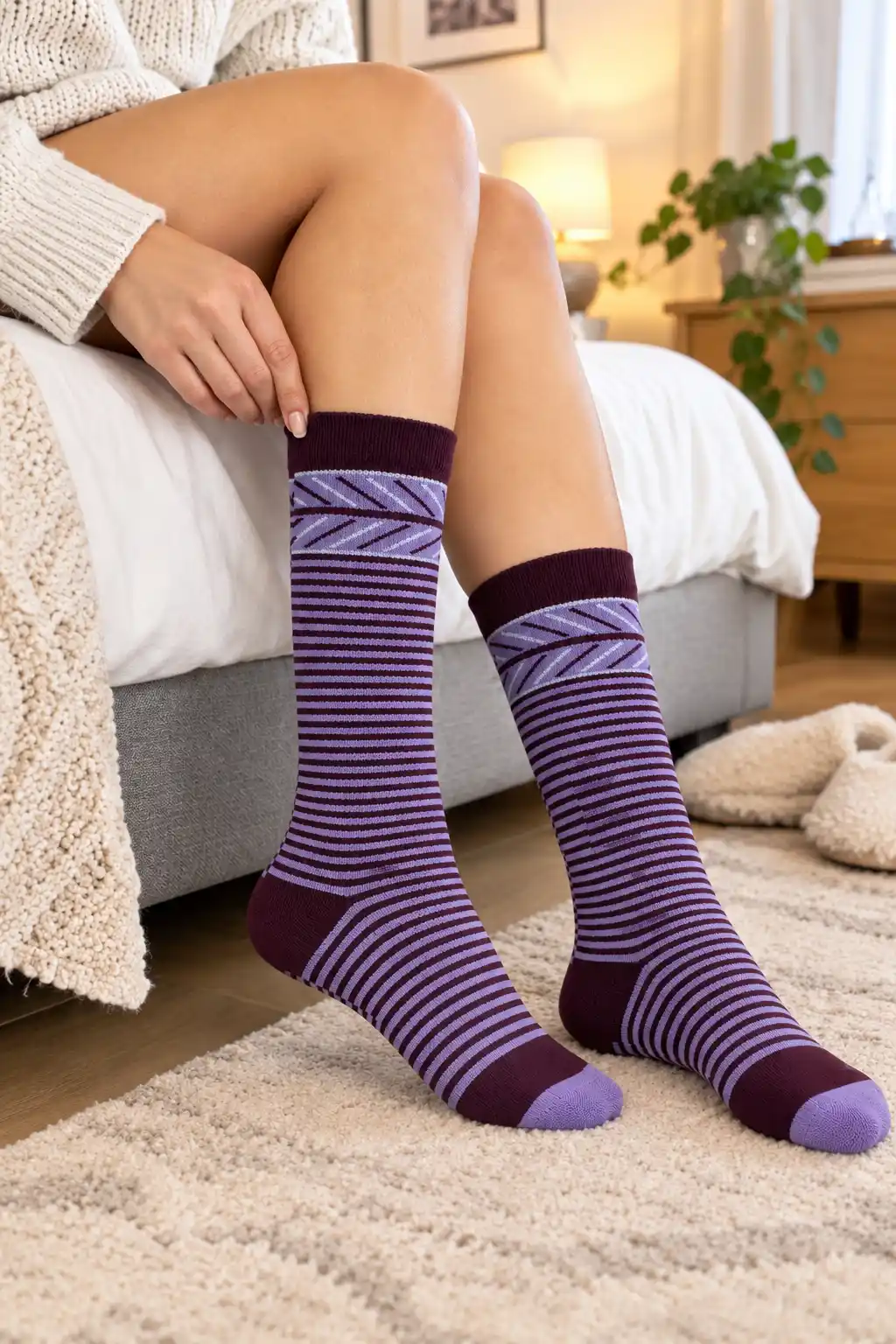
Verdict: Women-owned, stylish 15–20 mmHg socks whose standout trait is how easily they go on and come off.
Pulling compression socks over swollen feet after a long flight is a real hassle, and Lily Trotters’ biggest selling point is ease of use. The socks deliver graduated 15–20 mmHg compression in a thin nylon and spandex knit. That’s slim enough to wear with flats or sneakers without stretching out your shoes.
Sizing goes by calf circumference rather than shoe size, in S/M and L/XL. The brand is women-owned, makes its socks in the USA, and offers over-the-calf, crew, and calf-sleeve styles. The patterns are some of the most fashion-forward in this roundup.
They come in only two sizes, so women at the edges of those ranges may not get a precise fit. List prices run around $42 a pair, though sales on solid colors are frequent.
Pros
Cons
Best for: Women with limited hand strength, or anyone who wants to take socks off and on during a layover.
12. Truform 1773 Sheer Knee-High: Best Ladies’ Travel Socks for Dressy Trips
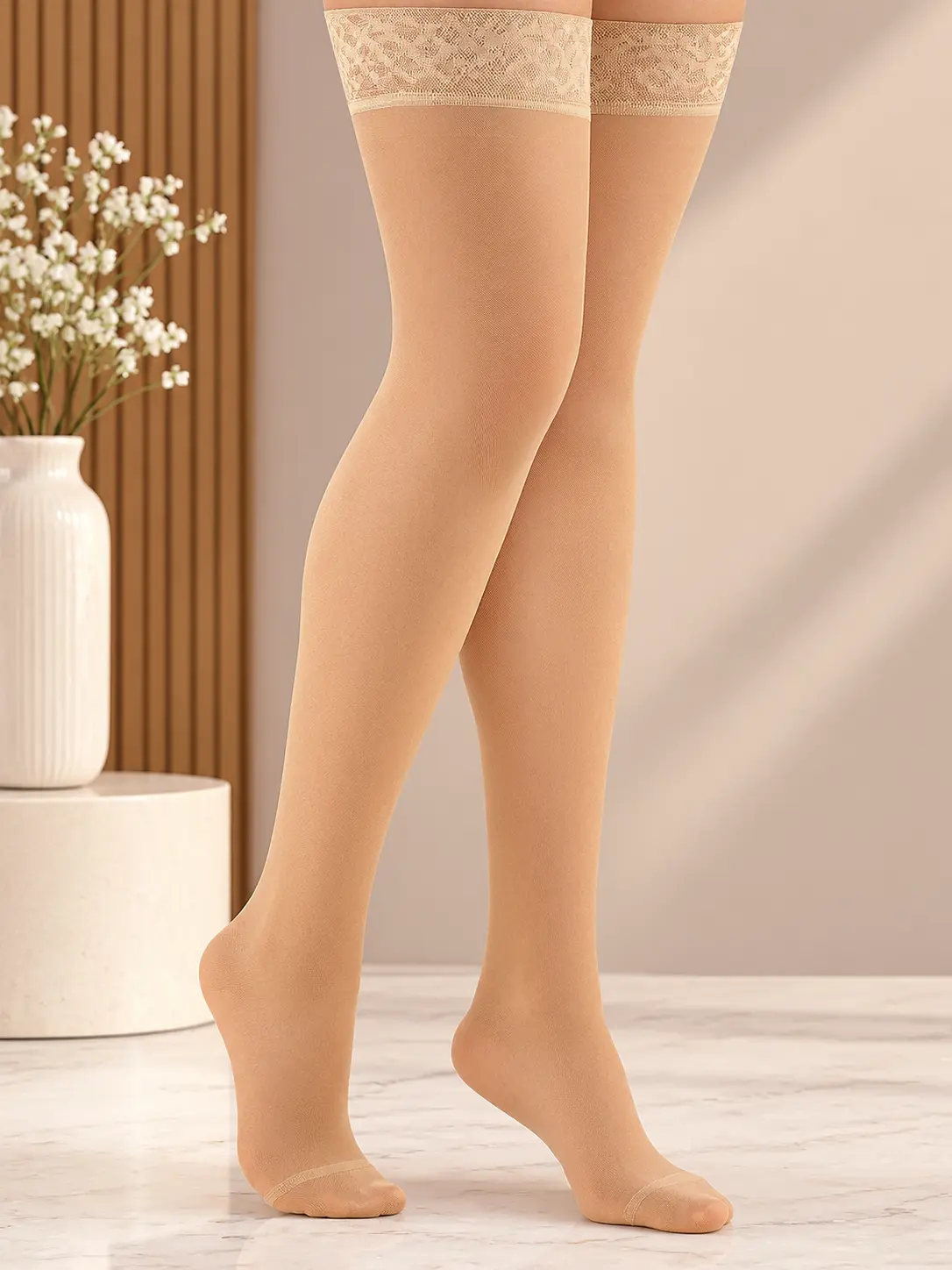
Verdict: Sheer travel support hose that disappears under a skirt or dress trousers, at the lowest price in this guide.
Not every long-haul flight ends at a hotel. If you’re landing straight into a client meeting, a wedding, or a nice dinner, chunky athletic compression socks don’t work with a dress. These sheer knee-high stockings deliver moderate 15–20 mmHg graduated compression in a nylon and spandex knit that looks like regular hosiery.
They have a defined heel, reinforced toe, and soft top band, and they’re latex free. Truform also makes the same sock in a thigh-high, an open-toe version, and a diamond-pattern design.
Sheer fabric is the weak point. It snags more easily than a knit sock, and Truform itself recommends rubber donning gloves to make them last. One reviewer also found the XL tight and wished for a larger size. Prices typically run around $13–21 per pair.
Pros
Cons
Best for: Business travelers and anyone dressing up on arrival.
13. Physix Gear Compression Socks: Best Budget Firm Compression
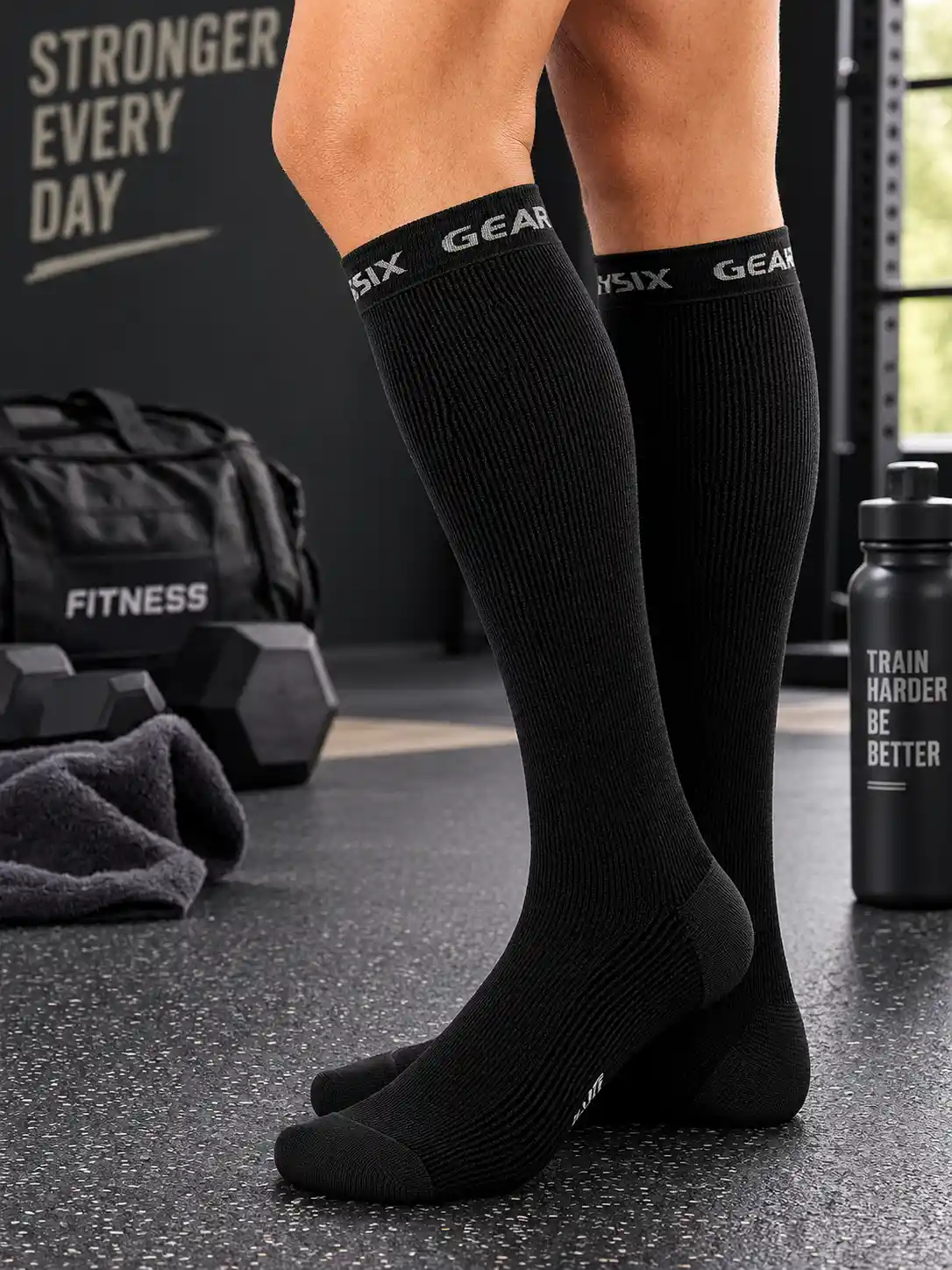
Verdict: Firm 20–30 mmHg graduated compression at a fraction of medical-brand prices.
Firmer compression usually costs more, and many drugstore options stop at 15–20 mmHg. Physix Gear delivers 20–30 mmHg graduated compression in a moisture-wicking nylon and spandex knit. Owners describe a cushioned, sport-sock feel with good arch and ankle support.
Sizing follows the brand’s calf-measurement chart, and owners who measured first generally report a good fit. Expect a real effort to pull them on, though. Several reviewers say they’re very snug and suggest sizing up if you’re on the border. A few also note they run long, reaching the bend of the knee on shorter legs.
Because 20–30 mmHg is treated as medical-grade, check with your doctor if you have a circulation or vein condition. Prices change often, so check the current listing.
Pros
Cons
Best for: Women who want 20–30 mmHg on a budget and don’t mind a tighter fit.
14. VIM & VIGR Compression Tights: Best Full-Leg Coverage
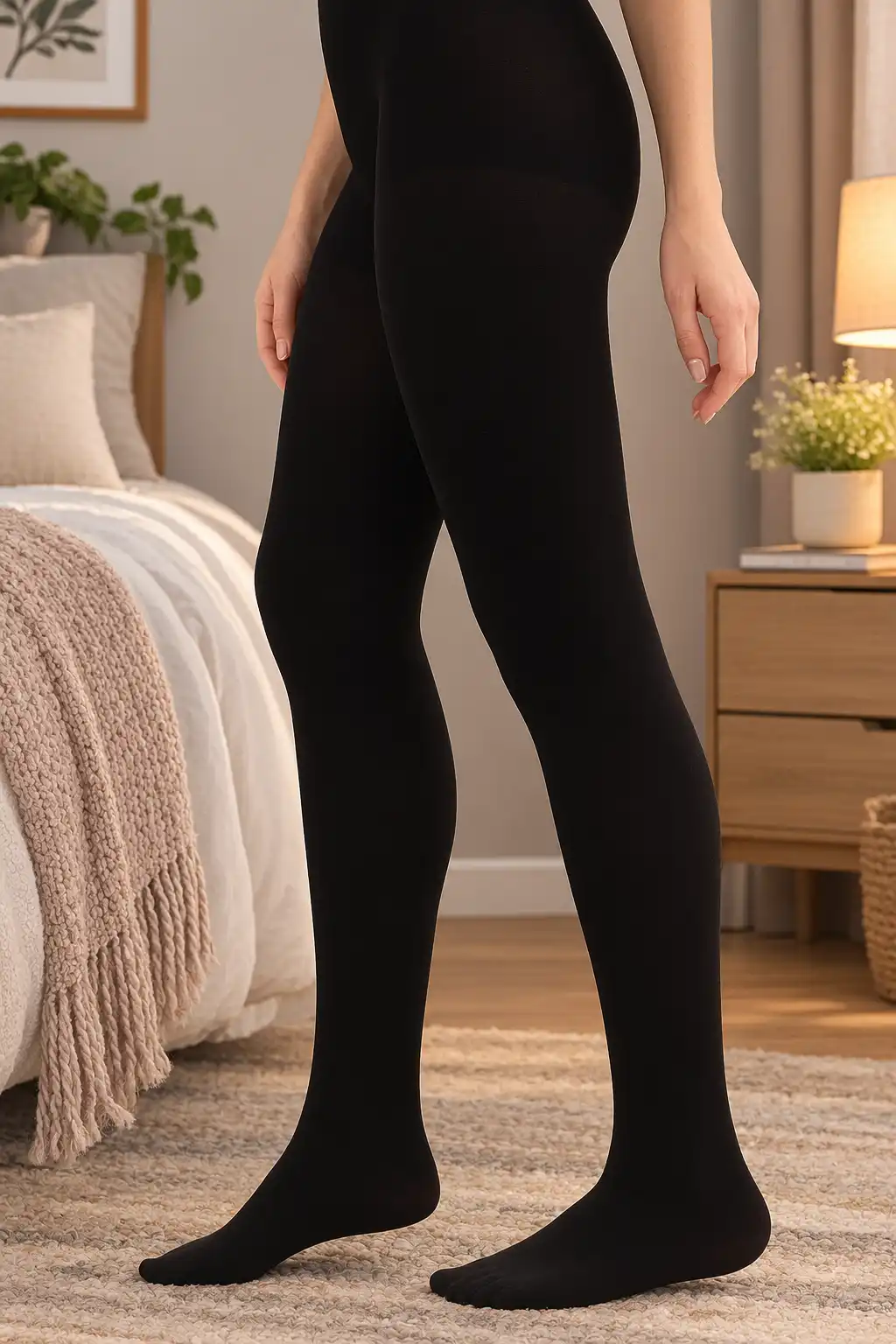
Verdict: Graduated compression from ankle to waist, for women who fly in dresses or feel swelling above the knee.
Knee-high socks stop at the calf. If your thighs feel heavy after a long flight, or you simply prefer flying in a dress or skirt, tights spread compression up the whole leg. VIM & VIGR makes them in 15–20 mmHg in a latex-free nylon and Lycra knit. There’s a footless version that pairs well with sandals at a beach destination, and some styles also come in 20–30 mmHg.
The practical downsides are real. Tights take longer to put on, they’re warmer than socks, and bathroom trips in a cramped airplane lavatory are more awkward. Sizing works differently from the brand’s sock chart, so check the tights chart for height and weight ranges before ordering. Confirm the current price on the listing too.
Pros
Cons
Best for: Women who fly in dresses or notice swelling above the knee.
15. Zensah Featherweight Compression Socks: Best for Hot-Weather Destinations
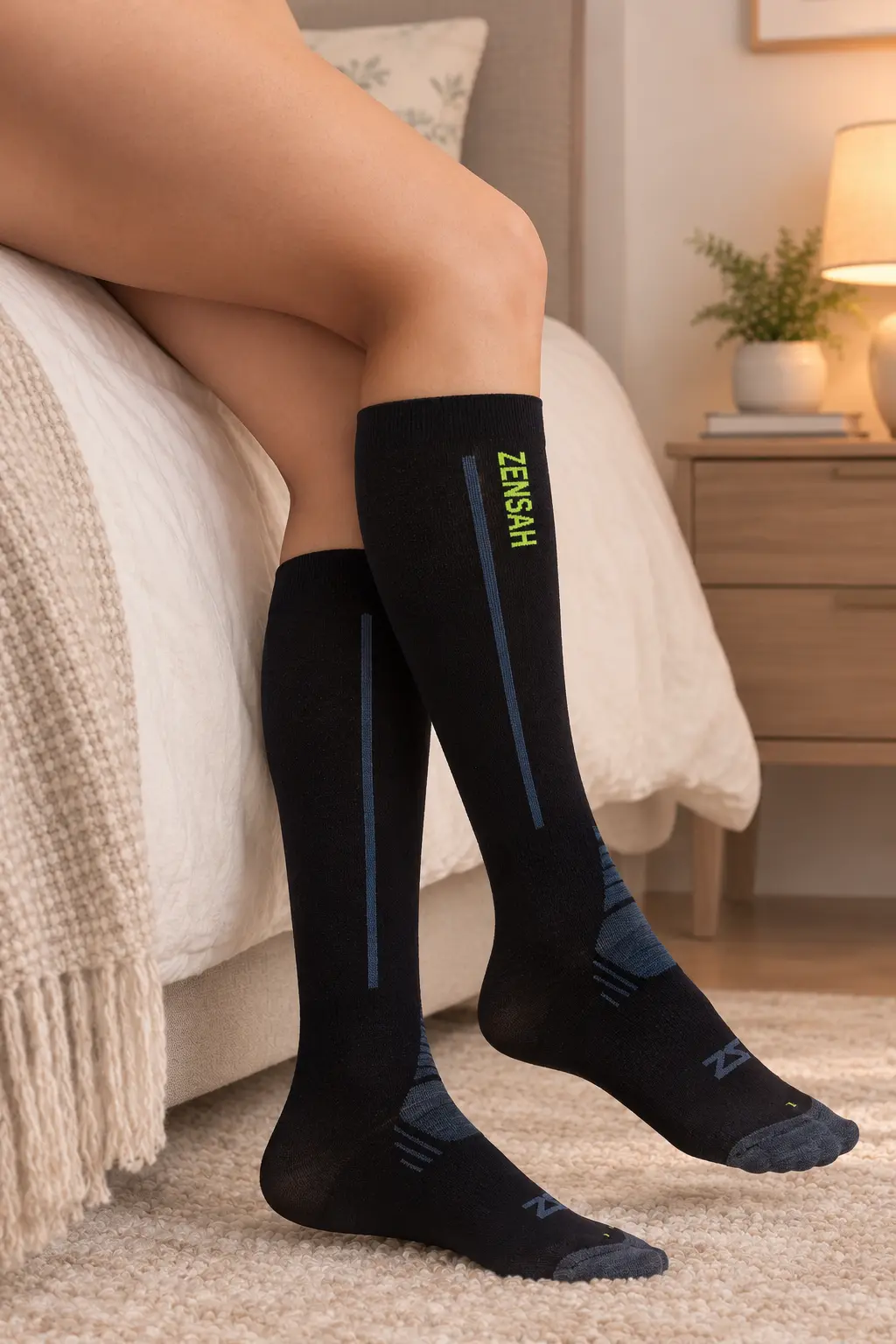
Verdict: An ultralight, quick-drying knit for landing somewhere humid, with one important gap in the specs.
Zensah built the Featherweight for warm conditions. It uses a polypropylene and polyamide blend that wicks moisture quickly, plus a thin sole and a lightweight calf. Each sock is shaped specifically for the left or right foot, the toe is seamless, and ribbing adds arch support. It’s made in Italy, and sizing goes by shoe size: women’s 5–8, 8.5–11 and 11.5–14.
The gap is the compression rating. Retail listings describe it as graduated compression but don’t give an mmHg figure, and we couldn’t confirm one. Check the current product page before buying, especially if you’re matching a level your doctor recommended. It’s also designed mainly for running, and pricing sits around $40–50.
Pros
Cons
Best for: Women flying to tropical or desert destinations who hate hot, damp feet.
16. CHARMKING Compression Socks 8-Pack: Best Multipack Value
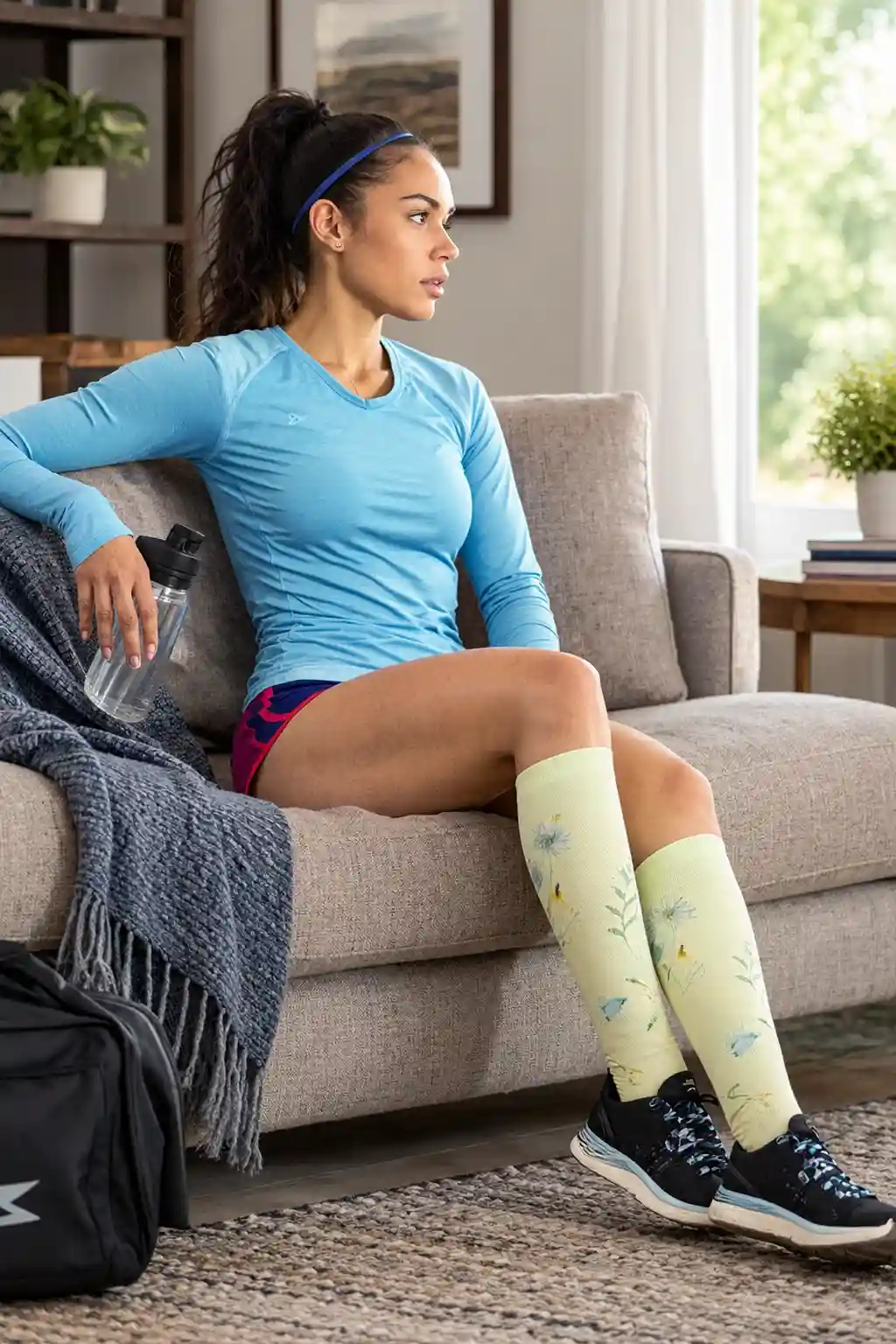
Verdict: Eight pairs for the price of one premium sock, with an honest caveat about how firm they feel.
If you take several long flights a year, or want a fresh pair for every leg of a multi-stop trip, CHARMKING’s multipack is hard to beat on cost. Roll a fresh pair for each flight into a packing cube for your carry-on.
The socks are labeled 15–20 mmHg graduated compression in an 85% nylon, 15% spandex knit. They come in S/M and L/XL, with lots of colors and novelty prints.
The caveat comes from owner reviews. Several regular compression wearers say the squeeze feels lighter than the 15–20 mmHg label suggests, especially at the ankle. Some recommend sizing down if you’re between sizes. Each size also covers a broad shoe-size range, so smaller feet may get extra room at the toe.
Treat these as everyday comfort socks. For a 14-hour flight, or if you have known risk factors, choose a brand with a confirmed rating.
Pros
Cons
Best for: Budget-conscious travelers who fly often and want spares.
Buying Guide: What to Look for in Compression Socks for Flying (Women’s Guide)
Compression Level: 15–20 vs. 20–30 mmHg
The mmHg number tells you how firmly the sock squeezes at the ankle. Good flight socks use graduated compression, which eases off as it moves up the leg.
- 15–20 mmHg is the standard choice for most healthy travelers. JOBST lists it for tired, aching legs and minor ankle and foot swelling.
- 20–30 mmHg is considered medical-grade, and VIM & VIGR notes it’s often prescribed or recommended by a healthcare provider.
If you’ve never worn compression, start at 15–20 mmHg.
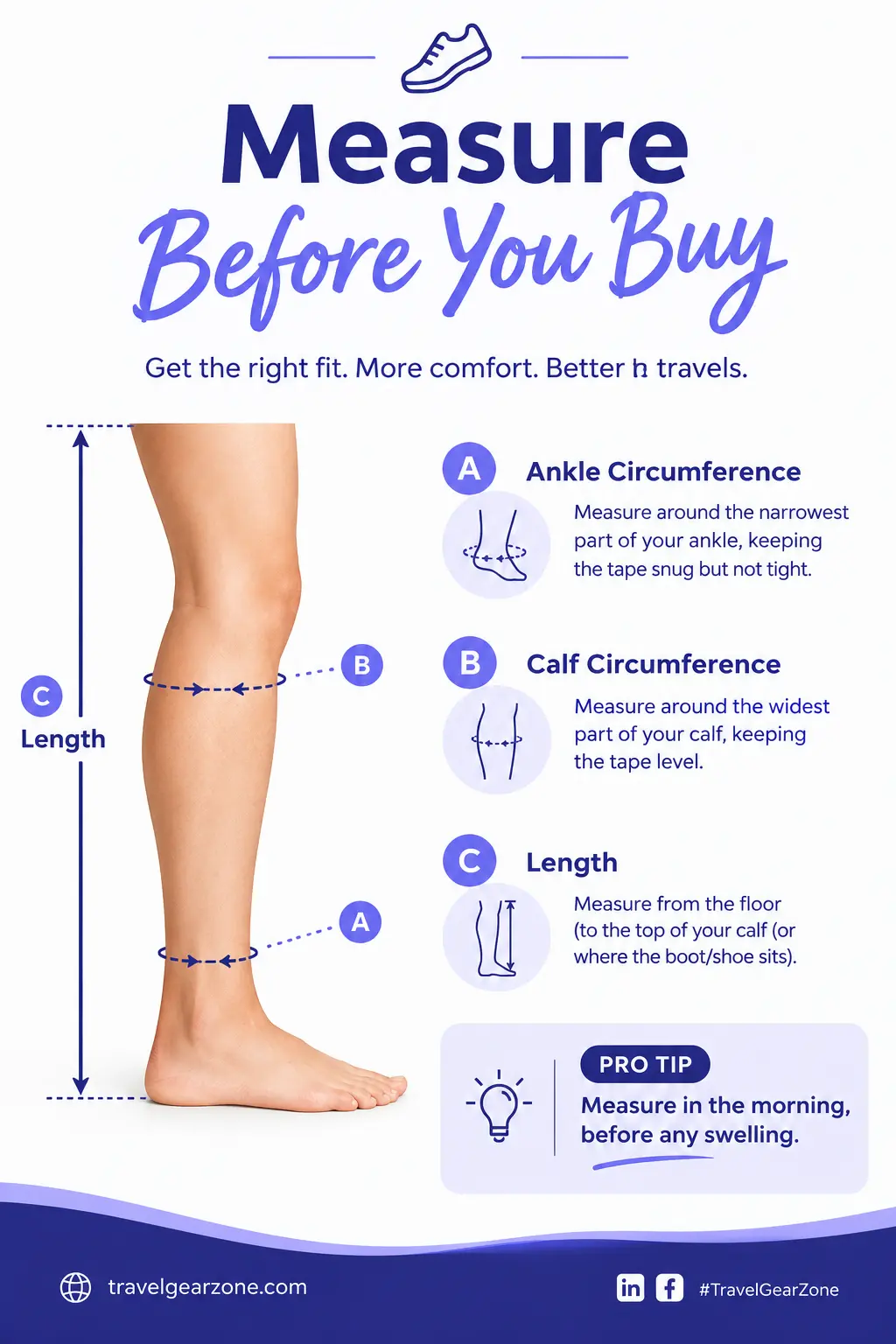
Calf Fit and Length
A rating means little if the sock doesn’t fit your leg. Too loose, and the compression never reaches the target. Too tight at the top band, and it can dig into your calf for hours.
Sigvaris sizes from three measurements:
- Your ankle, just above the bone
- The widest part of your calf
- The length from just below the knee crease to the floor, measured seated with your knee bent
JOBST’s quick check is that a knee-high should end about two finger-widths below the crease behind your knee. If it ends higher or lower, the length is wrong.
Women’s Fit Finder: calf ranges by brand
| Brand | Standard calf range | Wide or extended option |
|---|---|---|
| Comrad | 10–17″ (S to L) | M Wide 14–16″, L Wide 17–19″, XL 18–20″ |
| VIM & VIGR | 12–15″ and 15–18″ | Wide calf 17–21″ |
| Sockwell Full Heart | n/a | Wide calf, about 17.5″ |
| Smartwool (women’s) | 11–18″ (S to L) | n/a |
| Sigvaris Soft Opaque 841 | Short and long lengths at each size | Thigh-high version |
| Lily Trotters | Two sizes, by calf circumference | Check brand chart |
Fabric for a 10+ Hour Day
The fabric matters as much on a long flight as it does in any good travel sock. Pair your socks with travel shoes that have room for swollen feet.
- Merino blends (Sockwell, CEP, Smartwool) handle cold cabins and resist odor.
- Nylon (Comrad, Physix, Lily Trotters) is thin and quick-drying, but feels snugger.
- Cotton (Sigvaris Traveno, some VIM & VIGR and Comrad styles) feels the most like a regular sock, but holds moisture in humid destinations.
Socks, Travel Support Hose, or Tights?
- Knee-high socks are the most practical choice for most flights.
- Sheer travel support hose like the Truform 1773 suits dressy arrivals.
- Compression tights spread pressure up the whole leg, but they’re slower to put on and less convenient in an airplane bathroom.
When and How to Wear Them
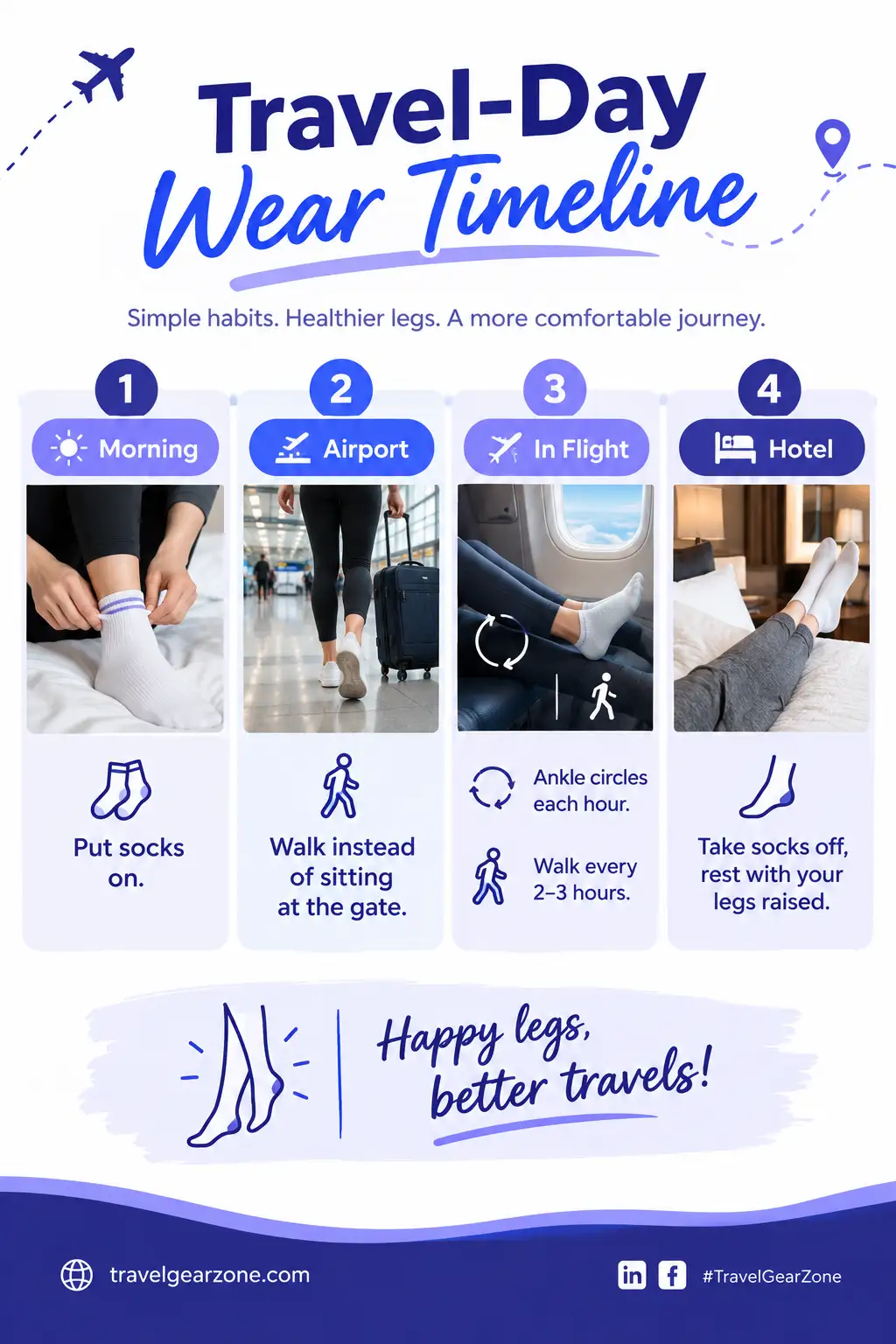
Put them on in the morning before your flight, before any swelling starts. JOBST recommends putting compression socks on right after you wake up.
To put them on, turn the sock inside out down to the heel, slide your foot in, and roll the rest up your leg. Never fold the top band over, because a doubled band squeezes harder than the rest of the sock. Between walks, noise-cancelling headphones built for flights make it easier to rest.
During the flight, keep moving. A vascular surgeon writing for Baylor Scott & White suggests getting up about every two to three hours on a plane.
Keep a spare pair in the top pocket of your carry-on backpack for international flights in case your checked bag is delayed.
What the Research Actually Says
The 2021 Cochrane review looked at randomized trials of passengers on flights of four hours or more. Of 2,637 passengers with follow-up data, 50 developed a blood clot with no symptoms. Only 3 of those 50 were wearing stockings. The review rated this evidence as high-certainty.
The evidence that stockings reduce leg swelling was rated low-certainty. The review also couldn’t measure the effect on symptomatic clots or pulmonary embolism, because none occurred in the trials.
The CDC notes that anyone traveling more than four hours by air, car, bus or train can be at risk. Most people who develop travel-related clots have other risk factors as well. Pregnancy and estrogen-containing birth control are both recognized clotting risk factors for women. If either applies to you, talk to your doctor before a long-haul flight.
Conclusion
For most women, the Sockwell Women’s Circulator is the pair to buy. It has moderate graduated compression and a merino blend that stays comfortable from boarding to baggage claim.
If you have trouble finding a fit, the Comrad Knee-High is the runner-up. Its calf-based sizing goes up to 20 inches, and it comes in two compression levels.
For other needs:
- Longest routes: CEP Flight for firm 20–30 mmHg support, if your doctor agrees
- Dressy arrivals: Truform sheer stockings
- Tight budget: Physix Gear or the CHARMKING multipack
The best compression socks for women for travel are the ones that match both your flight length and your calf measurement, so measure before you order. Check out our long-haul flight accessories guide for more gear recommendations.
Frequently Asked Questions
Should I wear compression socks on a long plane trip?
For flights of four hours or more, many travelers find they help with leg heaviness and ankle swelling. A 2021 Cochrane review found that passengers wearing compression stockings on these flights had far fewer symptomless blood clots. If you have a clotting history or other risk factors, ask your doctor which level to use.
How early should you put compression socks on before a flight?
Put them on the morning of your flight, ideally before you leave for the airport. Your legs are least swollen early in the day, which makes the socks easier to get on and helps them fit as designed. Waiting until you board means pulling them over feet that may already be puffy.
Who should not wear compression socks on a flight?
JOBST says its compression stockings should not be worn by people with certain conditions:
Advanced arterial disease that restricts blood flow (ischemia)
Uncontrolled congestive heart failure
Untreated septic phlebitis (an infected, inflamed vein)
Sensitivity to the fabric
Anyone with poor circulation to the feet, numbness, or broken skin on the legs should check with a doctor before wearing compression.
What is the downside of wearing compression socks?
They can be hard to pull on, especially firmer 20–30 mmHg pairs. They can also feel warm on long flights. A poorly fitted pair can bunch behind the knee or dig in at the top band, which defeats the purpose. Some people also find certain fabrics irritate their skin.
What mmHg compression socks are best for flying?
For most healthy travelers, 15–20 mmHg is the standard flight level. Firmer 20–30 mmHg is considered medical-grade. It suits very long routes or travelers whose doctor has recommended more support.
Can I wear compression socks on a flight while pregnant?
Several brands, including Sigvaris and Sockwell, list pregnancy among the intended uses for their 15–20 mmHg socks. Pregnancy does raise clotting risk, so ask your OB or midwife which compression level suits you before a long-haul flight.
Can I sleep in compression socks on an overnight flight?
Compression socks are designed for long periods of sitting, so keeping them on through an overnight flight in your seat is their normal use. Once you reach your hotel, take them off and give your skin a break. Ask your doctor before wearing them in bed.
Are travel support socks the same as compression socks?
Usually, yes. “Travel support socks” and “travel support hose” are older names for graduated compression socks and stockings. “Support” isn’t a standardized term, though, so look for an mmHg rating on the label before you buy.
Do compression socks work for road trips too?
The same socks work for any long journey where you sit still. The CDC notes that travel of more than four hours by car, bus or train carries a similar risk to flying. On the road, also stop every couple of hours to walk around.